
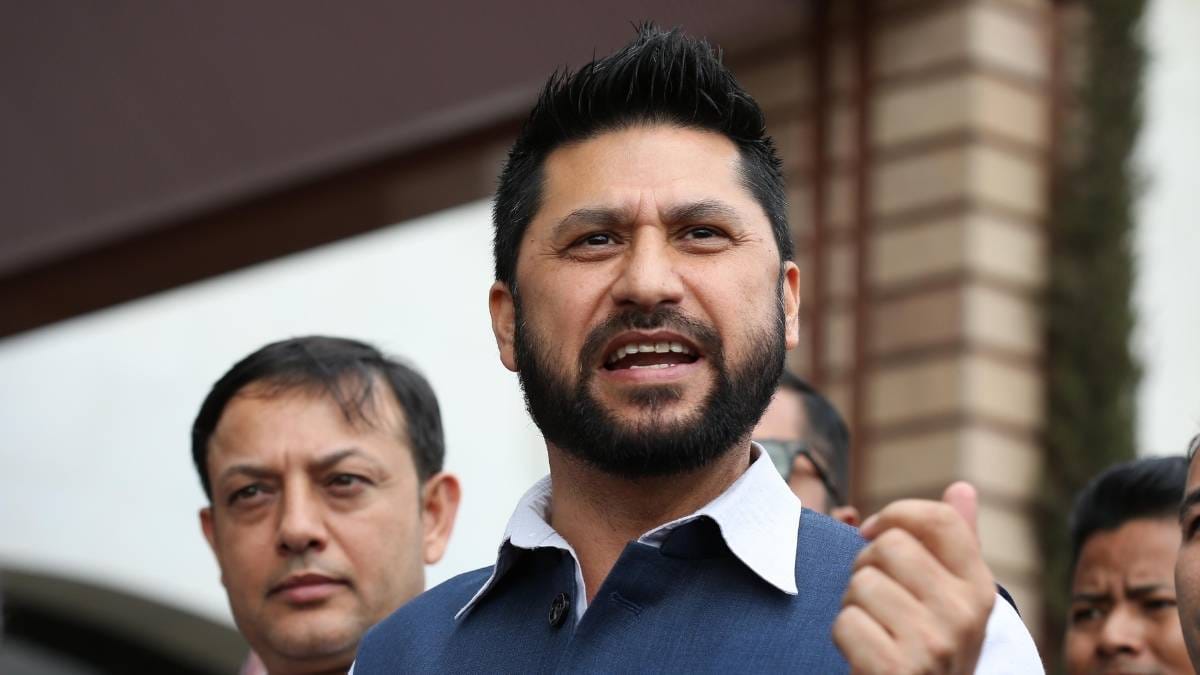
Image via OSNepalNews Inc
The price of political disruption in Nepal has just been set at Rs27.48m. That is the sum a court demanded to free Rabi Lamichhane, the country’s most controversial politician, from pre-trial detention on December 18th. Mr Lamichhane is the founder of the Rastriya Swatantra Party, a populist outfit that stormed into parliament in 2022 promising to clean up the grubby establishment. He had previously served as deputy prime minister and home minister before being thrown into jail.
Mr Lamichhane is accused of helping to misappropriate millions from local co-operatives, the savings banks of Nepal’s poor. His release on bail, secured by a bank guarantee matching the alleged losses, is nothing more than the law doing its job—no mercy, no favour. But it lays bare a bitter truth: in many young democracies, the fight against corruption is being subverted by the very forces that claim to wage it.
Mr Lamichhane’s story is a parable for our times. A charismatic television host, he built a brand by railing against the dodgy dealings of the political dynasties. His leap into politics was seamless. Voters, especially the young, were drawn to his promises of transparency and his outsider status. His new party’s symbol—a bell—was meant to signal a wake-up call for the nation. Yet soon after taking office, he was entangled in a scandal that echoed the abuses he denounced. Prosecutors allege that during his earlier career as a media executive, he helped funnel co-operative depositors’ savings through a web of accounts to prop up his business. The charges include fraud, money-laundering and organised crime. He denies wrongdoing.
The court’s decision to grant bail is not a judgment on his guilt. The judges reasoned that the state’s interest in securing the missing funds could be met by freezing assets equivalent to the alleged loss. Mr Lamichhane must also surrender his passport and co-operate with investigators. In purely legal terms, this follows the rule that pre-trial detention should be a last resort.
But its political effect is more corrosive. It reinforces a public perception that justice is negotiable—that the powerful can buy their freedom while the poor languish in jail awaiting trial. The bail sum, a fortune to most Nepalis, looks less like a safeguard and more like an admission fee to the political arena.
That arena is about to get crowded. Nepal will hold a general election in March, and Mr Lamichhane is free to run. The constitution bars only those with final convictions from standing. So the man that oversaw the police will campaign while under investigation by them. His trial has become a political spectacle, with each hearing painted as either a witch-hunt by the old guard or a reckoning for a false prophet. The substance of the case—what happened to the savings of thousands of co-operative members—will struggle to be heard over the din.
This is how populists undermine institutions. They present themselves as the sole authentic voice of the people, then treat any legal scrutiny as an attack on the popular will. Mr Lamichhane’s supporters already dismiss the case as a conspiracy by threatened elites. If his party wins the mandate to form the government, he could claim political legitimacy that, in his view, overrides the charges. (Experts say, however, he cannot serve as a member of parliament or minister while his case is ongoing.) The law becomes just another political weapon, its legitimacy undermined.
The tragedy is that Nepal desperately needs a credible anti-corruption movement. Its traditional parties, the Nepali Congress and the communist UML, are widely seen as self-serving networks that have failed to deliver prosperity or clean government. Mr Lamichhane tapped into real anger. But his own legal troubles suggest that changing the players without changing the system is a hollow victory.
What is to be done? First, the establishment parties must clean up their own act. Their failure to tackle graft and under-delivery created the opening for Mr Lamichhane and then deadly youth-led protests in September this year, which forced the resignation of KP Sharma Oli. Second, the judiciary must ensure that his trial is scrupulously fair as well as visibly swift. Justice delayed is justice denied and a languishing case benefits only the accused. Third, international partners who support Nepal’s democracy should speak up for the rule of law without taking sides in the political fray.
Mr Lamichhane’s bell once sounded a call for renewal. Now it tolls a warning. When anti-system champions become entangled in the very corruption they vowed to fight, it does not just discredit them. It deepens public cynicism, making it harder for any honest reformer to gain a hearing. Nepali voters face an invidious choice in March: a discredited old guard or a compromised new one. The real cost of that Rs27.48m bail will be counted not in a bank, but in the further erosion of trust in democracy itself. ■




