Image: The British College
Every autumn, a fresh crop of students in Nepal hand over a fortune to private colleges. They are buying what is marketed as a golden ticket: a degree from a foreign university, international experience and a path to prosperity. The transaction for many ends in ruin. The case of The British College (TBC), now under government investigation, is a template. It shows how loosely regulated for-profit education can turn the aspiration for a better life into a trap of debt and despair.
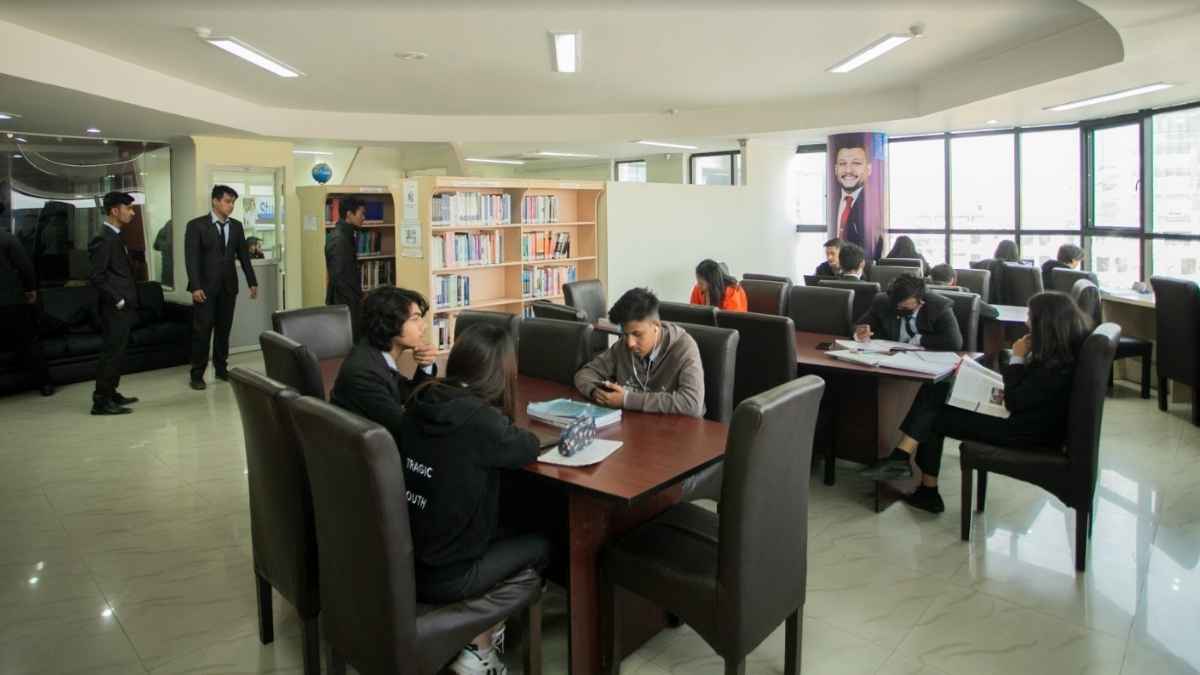
The model is effective. Colleges like TBC lure students with glossy brochures promising “global pathways”. They partner with obscure institutions abroad—such as The Woolwich Institute in Dubai—to lend a veneer of legitimacy. Students are told they will study in Nepal, train in Dubai and then graduate with a British degree. In reality they generally find substandard teaching, as well as decrepit facilities and no sign of the promised internships or jobs. The only consistent element is the relentless extraction of fees, which can reach Rs2m, a life-changing sum for many Nepali families.
When the experience inevitably sours, the fine print emerges. Students discover they signed disclaimers waiving any guarantee of placements. Requests for refunds are met with silence or legal threats. The colleges, usually family-owned businesses with interests in multiple institutions, are structured to profit from the pipeline itself rather than from educational outcomes. The British College’s ownership is a closed family affair: its CEO also runs the Dubai institute where students were sent. This is not education. It is a fully controlled scam.
Why does this persist? Regulatory failure is the obvious answer. Nepal’s Ministry of Education has been slow to act, launching probes only after public protests and reports of student self-harm. Its approval process for overseas programs is leaky, allowing colleges to market courses that lack proper affiliations. But the deeper malady is a market imbalance of hope and information. In a country where youth unemployment is high and public universities are strained, families see expensive fees as a proxy for quality. They are desperate to believe the sales pitch. As one father lamented, “I thought expensive colleges are automatically good. Now I realise how wrong I was.”
The colleges’ political connections provide a further shield. When students protest, their rallies can be dismissed as politicised, especially if party-aligned unions get involved. This muddies the waters and allows administrators to paint real grievances as vandalism or partisan agitation. The real vandalism, however, is the systematic defrauding of a generation’s ambitions and savings.
Cleaning up this mess means the government should come up with a two-pronged approach. First, regulators must move from forming committees to enforcing consequences. Colleges that mislead students should lose their licenses; fees should be held in escrow until promised services are verified. Transparency is non-negotiable: every affiliation, every partner institute and every graduate outcome must be publicly audited. Second, the government must provide credible alternatives. Investing in public vocational and technical education would give students real choices and weaken the monopoly of hope that private exploiters now enjoy.
The youth are betting their futures on education. It is a national scandal that so many are being sold a lie. A country cannot build its foundation on broken promises. For Nepal’s own prospects, the lesson must be learned in the courtroom and the parliament rather than in the classroom. The degree it confers will be one of integrity. ■