Image: Reuters
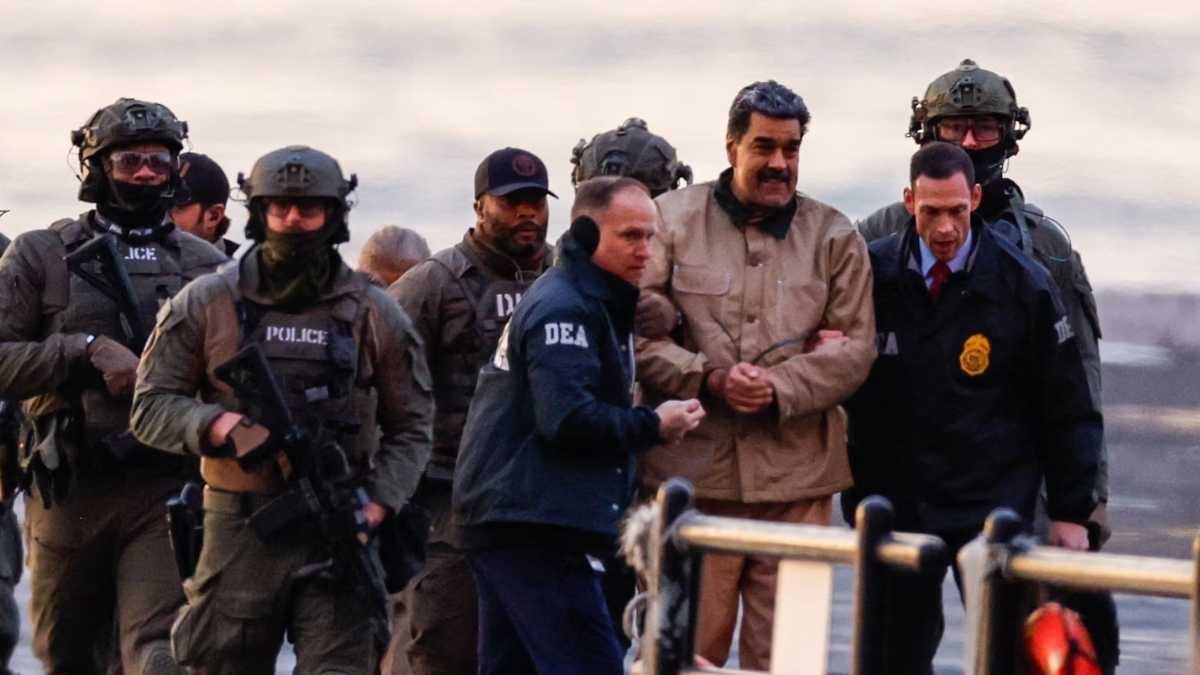
FOR MORE THAN a decade, Venezuela’s deposed leader, Nicolás Maduro, was the unflinching survivor, a bus-driver-turned-autocrat who weathered sanctions, coup attempts and the total ruin of his country’s economy with a blend of thug-like tenacity and Cuban-backed paranoia. On January 3rd that luck ran out in the dark. In a pre-dawn raid dubbed Operation Absolute Resolve, American Delta Force teams snatched Mr Maduro and his wife from their Caracas fortress and whisked them away to a federal courtroom in New York.
The image of a sitting head of state, however illegitimate, appearing in handcuffs before a judge in Manhattan to face drug-trafficking charges is a stunning turn. To his supporters it is a kidnapping; to the Trump administration it is a matter of law enforcement. But to the rest of the world, it marks the ugly end of a long era of diplomatic “drift” in the Americas. Washington is no longer content to wait for regimes to rot from within. It has decided to pick up the sledgehammer.
This is the dawn of what some are already calling the “Donroe Doctrine”. It is a messy blend of the 19th-century Monroe Doctrine, which told European powers to stay out of the western hemisphere, and Donald Trump’s own brand of transactional nationalism. In this new world, the Americas are a U.S. sphere of direct enforcement rather than a collection of sovereign partners.
The logic is brutal. If your country is a source of drugs, a hub for migrants or a playground for Russian and Chinese influence, your sovereignty is no longer an absolute right, meaning it is a lease that can be revoked by the White House. By painting the Caracas raid as a criminal takedown rather than a political regime change, the administration is signaling a new, assertive posture: where American security is “exposed”, American boots will follow.
The consequences are already rippling across the map. In the short term, the United States has achieved what a decade of sanctions could not. The “narco-state” has been decapitated. But as any street cop knows, taking out the kingpin rarely ends the trade: it usually just triggers a bloody scramble for the crown.
Nowhere is the tension more electric than in Colombia. For decades Bogotá was Washington’s most loyal lieutenant in the war on drugs. But under President Gustavo Petro, a former guerrilla who prefers “total peace” to total war, the relationship has soured into open hostility.
Speaking from Air Force One on January 5th, Mr Trump accused Mr Petro of being a “sick man” who oversees “cocaine mills”. When asked if Colombia might be the next target for a Caracas-style “extraction”, the president’s response was a chillingly casual: “It sounds good to me.”
That rhetorical bombast suggests a fundamental reclassification of a key ally into a potential suspect. Mr Petro has responded by ordering his commanders to choose between the Colombian flag and the American one, warning of a “people’s jaguar” that will rise against U.S. interference. If the United States continues to treat the Andes like a domestic crime scene, it risks turning a strategic partnership into a regional insurgency.
Then there is Cuba. For sixty years the Castro dynasty and its successors have survived on the lifeblood of foreign patrons. First the Soviets, then the oil-rich Venezuelans. With Maduro in a New York cell and the American Navy tightening its grip on the Caribbean, the oil tankers from Caracas, Venezuela’s capital, have stopped arriving.
The administration’s hawks, led by Secretary of State Marco Rubio, believe Havana is finally “ready to fall”. They may be right. The island is currently a place of darkness, as the power grid fails and food supplies vanish. Yet a total collapse in Cuba is not a clean victory: it is a recipe for a migration wave that would make the current crisis look like a trickle. Toppling a regime is the easy part, meaning managing the chaos that follows is a grind that Washington rarely has the patience for.
The doctrine extends even further north. Mr Trump’s renewed desire to “take control” of Greenland—justified as a move to block Russian and Chinese ships—shows that this territorial hunger is not limited to the tropics. To the Danes and the Greenlanders, the talk of annexation is an “absurdity”. But after Caracas the laughter in European capitals has a nervous edge. The warning is that if the United States deems a piece of land vital to its security, the owner’s consent is a secondary concern.
Is this a boom for regional stability or the start of a long and violent bust? There is a certain grim efficiency to the Donroe Doctrine. It cuts through the thicket of multilateral talk shops that have failed to stop the rot in Venezuela for years. But it also creates an unpredictable vacuum. The problem with being the only sheriff in town is that eventually, everyone else starts looking like a bandit. A neighbourhood held together by fear is rarely a peaceful one.
Multilateralism is now a dead letter in the hemisphere. The OAS and the UN have been bypassed entirely. When the United States decides that “international law” is whatever it says it is, it invites every other power to do the same. If it can snatch Maduro, why can’t China one day snatch a leader it deems “criminal” in its own sphere? ■