
It’s a shame
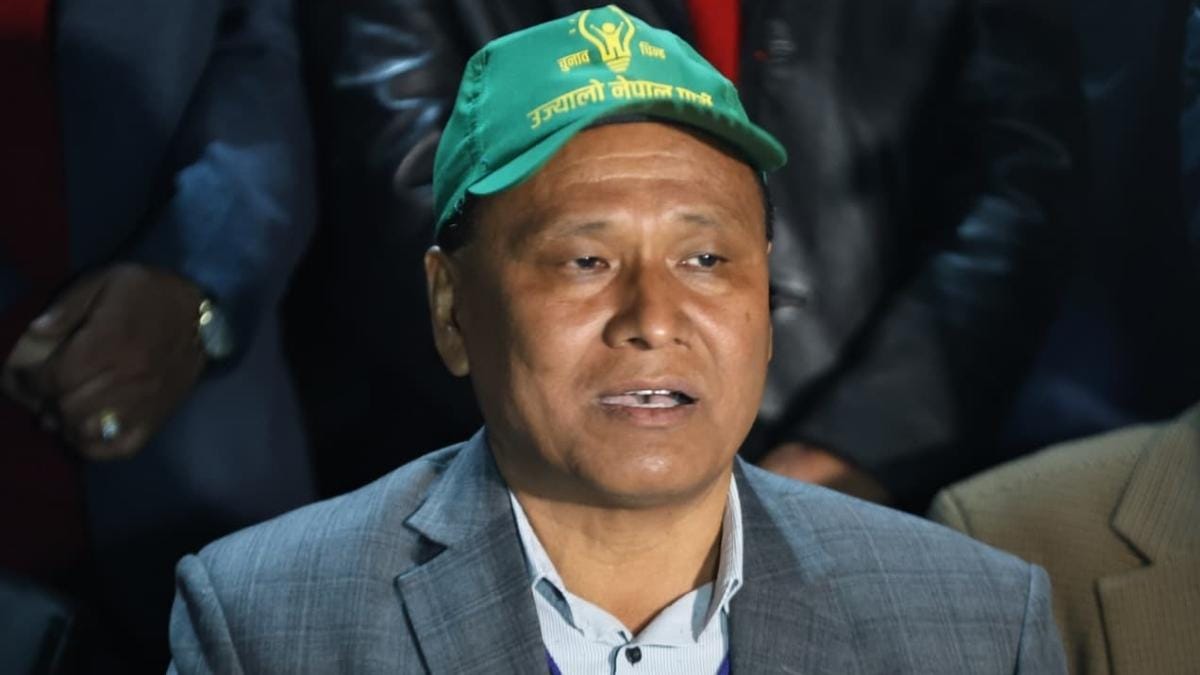
FOR A few days at the end of December, it looked as though the “light-bringer” and the “televangelist” had finally found a way to flip the switch on Nepal’s gloom. The merger of the Rastriya Swatantra Party (RSP), led by the populist former broadcaster Rabi Lamichhane, and the Ujyalo Nepal Party (UNP), headed by the technocratic hero Kulman Ghising, was heralded as a big shift. Mr Ghising, who earned the nation’s eternal gratitude for ending the chronic power cuts that once choked Kathmandu, appeared to be the perfect ballast for Mr Lamichhane’s high-velocity and often erratic political rise. To the young protesters who had filled the streets in the “Gen Z” rallies, this was the dream ticket: a union of charisma and competence.
Yet the reality was far messier. The marriage lasted just twelve days. On January 10th the alliance dissolved in a flurry of recriminations, leaving the two parties further apart than they were when they started. To the disillusioned voter, it looked like a classic Nepali farce. To the established “syndicate” of ageing revolutionary leaders who have run the country for decades, it was a gift. The collapse of the merger suggests that the “new” politics of Nepal is suffering from the same rot as the old: a chronic inability to put institutional rules above personal ego.
Mr Ghising, who resigned his ministerial posts on January 7th after a brief stint in government, has since offered a stinging autopsy of the failure. His version of events is a study in political naivety meeting cold-blooded opportunism. According to the UNP leader, his party entered the merger with its hands open and its guard down. He claims he offered to surrender almost everything—status, leverage and even his own rank—for the sake of a unified front. He was even willing to stay an ordinary member of the RSP, provided his team was given a fair shake in the party’s central committee.
In the cynical world of Kathmandu’s backrooms, however, flexibility is rarely seen as a virtue: it is seen as blood in the water. Mr Ghising says that the RSP began to treat the UNP’s concessions as weakness to be exploited rather than as goodwill. While the public celebrated the union, the internal reality was a 12-day “holding pattern”. Discussions dragged on without decisions. The unwritten understandings that underpinned the December 29th agreement—the vital “gentleman’s agreements” that oil the wheels of Nepali politics—were ignored.
The most egregious breach, in the UNP’s telling, concerned the proportional-representation (PR) lists. In Nepal’s electoral system, these lists are the ultimate currency of patronage. The merger was finalised on the very last day for PR registration, a timing that now looks calculated. By the time the UNP realised the RSP had no intention of honouring their verbal commitments regarding seat placements, it was too late. The UNP was frozen out: its own list unregistered, and campaign momentum shattered. Mr Ghising’s team felt they had been invited not to a partnership but to their own funeral.
Beneath the squabble over seats lay a more fundamental rift over what the “new politics” actually stands for. Mr Ghising laments the core disagreement was about values. The UNP wanted explicit commitments to inclusiveness as well as federalism and constitutional principles. They wanted a party built on a programme rather than just a personality. The RSP, which has leapt to prominence by being everything to everyone, initially agreed to these basics only to back away when it came to the crunch. It turns out that claiming to be “post-ideological” is just an excuse for lacking direction.
The consequences of that divorce are grim for those hoping for a stable alternative to the status quo. By unilaterally announcing the end of the merger on January 10th, the RSP has signalled that it believes it can go it alone. That is a gamble. Mr Lamichhane has the gift of the gab and a formidable social-media machine, but he lacks the administrative depth that Mr Ghising provides. For his part, Mr Ghising is now forced to run a nationwide campaign from a standing start, fielding candidates in all 165 constituencies with a party that was nearly swallowed whole by its supposed ally.
All this farce points to a bigger truth about the nature of power in Nepal. The country’s political culture is built on the “big man” model. Whether it is the grizzled veterans of the Maoist insurgency or the fresh-faced outsiders of the RSP, the instinct remains the same: power is something to be captured and held tightly; you don’t share it or institutionalise it. The “new” parties have mimicked the very vices they decry in the old guard. They bargain for posts; they ignore their own cadres; and they treat written agreements as mere suggestions.
Mr Ghising’s appeal to the public is poignant. He asks for the same trust he earned when he brought light to the country’s homes, promising delivery and integrity. But politics is not a power grid. It cannot be fixed by a single brilliant technocrat with a wrench and a plan. It requires the slow, grinding work of building institutions that are stronger than the men who lead them. The 12-day merger failed because it was a deal between two leaders rather than a union of two organisations.
The tragedy of the RSP-UNP collapse is that it validates the cynicism of the old guard. The veteran leaders of the Nepali Congress and the UML, who have spent decades perfecting the art of the cynical alliance, will be laughing in their villas. They know that as long as the reformers are busy stabbing each other in the back, the syndicate is safe. Nepal’s “Gen Z” protesters wanted a revolution of transparency and cooperation. What they have rather received is a masterclass in the same old zero-sum games.
The result of this brief, ill-fated experiment is a fractured opposition and a confused electorate. If the light-bringers cannot learn to share the stage, Nepal is destined to remain in the political dark for a long time to come. ■




