
CATCH A WAVE
SHER BAHADUR DEUBA, the ageing boss of the Nepali Congress, has been prime minister five times. At 79, that is either an astonishing feat of survival or proof that no one else was fit for the job. He has weathered civil wars, royal coups and the fractious leap to a federal republic. Yet as he lingers in his residence in Budhanilkantha, the gravest threat to his career is not the rival communists, but his own party. A generational insurgency is bubbling, determined to tear down the cosy networks of influence that have let Nepal’s largest party drift without direction for decades.
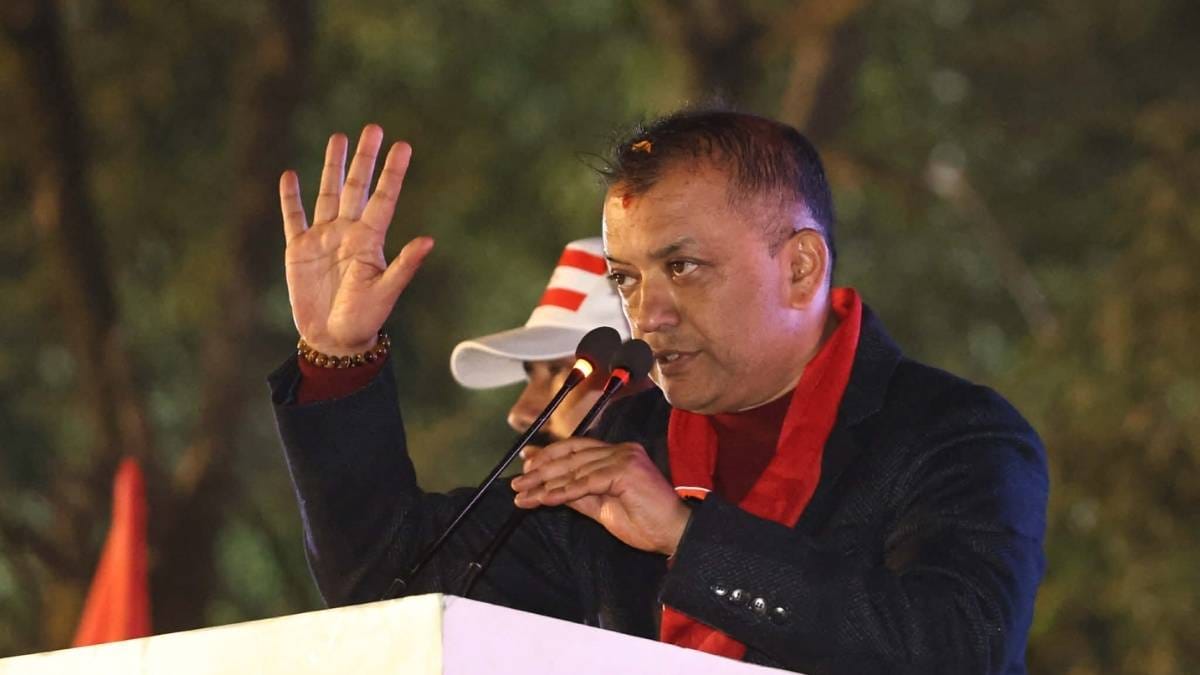
The flashpoint arrived on January 11th, when the “special general convention”—a rare party meeting called to choose leadership outside the usual schedule—opened at Kathmandu’s Bhrikutimandap auditorium. Mr Deuba did not want this meeting and spent months trying to delegitimise it. Party rules, however, leave him little choice: if 40% of the party’s voting members demand a convention, the leadership must comply. Gagan Thapa and Bishwa Prakash Sharma, the insurgent general secretaries—second only to the president in formal authority—brought in signatures from more than 2,350 representatives, comfortably over half the party’s delegates.
This is not a mere squabble over titles. It is open-heart surgery on a sclerotic institution. The reformers are spurred by existential dread. On September 8th last year, Gen Z-led protests paralyzed Kathmandu, exposing a public fed up with the old political class. Parliament dissolved, Sushila Karki took the reins as interim chief, and elections were set for March 5th. The NC fears it will be swept aside by a wave of populist anger unless it can convince the country it has changed.
The insurgents’ manifesto reads like a blueprint for radical housekeeping. Two-term limits for prime ministers; a one-time rule for proportional representation seats to stop careerists cycling endlessly through parliament; and a high-level audit of all officials’ wealth—including judges and generals—stretching back to 2006. For an establishment built on doling out state largesse, such measures feel like self-inflicted pain rather than reform.
Mr Deuba’s camp argues that a convention so close to an election risks splitting the party. They would rather wait until May, after the ballots are cast. But the insurgents counter that a party led by a five-time premier cannot credibly ask the youth for another chance. They want a new Central Working Committee—the party’s core decision-making body—and a clear promise of generational change before the first vote.
Legally, the special convention’s status is disputed. Mr Deuba loyalists point to a two-thirds majority requirement to dissolve an elected executive. A stalemate in the courts or at the Election Commission is possible. On the ground, however, reality is shifting. Some senior figures are quietly exploring compromise: perhaps Mr Thapa as the party’s prime ministerial candidate while Mr Deuba retains a symbolic presidency.
Whether such a truce can hold is uncertain. The NC has a long history of splits and reunions. What is different today is the context: past fights were about democracy’s survival. Today the party must show that democracy can deliver. Fail and the “anarchists” of Kathmandu may decide the whole system is surplus to requirements. Mr Deuba might survive the storm but the party he leads is running out of time to catch the tide. ■




