
IMAGE: THE KATHMANDU POST
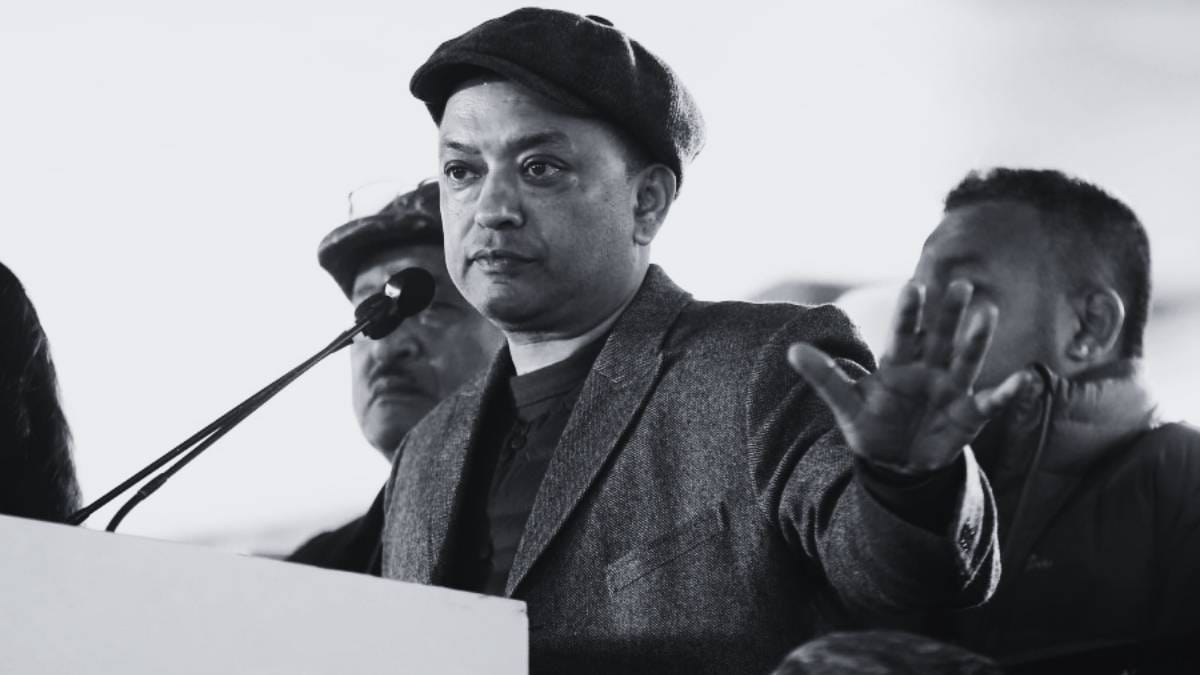
ON THE afternoon of January 14th, politics in Kathmandu acquired a double life. Inside the party headquarters in Sanepa, the establishment faction of the Nepali Congress, led by Sher Bahadur Deuba, formally suspended two top leaders, Gagan Thapa and Bishwa Prakash Sharma. Both are general secretaries, second only to the president in formal authority. Both are now out in the cold for five years. Across town at the Bhrikutimandap exhibition centre, the suspended men continued their “special general convention” regardless. It was a scene of parallel realities. In one room sat the formal authority of a five-time prime minister. In the other sat the energy of a younger generation that believes the clock has run out.
The trigger for that rupture was ostensibly procedural. Mr Deuba’s camp accuses the duo of convening a rogue gathering without the consent of the central working committee, the party’s core decision-making body. In the logic of the party’s bureaucracy, this is a constitutional crime. Yet the insurgency has its own legal shield. Party rules allow for a special convention if 40% of members demand one. Mr Thapa argues he has the numbers. Mr Deuba argues that only the sitting executive can authorise a change in leadership. Both sides are following the rules, but they are reading from different books.
This is not a debate over bylaws but a panic over survival. Nepal is currently governed by an interim administration. Parliament has been dissolved. Street protests led by a restless Gen Z brought the capital to a standstill last September. Elections are looming in March. For the reformers, the calculation is that leading the party into a national vote behind a 79-year-old who has dominated the party for three decades is electorally suicidal. New, populist parties are nibbling at the Congress vote bank. To Mr Thapa and his supporters, reform is a matter of avoiding extinction.
The establishment sees things differently. To Mr Deuba’s loyalists, the insurgents are reckless. They fear a pre-election convention will shatter the party’s delicate network of local candidates and confuse voters. There is also the matter of the party’s internal economy. The Nepali Congress functions as a vast distribution network for tickets, appointments as well as access to state resources. Mr Thapa’s platform includes wealth audits and term limits. To many senior figures, these are threats to a professional way of life. When reform attacks the patronage system, the system bites back.
The suspension of the general secretaries is the ultimate institutional weapon. By stripping Mr Thapa and Mr Sharma of their status, Mr Deuba intends to invalidate their convention retroactively. It is an attempt to ensure that when the Election Commission looks at the party symbol—the famous four stars—it sees only one legitimate claimant. If the establishment can hold the brand, they reckon the rebels will eventually wither.
Yet the rebels show no sign of wilting. Mr Thapa has rejected the suspension. He claims a majority of the delegates and democratic legitimacy. This sets the stage for a messy, two-headed monster to enter the March elections. If the Election Commission or the courts do not intervene fast, voters will face a choice between two versions of the same party. One will hold the legal name. The other will hold the youthful energy. History suggests that in such contests, the brand usually wins the office while the energy wins the future. In the short term, however, a split almost guarantees a drubbing.
The tragedy of the Nepali Congress is that it has been here before. It has survived splits, royal coups and Maoist insurgencies. But the world outside Sanepa has changed. The voters who took to the streets in September do not care about the internal hierarchy of a party born in the 1940s. They want jobs, stability and a government that functions in the digital age. By retreating into a battle over technical legitimacy, the party leadership risks appearing like a group of elderly captains arguing over the seating chart while the ship nears the falls.
A last-minute compromise is always possible in the fluid world of Nepali politics. Perhaps Mr Deuba could remain a ceremonial patriarch while Mr Thapa becomes the face of the campaign. But trust has faded. The suspension was a psychological point of no return. For now the oldest democratic force in Nepal is a house divided. If it cannot reconcile its past with its future, the electorate may decide that it has no place for either. The party of the revolution is riskily close to becoming a relic. Mr Deuba may keep his gavel but he may find he has very little left to hit with it. ■




