
IMAGE: SETOPATI
THE BLACKENED front of Singha Durbar, Nepal’s main seat of government, captures a sharp change in the public mood. Protesters set it alight last September. Many were young, angry at a clumsy social-media ban and fed up with decades of bad rule by the same rotating parties. The violence killed dozens, forced out a prime minister and left a political vacuum. The Rastriya Swatantra Party (RSP), a young populist force, has moved quickly to position itself as the main beneficiary of the chaos.
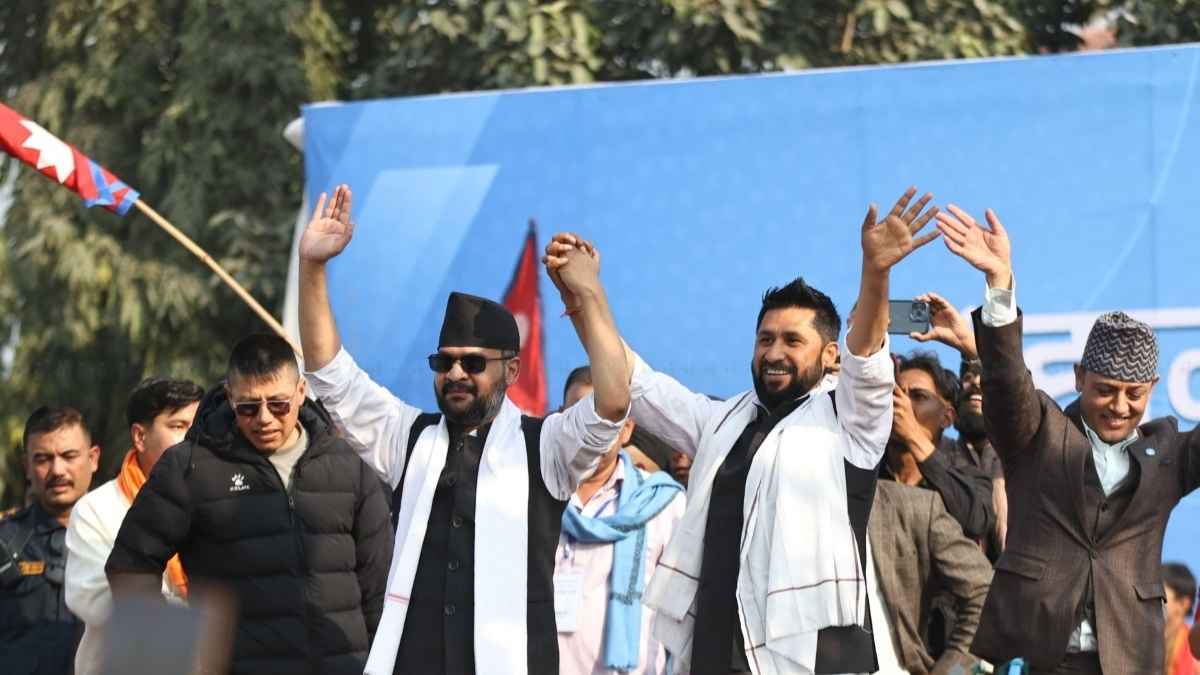
Now joined to the personal appeal of Kathmandu’s former mayor, Balendra Shah, the party appears to have the upper hand ahead of the snap election on March 5th. It promises to clean up a rotten system. What it is more likely to do is weaken the checks and limits that keep Nepal democratic.
The RSP’s rise is not difficult to explain. It speaks to a deep frustration with the Nepali Congress and the communist UML, parties that have treated the state like shared property for 30 years. Their feuding and favour-trading slowed progress even after a long civil war and the birth of a federal republic in 2015. Led by Rabi Lamichhane, a former television star who knows how to command attention, the RSP talks directly to the urban young people who filled the streets. It does not promise gradual fixes but a full break with the past. The language is of “cleansing” not repair. But look closely at its plans and the ambition goes much further than policy change. The party wants to remake the state itself, pulling power towards the centre in ways that would make future governments harder to challenge and opponents easier to punish.
Start with the constitution. One of the RSP’s key proposals is to scrap the Constitutional Council, which recommends appointments to bodies meant to keep the state in check, such as the anti-corruption commission and the election authority. The council exists to spread power. It includes the prime minister but also the chief justice and the leader of the opposition. The RSP wants to replace this with a straight parliamentary vote. If the party controls parliament, that would give the executive free rein to appoint the very institutions meant to oversee it. This is a pattern seen elsewhere. In countries like Hungary and Poland, capturing watchdog bodies was an early step towards hollowing out democracy while keeping elections intact.
The plan goes further. The RSP wants to set up a powerful new Anti-Corruption Police force, controlled by an anti-corruption commission that the party itself would likely dominate. Alongside new whistle-blower laws, this is presented as a tough answer to graft. In reality it looks like a tool that could be used selectively. The RSP constantly describes the old parties as criminal networks. Giving a politically aligned body its own police arm would make it easy to target rivals and civil servants linked to past governments. What is sold as “cleaning up” starts to look like settling scores through the courts.
These fears are heightened by the legal troubles of the party’s own leader. Mr Lamichhane is facing cases in five districts over alleged financial wrongdoing including claims that large sums were taken from cooperative savings schemes. He denies everything and says the cases are a political attack by the old establishment. The party’s response to unfavourable court decisions has been revealing. When a judge upheld his detention last year, the RSP leadership dismissed the ruling as “baseless” and argued the matter was civil not criminal. From there, it is not a big leap to action. The party also wants to “restructure the judiciary”, including changing how judges are appointed and disciplined. A government convinced the courts are biased could easily use such reforms to pressure judges into line.
The alliance with Balendra Shah, widely known as Balen, piles up yet another risk. He is a striking figure: a rapper-engineer who thrives on confrontation and plays extremely well on social media. As mayor, he once threatened to “burn Singha Durbar” after a small dispute with the police. He later hung a “Greater Nepal” map in his office, showing parts of India as Nepali territory, a pointless and provocative nationalist gesture. His style of rule is built on provocative acts and public drama rather than disciplined administration. He prefers viral orders to negotiation. As a national leader, that impatience with process and taste for inflammatory language could easily lead to constitutional standoffs and diplomatic flare-ups. What worked to clear rubbish in Kathmandu could cause serious damage when applied to the state as a whole.
There is a serious contradiction at the centre of the RSP project. It claims to represent a new kind of politics; yet inside it shows old habits of secrecy and central control. Promises of internal democracy have faded. Sumana Shrestha, a respected lawmaker seen as a genuine reformer, stepped down from a senior role, saying the party had become centred on one person, where only the voices of Mr Lamichhane mattered. The selection of parliamentary candidates for the March election has also drawn criticism with claims that relatives of wealthy business figures and those able to pay huge sums were favoured. The party that ran on being “clean” already appears to be building its own web of money and influence.
That is the real danger for Nepal. The anger that exploded onto the streets last September was justified. The system has failed too many people for too long. But that anger is now being channelled by a party whose answer to broken institutions is not to fix them, but to take control of them. The RSP projects a powerful vision of renewal. Its actual plans point elsewhere: towards a state where police and prosecutors are turned against a newly defined enemy; where oversight bodies answer to the ruling party; and where strong personalities brush aside inconvenient rules in the name of the people. It would swap a messy system of competing interests for a single dominant force. The old parties were deeply flawed, but they checked each other, and those checks mattered. The RSP wants to remove them.
Nepal’s democracy has survived the monarchy, a brutal civil war and repeated natural disasters. Its next challenge may be no less serious: choosing a party that speaks fluently about democratic change while using that language to build something far less democratic. The desire for renewal is real and necessary. But cures can sometimes do more harm than the disease. ■




