IMAGE VIA ONLINEKHABAR
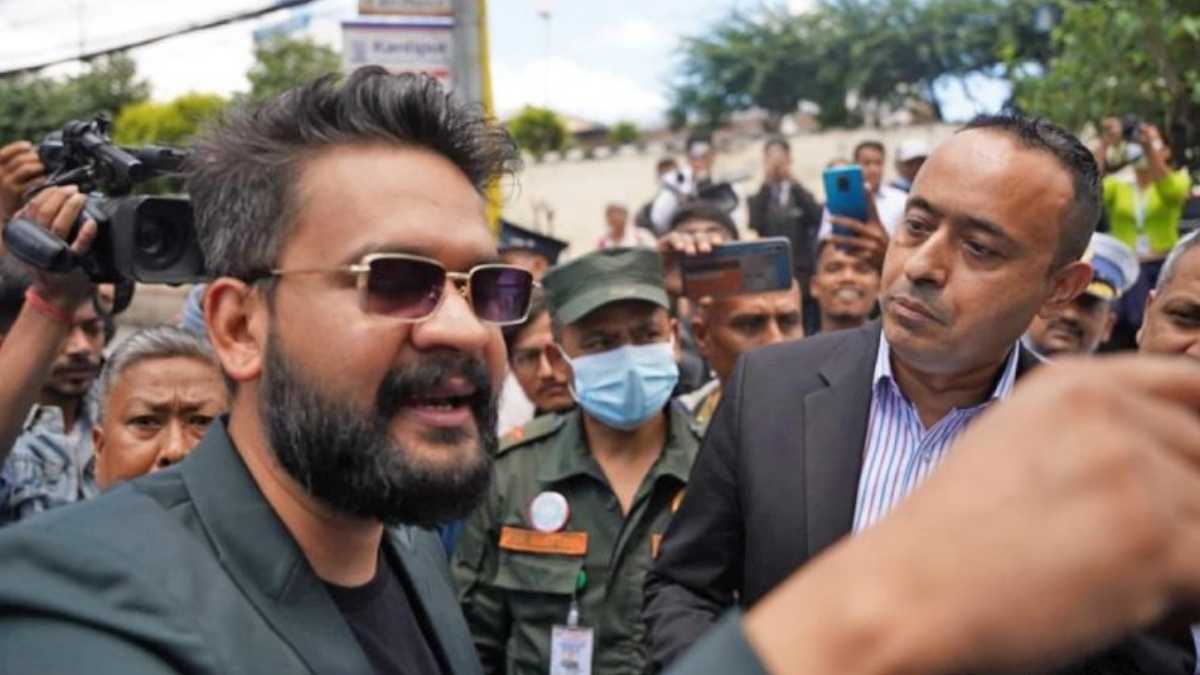
THE MAYOR’S office in Kathmandu for years was where political careers went to idle. It was held by party loyalists who oversaw municipal contracts while the city’s temples darkened and its concrete spread. Then came Balendra Shah. In 2022 the structural engineer and underground hip-hop artist, known universally as Balen, smashed his way into city hall as an independent. Instead of relying on party support, he won with a smartphone, a 28-point manifesto and the anger of a younger generation. His resignation on January 18th, to run for parliament and ultimately the prime minister’s office, was a logical next step, true, but it was also a betrayal. It confirmed his triumph as a political disruptor. It also exposed the limits of that disruption.
Balen’s victory gave Kathmandu a sense of release. He defeated candidates from the Nepali Congress and the communist UML by an extraordinary margin, a scathing verdict on the entrenched political class. His appeal was built on a compelling duality. Here was a technically trained problem-solver who promised to engineer solutions for the city’s legendary waste and traffic. He was also a cultural insurgent whose rap lyrics excoriated the very corruption and complacency he vowed to eradicate. He offered competence and rebellion in one package. For a city choking on pollution and cynicism, it was an irresistible formula.
His early months were busy. He brokered a deal to reopen a critical landfill, ending a garbage crisis that had festered for months. He launched an “infrastructure ambulance” service for potholes. He live-streamed municipal meetings, injecting unprecedented transparency into the council chamber. The budget grew, and not a whiff of personal corruption touched him. To his ardent supporters, particularly the young, he was a hero simply for being different—for refusing to play the old game. He governed, as one admirer put it, like a man who had read the manual for a modern city and was determined to follow it.
Yet manuals can be misleading. The first uncomfortable question Balen’s success provokes is whether the performance of governance can eclipse its substance. Take waste management, his flagship issue. He promised a technological revolution: composting 70% of waste and incinerating the rest. The reality was less transformative. The composting system never materialised. The incinerator plan was quietly dropped. Kathmandu’s cleanliness improved mainly because garbage collection resumed at the federal government’s new landfill site, an infrastructure project completed before Balen took office. His administration managed the flow of waste but did not reinvent it.
A similar pattern emerged elsewhere. He promised to wash the wheels of vehicles entering the city to curb dust. It never happened. Dust levels did fall but largely because major road construction projects nearby finally ended. He pledged a unified public transport system and electric buses. Kathmandu’s streets remain a chaos of private minibuses. He spoke of a pedestrianised core and revived heritage. The historic Sundhara water spout continued to decay while the smaller cities of Lalitpur and Bhaktapur executed more coherent conservation plans. Balen was a master of the visible, single-point intervention—the filled pothole, the cleared footpath on New Road. The complex, systemic reforms needed to truly remake a city tended to elude him.
That gap between promise and delivery points to a wider flaw: a technocrat’s arrogance blended with a populist’s disregard for process. Balen displayed a deep confidence in his own prescriptions, brushing aside expert caution. He communicated directly with millions on social media, adopting a “zero interview” policy with the traditional press. This cut out the critical middlemen of democracy, the journalists and civil society groups who ask inconvenient questions. His decision-making grew insular, confined to a tight circle of aides. When his metropolitan police cleared street vendors with aggressive force, it was done in the name of a “clean city”. Human-rights activists documented assaults on some of Kathmandu’s poorest workers. The mayor’s vision of order, it seemed, had little room for those who disrupted the aesthetic.
His relationship with other pillars of the state was full of perpetual confrontation, too. He once threatened to “burn down” Singha Durbar, the federal government secretariat, after a personal grievance. He stopped collecting its garbage in a fit of pique. He installed a “Greater Nepal” map in his office to needle India, and briefly banned Indian films over a historical slight, defying a court order until contempt proceedings loomed. These acts played brilliantly to a base weary of a pliant political establishment. They were celebrated as the actions of a man who would not be pushed around. But they also revealed a style of governance built on perpetual conflict, ill-suited to the patient bargaining of federal politics or the complexities of international diplomacy.
All those contradictions have converged in his audacious leap to national politics. The September 2025 protests, a youth-led explosion of anger against the government, became his springboard. While not the organiser, he was its natural symbol. He has now joined the Rastriya Swatantra Party and is its prime-ministerial candidate. In seeking a national mandate, however, he has performed a series of sharp reversals that lay bare the opportunism beneath the iconoclasm.
In a recent speech in Janakpur, a city in the southern Madhes region, Balen declared himself a “son of Madhes” for the first time. That was notable because he had previously downplayed this identity, even reportedly rejecting the “Sah” surname common in the region. The Madhes, a plains area long marginalised by the Kathmandu elite, is now electorally critical for him. His newfound identity seems more like a choice than a homecoming.
In the same speech, he called for strengthening federalism, devolving power from Kathmandu to the provinces. This is striking because as mayor he was openly dismissive of federalism, and in 2022 he refused to vote in provincial elections. For many in the Madhes, where decades of agitation and scores of lives were sacrificed for federal rights, this is a deeply emotional issue. Balen’s conversion seems conveniently timed. He also suggested bringing ten million tourists a year to Janakpur—a fantastical number given that Nepal as a whole receives about one million. It was a moment of pure political romance, untethered from data.
These pivots prompt the second uncomfortable question: does Balen embody a new kind of politics or merely the old kind with a new face? He has courage and personal integrity, assets in short supply. Yet his journey from independent mayor to party-standard-bearer, his shifting identities and fluid principles, look familiar. They are the moves of a politician adapting to survive and grow. The packaging is modern, all social-media feeds and hip-hop attitude. The core content—grand promises and tactical repositioning—is classic.
Balen Shah’s success holds up a mirror to Nepal’s young democracy. It reflects a strong and healthy hunger for change; for competence; and for leaders untainted by a corrupt past. His rise was possible because the old parties failed spectacularly to deliver. But the reflection also shows the perils of confusing a mood for a movement, and a persona for a programme. He proved a brave outsider could storm the gates of power. His mayoralty, however, suggests that governing a complex state means you need more than bravery and outsider status. You need coalition-building; policy discipline; and a commitment to institutions over one’s own image.
The final awkward question is for voters. They once backed Balen as a remedy for a broken system. Now he is asking for vastly greater power. His mayoral record provides evidence both for and against him. It shows he can inject energy and honesty. It also shows a tendency for overreach, as well as a struggle with implementation and a disquieting flexibility of conviction. His success was a symptom of his country’s political sickness. It is doubtful whether he is the cure. The fear is that Nepal may trade the failures of the old politics for the seductive, unmet promises of the new. ■