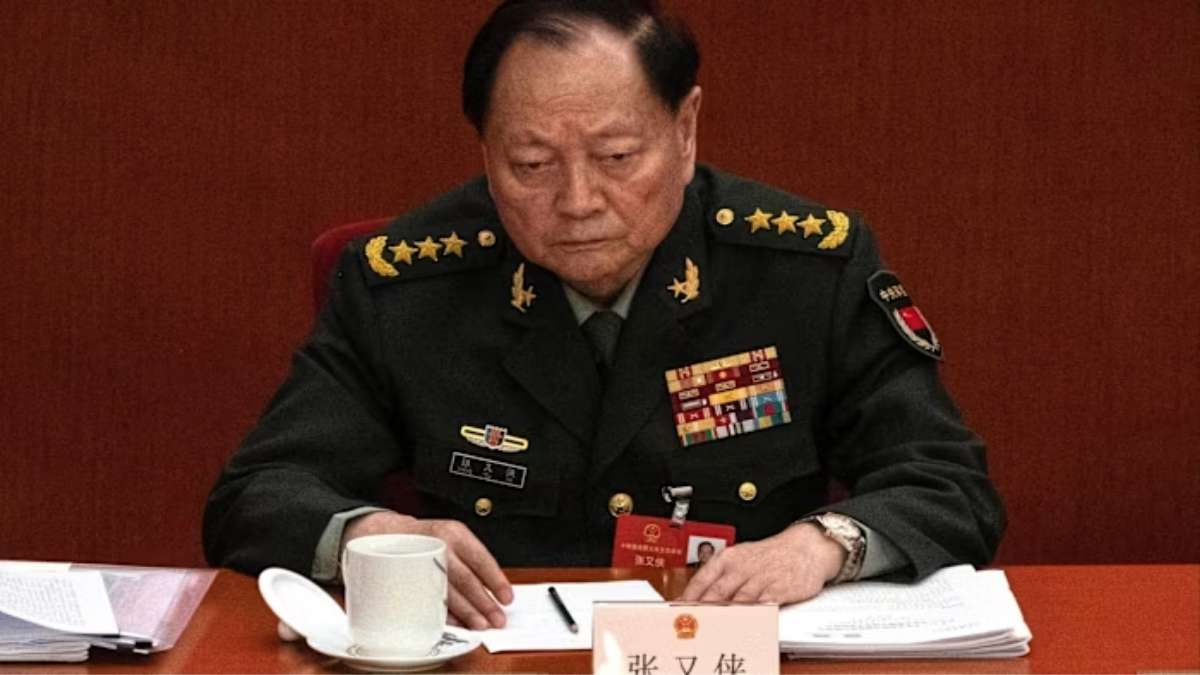
IMAGE: GETTY IMAGES
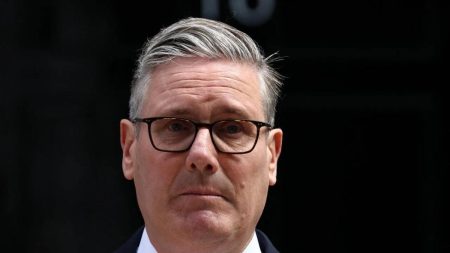
THE GREAT HALL of the People in Beijing is a place where absences matter more than presence. In Chinese high politics, the seating plan is the clearest map of power. Lately that map looks surprisingly empty. The latest figures to vanish are General Zhang Youxia (pictured above) and General Liu Zhenli, the last senior military leaders to survive a decade of purges. Their removal leaves the Central Military Commission (CMC), China’s top military body, smaller than ever. Where once a committee of generals oversaw the country’s security, there is now only Xi Jinping and a single political commissar, Zhang Shengmin, left in charge.
It is the most dramatic shake-up in the Chinese military since Mao Zedong’s final, chaotic years. Since becoming China’s leader in 2012, Mr Xi has systematically broken down the power networks built by his predecessors. But the latest round is different. In his third term alone, fifteen of the seventy-nine generals he promoted have disappeared from view or are under formal investigation. In earlier times, leaders purged officials from past regimes to install their own men. Mr Xi is now removing the men he personally chose.
Zhang Youxia’s fall is particularly troubling. He was not a minor figure. A war hero from Vietnam in the early 1980s, he was one of the most respected officers in the People’s Liberation Army (PLA). He was a “red princeling”, the son of one of the Communist revolution’s founding fathers, and his family ties to Mr Xi were close: their fathers fought together in the civil war. Zhang was seen as Mr Xi’s key ally in modernising the military. His disappearance shows that even deep revolutionary roots provide no protection in today’s climate of mistrust.
The official charge against these men is “serious discipline violations”, a phrase usually meaning corruption. And corruption is not hard to find. The PLA is the party’s army rather than a state army in the Western sense. Since 2012 Mr Xi has doubled military spending to around $296bn. Such a rush of cash, spent on missiles, ships and stealth aircraft, naturally encourages graft. American intelligence has reported that corruption in the Rocket Force, which controls China’s missiles, became so bad that some missiles were reportedly filled with water instead of fuel.
But corruption tends to be just an excuse. For Mr Xi, the military is the guarantor of his “national rejuvenation”, a project with an ever-sharper deadline. He has ordered the PLA to be able to take Taiwan (China considers it a breakaway province that must eventually be reunited with the mainland) by force by 2027. That creates intense pressure. If Mr Xi suspects his generals care more about personal gain than preparing for a major conflict, he will act ruthlessly. The purges of the Rocket Force and the disappearance of Li Shangfu, the shortest-serving defence minister in China’s history, show doubt about the army’s readiness.
There is also a psychological element. Mr Xi seems strongly worried about foreign interference. He regularly warns of the CIA’s “black hand”, blaming it for everything from Hong Kong protests to unrest in Xinjiang. In that view, any general with a wide network or independent thinking is a possible traitor. Sweating officers like Zhang Youxia is a way to find anyone who might be more loyal to a commander than to the chairman.
The cost to the military is high. Dennis Wilder, a former CIA analyst, points out that no modern army can operate this way. Replacing almost the entire top command leaves a force paralysed. The PLA is now a headless giant. Pilots can still fly, sailors can still sail, but the top-level strategic decisions fall to a single civilian leader who has never worn a uniform. That creates a dangerous loop: subordinates are too scared to report bad news and the leader is too isolated to hear it.
There is unease within the party as well. Many members are said to be alarmed at the furious pace of purges and the concentration of power. When a leader removes his own allies, it sends a warning that no one is safe. Fear keeps people in line for now, but it breeds quiet resentment that waits for a moment of weakness. Order holds but it is fragile.
The effects on the region are unpredictable. A military in crisis is unlikely to mount a complex amphibious invasion of Taiwan soon. Such an operation requires trust and coordination, which are currently lacking. Yet Mr Xi may feel the need to show strength, to hide domestic weakness. That could mean a tougher stance in the South China Sea or towards the Philippines, proving the PLA can still fight despite the chaos at the top.
Mr Xi’s attempt to build a perfectly loyal and competent army has trapped him in trouble. By removing the old guard, he has also stripped the military of experience and professional skill. He now has complete control, but he has done it by hollowing out the very organisation he expects to command in battle.
As the 2027 deadline approaches, the gap between ambition and reality will widen. Mr Xi has ensured no one in the barracks can challenge him. But he may also have created an army better at passing political loyalty tests than winning a modern war. Absolute power, it seems, is a lonely and inefficient business. Mr Xi sits at the top of the pyramid, but the stones under him are being pulled out one by one. ■