
IMAGE: NRB
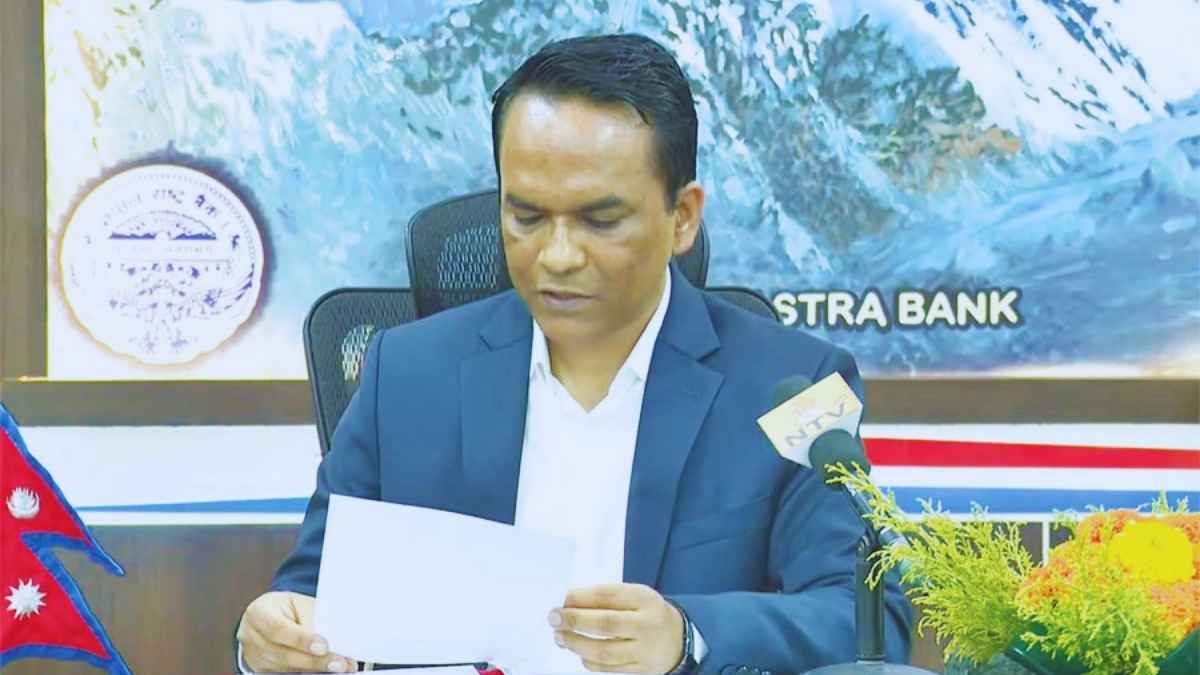
WHEN THE Nepal Rastra Bank cut its policy rate to 4.5% last July, shares in Kathmandu jumped. The stock market surged some 8% in less than a fortnight. Property agents fielded calls from buyers who had vanished for two years. Biswo Nath Poudel, the central bank’s new governor, had delivered what the business lobby demanded: cheap money. Yet Nepal’s economy, flush with $22bn in foreign reserves and inflation at a welcome low, still refuses to grow.
The puzzle is awkward. Mr Poudel, a Berkeley-trained economist, inherited an institution rebuilt by his predecessor, Maha Prasad Adhikari. Over five grinding years, Mr Adhikari steadied Nepal through a pandemic, rapidly plummeting reserves and global inflation triggered by the Ukraine war. He left behind ample reserves, digitalised payments and a functioning central bank. What he did not leave was growth. Private credit expanded by barely 7% last fiscal year. Firms hesitated to take on new loans while past borrowers, burdened by previous debts, focused on repayment. The conundrum of excess liquidity amid economic torpor became Mr Poudel’s inheritance.
Mr Poudel’s response has been to loosen. The rate cut is only part of it. Before eliminating the cap last October, he raised the ceiling on share-backed loans from Rs150m to Rs250m, allowing punters to borrow more against equities. Housing loans have been sweetened: first-time buyers can now borrow Rs30m at 80% loan-to-value, up from Rs20m. Working capital rules, despised by manufacturers for throttling credit during the downturn, have been softened. The nudge is: take on debt, invest in infrastructure and purchase the assets that will drive the economy forward
Critics call this reckless. Nara Bahadur Thapa, a former central bank executive, warns that inflating share prices is not the same as financing factories. Nepal’s stock market is volatile: pumping credit into it risks a bust. Housing, too, is problematic. Kathmandu’s property market is already speculative. Easier loans may enrich landlords without building the industrial base Nepal needs to escape its remittance trap. The worry is that Mr Poudel is treating symptoms—low asset values, sluggish sentiment—rather than the disease: a shortage of productive investment.
Yet the governor’s defenders have a point. Nepal’s problem is not a lack of savings but a surfeit of fear. Banks hold Rs700bn in loanable funds, by some estimates, with nowhere to lend them. Businesses, scarred by years of political chaos and subdued demand, refuse to invest. In such a world, monetary policy must jolt psychology. Share and property markets, however imperfect, are visible. A rising stock index signals optimism. A recovering property market suggests confidence. If Mr Poudel can revive those, wider investment may follow.
The real test is whether that works. Annual inflation, at 1.55%, gives Mr Poudel room. Foreign reserves, covering 18 months of imports, provide a cushion. But the signs are mixed. Credit growth ticked up slightly in recent months yet remains far below the 12% target. The stock market’s rally may already be fading. And the structural problems such as poor infrastructure and political instability remain. No amount of cheap credit will fix those.
There is also a question about central-bank independence. Mr Adhikari fought openly with finance ministers; was briefly suspended; and defended monetary orthodoxy with guts. Mr Poudel, by contrast, speaks warmly of “dialogue” and “coordination” with the government. That sounds mature. It may also signal a shift towards fiscal dominance, where the central bank’s job becomes financing the state’s ambitions rather than safeguarding stability. Nepal’s placement on the global money-laundering watchlist adds urgency: lax supervision now could invite sanctions later.
The trouble of Nepal’s economy reflects a bigger truth about developing countries. Money alone does not create prosperity. Credit does not guarantee investment. A central bank can lower rates, but it cannot compel entrepreneurs to take risks. Mr Poudel’s market-first stimulus is a gamble that cheaper money will rekindle animal spirits. It may work or it may simply reflate assets while the real economy stagnates, leaving Nepal trapped in a cycle of remittance dependence and speculative froth.
The answer will come not from Kathmandu’s stock tickers but from factory floors and hiring queues. If credit starts flowing into manufacturing, if firms begin expanding, if the jobs return, Mr Poudel will have earned his gamble. If, instead, shares soar while growth sputters, Nepal will have learned an expensive lesson: that reviving an economy takes more than cutting rates and hoping. ■
Corrections (Jan 30th 2026): An earlier version of this story said the ceiling on share-backed loans was raised from Rs150m to Rs250m. Last October the cap was removed.





