
IMAGE VIA CRYPTOSLATE
BITCOIN HAS shed more than a quarter of its value this year. On Thursday it sank below $65,000, erasing every dollar of gain made since Donald Trump’s election victory in November 2024. The self-proclaimed “crypto president” watched as his favoured digital asset retreated to where it was before his win, alongside a wider sell-off in American technology shares.
The parallel slide reveals an inconvenient truth. Cryptocurrency, marketed as a novel, uncorrelated asset, is behaving just like the most speculative corner of the equity market. Both are suffering from the same ailment: the unwinding of leveraged positions and a flight from risk assets.
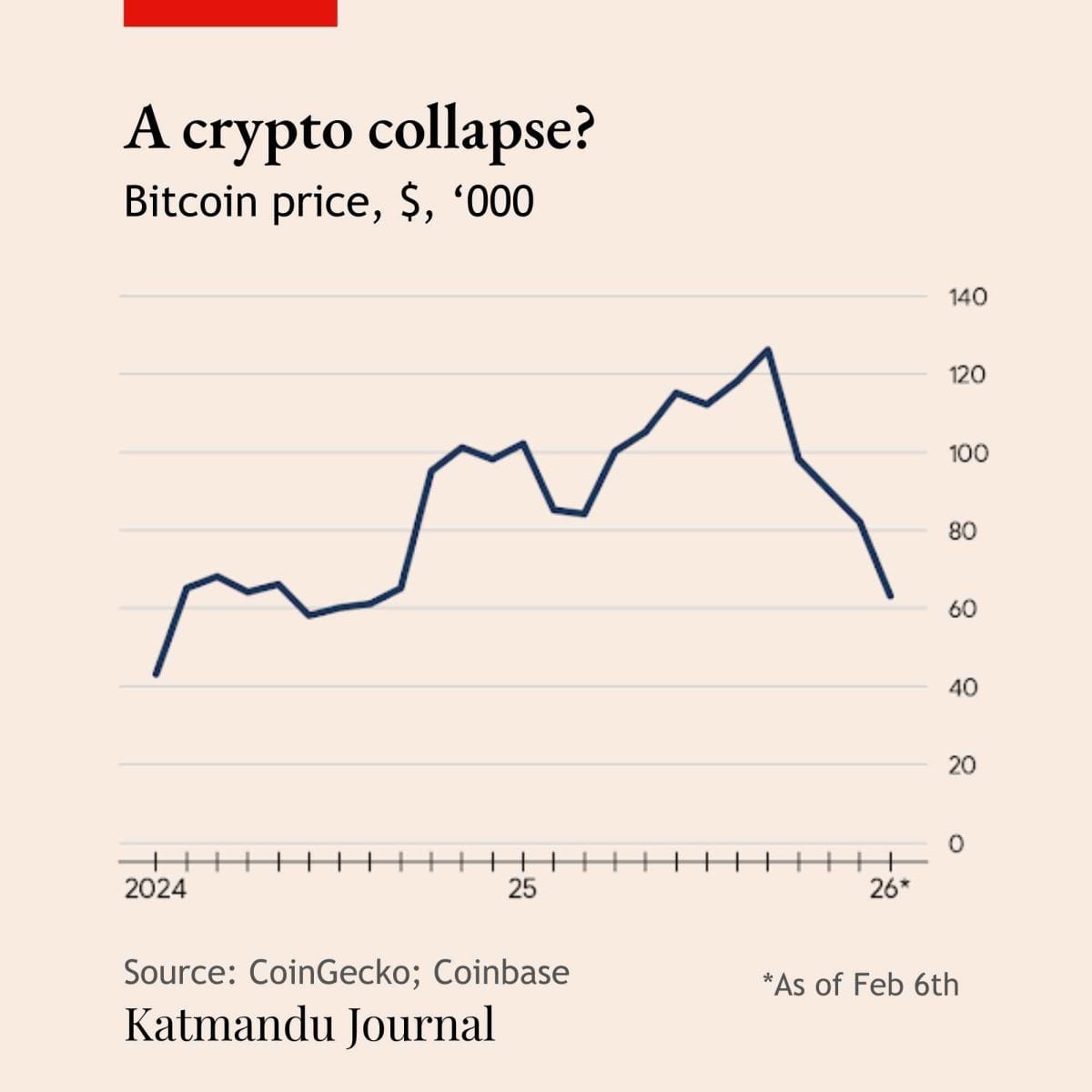
The initial Trump rally made superficial sense. His administration championed industry-friendly legislation and regulators stood down. Bitcoin’s price soared to a record above $125,000. Enthusiasts declared a new dawn. But the rally was built on excessive leverage. Traders piled into borrowed positions to amplify their bets despite interest rates remaining elevated. When prices turned, a mechanical unwinding began. Margin calls forced sales, which depressed prices further, triggering more calls. According to Coinglass data, more than $2bn in long and short cryptocurrency positions were liquidated in the past 24 hours.
The bloodbath is not confined to crypto. Look at technology stocks. The tech-heavy Nasdaq has endured its worst week since last April’s tariff shocks. Companies like Palantir and Qualcomm have fallen sharply. A nervous focus has landed on the soaring capital expenditure needed for artificial intelligence. Amazon announced its spending would surge past $200bn next year. The figure gave investors pause, a reminder that vast profits from AI remain prospective and expensive to chase. The Vix index, Wall Street’s fear gauge, has jumped to its highest level in months. Money is fleeing risk.
The connection is clearest in the casualties. Michael Saylor’s MicroStrategy, a corporate bitcoin hoarder, holds over 700,000 coins bought at an average price of $76,052. Its shares are down by a third this year, and the company booked a $12.4bn paper loss last quarter. The Winklevoss twins’ Gemini exchange is laying off staff and winding down operations; its share price has collapsed by 80% since its debut. They are not niche players. They are bellwethers for a market fuelled by narrative and debt.
Bitcoin was conceived as an alternative to traditional finance, a hedge against systemic folly. Yet it now moves in lockstep with the speculative tech stocks that embody that system. Traders on prediction platforms now bet on how low bitcoin will go. The real wager is how much further the unwinding has to run. ■