IMAGE: FLORENCE LO/REUTERS
WHEN A Chinese high-altitude balloon drifted across North American skies in early 2023, floating above nuclear missile fields in Montana, Washington’s first instinct was ridicule. Late-night comedians had material for weeks. The second instinct, inside the intelligence community, was something closer to dread.
The balloon was carrying high-resolution imaging systems, electronic sensors designed to intercept communications and tools to map how American weapons systems talk to each other.
China’s Ministry of State Security, the main civilian spy agency, has transformed over the past decade and a half from an organisation preoccupied with monitoring dissidents abroad—the so-called “five poisons” of Tibetans, Uyghurs, Falun Gong practitioners, Taiwanese independence advocates and democracy activists—into something resembling a troubling global intelligence service.
The People’s Liberation Army now operates more than 260 intelligence satellites, roughly double the number it had in 2018. Add cyber intrusions, corporate investments, human networks and aerial platforms, and you have what Michael Chertoff, a former American homeland security secretary, describes as intelligence gathering “by all kinds of methods”.
The history of Sino-American espionage is long and rarely flattering to either side. In the 1960s, American U-2 planes flew over China to monitor its nuclear programme; Beijing shot several down and put the wreckage on public display, where it still sits. Mao Zedong celebrated each downing. Richard Nixon’s CIA kept flying. Henry Kissinger, ever the realist, argued internally that losing the odd U-2 caused little diplomatic damage. Then came Nixon’s opening, and a strange interlude: in 1979 Deng Xiaoping visited CIA headquarters in Langley, and the two countries briefly cooperated against the Soviet Union. Tiananmen ended that.
What followed was a grinding, escalating contest. Its most consequential episode came around 2010-12, when China systematically dismantled the CIA’s human network inside the country. Dozens of assets were arrested or killed. A former CIA officer had leaked information, but the deeper wound came from what American investigators came to believe was China cracking the agency’s covert communications system. Combined with China’s rapidly expanding surveillance infrastructure—licence-plate readers, facial-recognition cameras as well as smartphone-tracking tools—the result was what one former senior American intelligence official calls a “major security screwup”. Washington has spent the years since trying to rebuild what it lost, with limited success.
Xi Jinping’s arrival in 2012 accelerated the professionalisation of Chinese espionage. Officers became better trained and more aggressive overseas, as well as more willing to recruit non-Chinese Americans. The targets expanded too: not just military technology but industrial secrets, hotel records and government personnel files, as well. American counter-intelligence officials now describe China as going after the entire economy. Chinese hackers, having stolen government databases, corporate records and hotel registries, can cross-reference that information to identify covert operatives by their travel patterns and credit-card use near sensitive facilities.
Chris Wray, former FBI director, has noted that as American counter-intelligence improves, China gets better at hiding. The CIA, meanwhile, describes China as an “impossible target”. Classic tradecraft—casual recruitment at a diplomatic reception—barely functions inside a surveillance state that can track every foreigner’s phone, face and footfall.
For its part Beijing protests that American reconnaissance flights and naval patrols along its coastline amount to constant provocation. Washington replies that those operations take place in international waters and airspace. Both governments are correct. Both are also spying on each other with everything they have.
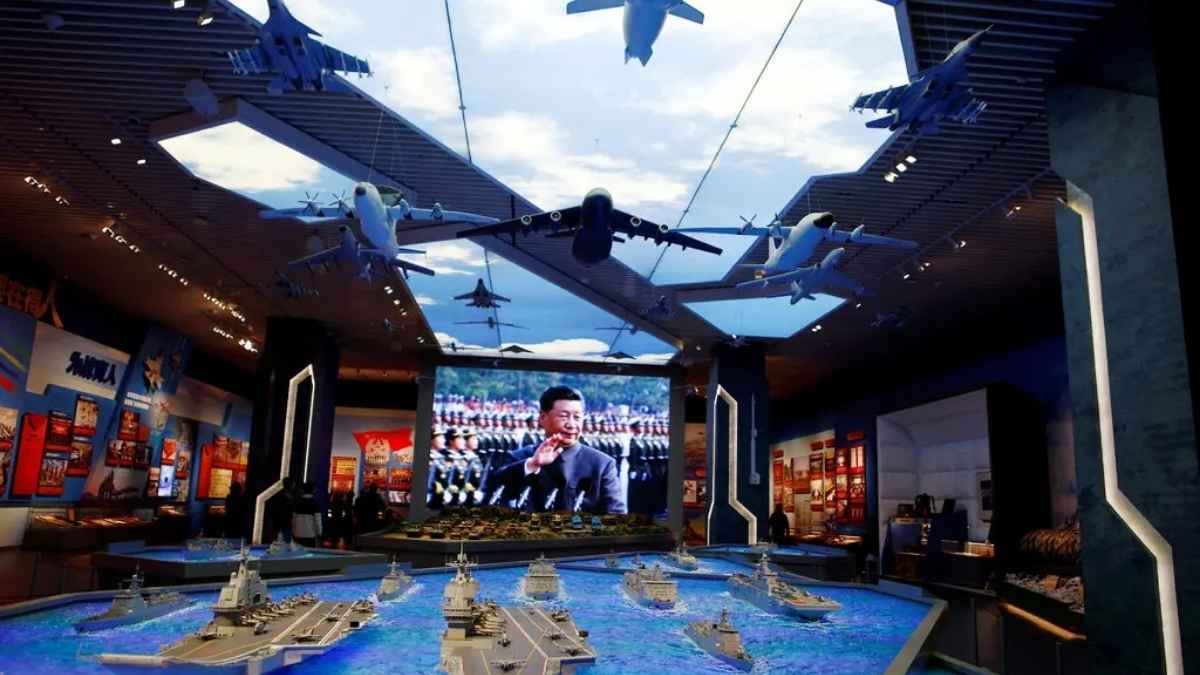
The balloon debris, now being analysed by American intelligence, may yet yield the kind of tangible proof that U-2 wreckage once provided in Beijing’s museums—evidence, plainly visible, of an adversary’s ambitions. The irony would not have been lost on Kissinger. ■