IMAGE: AP
THE AIR-RAID sirens that sounded across Israel as the Jewish Sabbath began on February 28th were not, this time, a precaution. Within 90 minutes Donald Trump appeared on television to announce that America had joined Israel in “major combat operations” against Iran. The declared aims were sweeping: to prevent Iran from threatening American national security; to stop its long-range missile programme; to block its nuclear ambitions; and explicitly to encourage its people to overthrow their government. “This may be your only chance for generations,” Mr Trump told Iranians. Benjamin Netanyahu, Israel’s prime minister, spoke of creating the “conditions” for a domestic uprising.
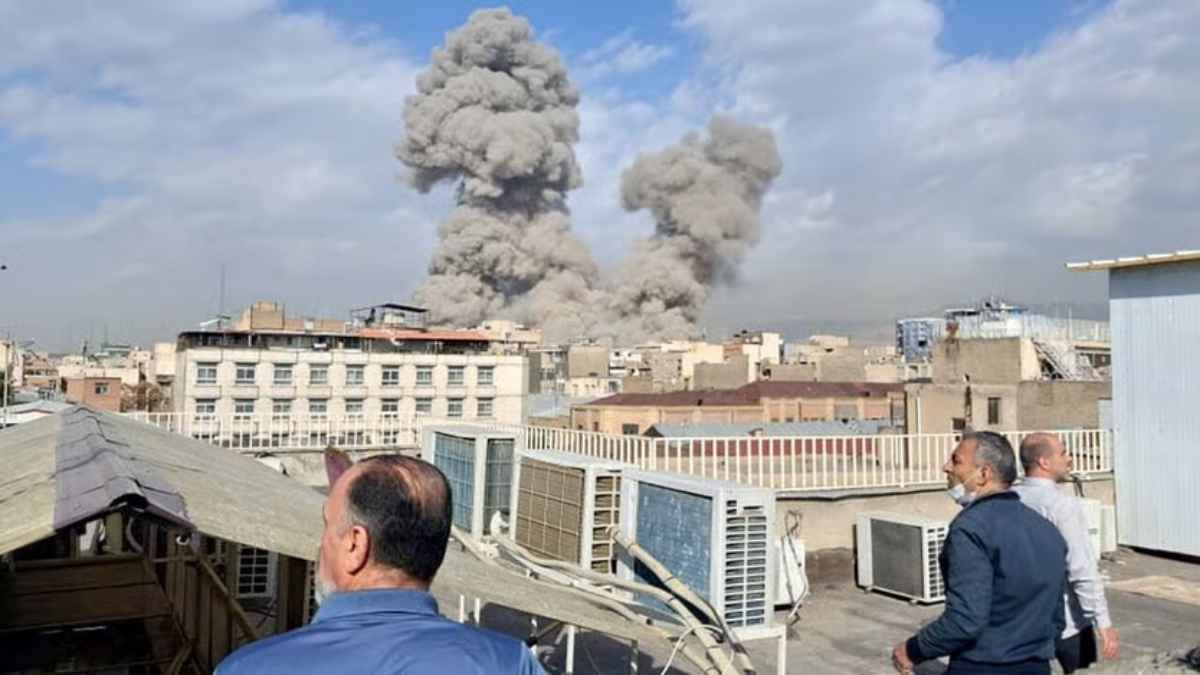
The opening salvos of this war look different from the 12-day conflict last June. Then, Israel struck first and America joined ten days later with a limited raid on nuclear sites. This time the two allies attacked simultaneously, with pre-planned strikes on a far wider set of targets. Early reports suggest that the list included the headquarters of the supreme leader, Ayatollah Ali Khamenei, the Iranian parliament, the presidential district in Tehran, bases of the Islamic Revolutionary Guard Corps (IRGC), missile-production facilities near Shiraz, nuclear-related sites close to Isfahan and even the port of Chabahar. Israeli officials confirmed that both Mr Khamenei and President Masoud Pezeshkian were intended targets. This is not a campaign of punishment or deterrence: it is a bid at decapitation.
America’s military build-up in the region is the largest since the invasion of Iraq in 2003. Two carrier strike groups are on station: the USS Gerald R. Ford in the eastern Mediterranean and the USS Abraham Lincoln off Oman. Around them are guided-missile destroyers, dozens of F-35s and F/A-18s, and a small fleet of tankers and surveillance aircraft. Air-defence systems, including THAAD and Patriot batteries, have been pre-positioned to protect Gulf allies. In all, some 40,000 American troops are spread across bases from Qatar to Bahrain to Kuwait. This force can sustain hundreds of sorties a day for weeks. But munitions are not infinite. An air campaign, however fierce, has limits.
Iran’s response, within hours, was calibrated rather than cataclysmic. Missiles flew towards northern Israel and American bases in Bahrain, Qatar, Saudi Arabia and the UAE. Most were intercepted. One person died in Abu Dhabi from falling debris. The salvo was smaller than those launched last June, suggesting that Iran may still see a diplomatic off-ramp. Yet it retains thousands of ballistic missiles, cruise missiles and drones. It can coordinate barrages to overwhelm defences. And its doctrine is to fire and then disperse, knowing that Israel’s “kill the archer” response will target the launch sites.
The path ahead has many branches. Iran could mine the Strait of Hormuz, through which 30% of the world’s seaborne oil passes. It could strike Saudi or Gulf energy facilities, as it did in 2019. It could activate proxies: Hizbullah in Lebanon, the Houthis in Yemen, Shia militias in Iraq. It could just sustain an intermittent missile war, testing the interceptors’ stockpiles. Each option carries risks. Closing the strait would alienate China, Iran’s biggest oil customer. Hitting Gulf states might unify them more firmly behind America.
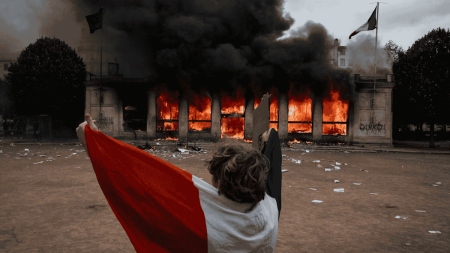
What makes this moment particularly volatile is the state of Iran itself. The country is already convulsed by unrest. Universities reopened on February 21st after weeks of closure, and students at Tehran University were soon chanting for the restoration of the Pahlavi dynasty, waving the pre-revolutionary lion and sun flag. The security forces killed at least 3,117 people in January, according to official figures; independent estimates are higher. Now 40-day memorials are turning into anti-regime rallies.
Some newspapers are testing censorship boundaries, publishing victims’ names and even displaying monarchist symbols. Reports speak of firearms entering civilian circulation, of secessionist talk in minority provinces, of “ungoverned spaces” emerging.
Yet the regime is not a house of cards. No senior figures have defected. A succession council is ready. Stand-by replacements have been appointed for senior officials. Mr Khamenei is said to have moved to a secure location. The security apparatus, implicated in January’s killings, has little choice but to stick together. Pickup trucks with heavy weapons now patrol the streets. The leadership has survived worse.
Nuclear diplomacy, meanwhile, has been running on a separate track. Three rounds of talks ended on February 26th with Iran offering to close multiple nuclear sites. American assets were dispersing for attack even as diplomats talked. Some Gulf officials wonder whether Iran might now accept token enrichment limits, restrict missile transfers and seek sanctions relief to ease its economic crisis. War and diplomacy are not mutually exclusive; they are, in this case, overlapping.
Oil markets have so far taken the news calmly. Brent crude hovered around $73 a barrel, up 12% in a month. Iran accounts for only about 2% of global supply, most of it sold to China. The real threat is to the Strait of Hormuz. But markets are forward-looking: a disruption would send prices soaring, and all sides know it.
The strategic bind for America and Israel is that air power alone is unlikely to topple a regime as entrenched and geographically sprawling as Iran’s. The country is 4,500 times the size of Gaza. Its leaders have prepared for decentralised survival. A ground invasion is politically out of the question for Mr Trump. Russia may yet provide shoulder-fired missiles or other support. For all the thunder of the opening strikes, the trajectory now depends on whether Iran escalates in a way that invites further decapitation; whether domestic unrest reignites under bombardment; whether oil infrastructure becomes a target; or whether a back channel reopens. The dogs of war have been unleashed, but they have not yet chosen their course. ■