
IMAGE: FLICKR
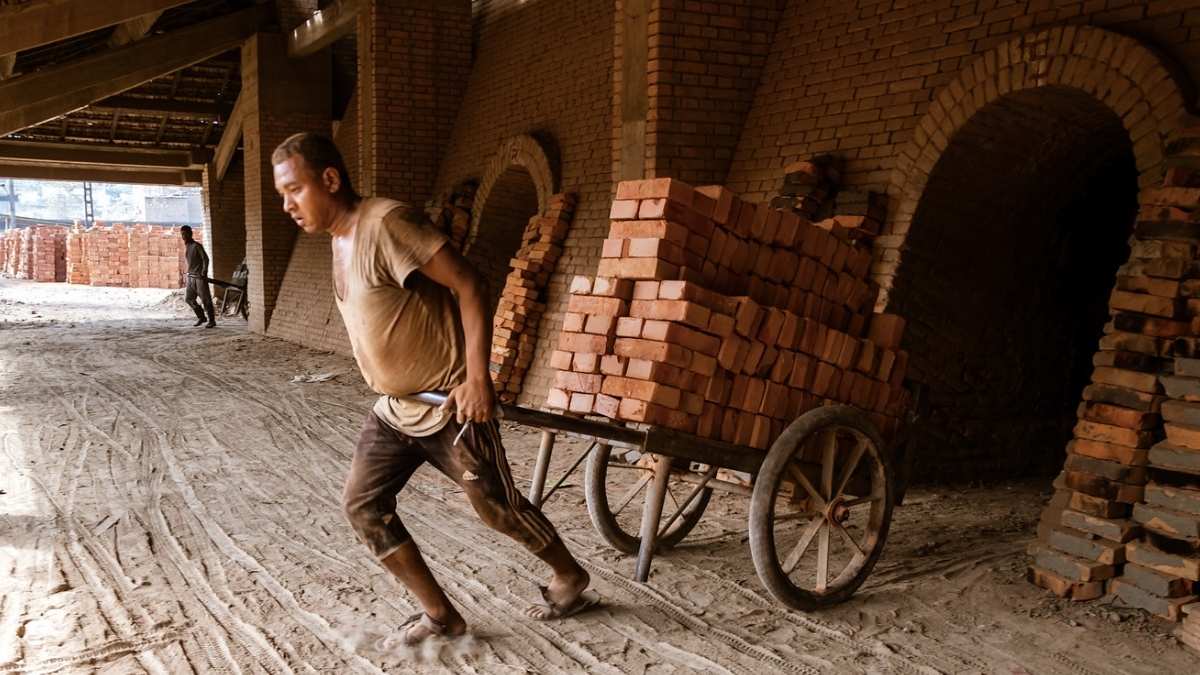
BHIM BAHADUR wakes before dawn in a Kathmandu construction camp. By seven he is carrying bricks on a site where a new hotel is rising. He has no written contract, no enrolment in the Social Security Fund, no entitlement to paid leave if he falls sick, and no recourse if the contractor disappears without paying his wages. At the end of each day he is paid in crumpled notes. Tomorrow he will find work or he will not.
His story is Nepal’s story. Four out of five Nepalis work in the informal economy, a share that places the country among the most informal in the world. They build its apartments, tend its fields, staff its shops and clean its houses. They do so without the protections that labour law was meant to provide: no health insurance, no pension contributions, no compensation if they are injured, no maternity leave, no minimum wage that can be enforced. Four in five workers are, in effect, invisible to the state.
Here is the paradox. Remittances from Nepalis working abroad surpass a quarter of GDP, a flow that has sustained household consumption and financed a construction boom. Yet that very success conceals the domestic labour market’s failure. Young men queue for Gulf visas; their wives till fields they do not own. The most productive workers leave; those who remain are trapped in work that builds no skills, generates no tax and offers no pathway to security. Migration and informality reinforce each other.
The macroeconomic cost is brutal. The World Bank estimates that a Nepali child born today will use only 18% of their productive potential as an adult. Informality is the mechanism. Workers who cannot borrow against a formal income cannot invest in their children’s education. Firms that operate outside the tax system cannot grow beyond the reach of their cash reserves. An economy that cannot count its workers cannot plan for them. The productivity gap between formal and informal employment in Nepal is wide, and widening.
Then there is the fiscal hole. Informality means income tax unpaid and VAT uncollected, as well as social security contributions unmade. A rough calibration suggests that even small progress on formalisation—bringing, say, two in five informal workers into minimal tax compliance—would generate additional revenue equivalent to 1.0–1.5% of GDP a year. That is enough to double the health budget or build schools in every village. Instead the money stays in cash, under mattresses, beyond the reach of public services that might, in turn, help workers become more productive.
It is tempting to blame the state for failing to enforce its own laws. The Labour Act 2017 is a decent piece of legislation. But its provisions on severance, leave and safety are unaffordable for micro-enterprises; its enforcement is invisible in most sectors; its inspections are rare and predictable. A construction contractor who complies with the law while competitors do not will just go out of business. For most small employers, informality is survival not evasion.
Nepal will not formalise its economy by wishing it so. It needs simpler rules for small firms, as Brazil achieved with its SIMPLES regime, and social insurance that workers actually trust. It needs sectoral approaches for construction, domestic work and agriculture, where the barriers to formality differ completely. It needs labour inspectors who can reach beyond Kathmandu. And it needs to recognise that formalisation is not a luxury to be addressed after growth, meaning it is the precondition for growth that includes everyone.
That dawn, Bhim Bahadur picked up his shovel and went back to work, unprotected. Unless something changes, he will do the same tomorrow. ■





