
IMAGE: REUTERS
FOR THREE decades, since democracy replaced absolute monarchy in 1990, Nepali politics has been a carousel of the familiar. The same faces, from the same parties, have circled through power in Kathmandu: K.P. Sharma Oli of the Communist UML, Sher Bahadur Deuba of the Nepali Congress, Pushpa Kamal Dahal, the Maoist leader known as Prachanda. They have fought, merged, split and realigned with a predictability that bred strong public cynicism. On March 5th voters finally stepped off the ride.
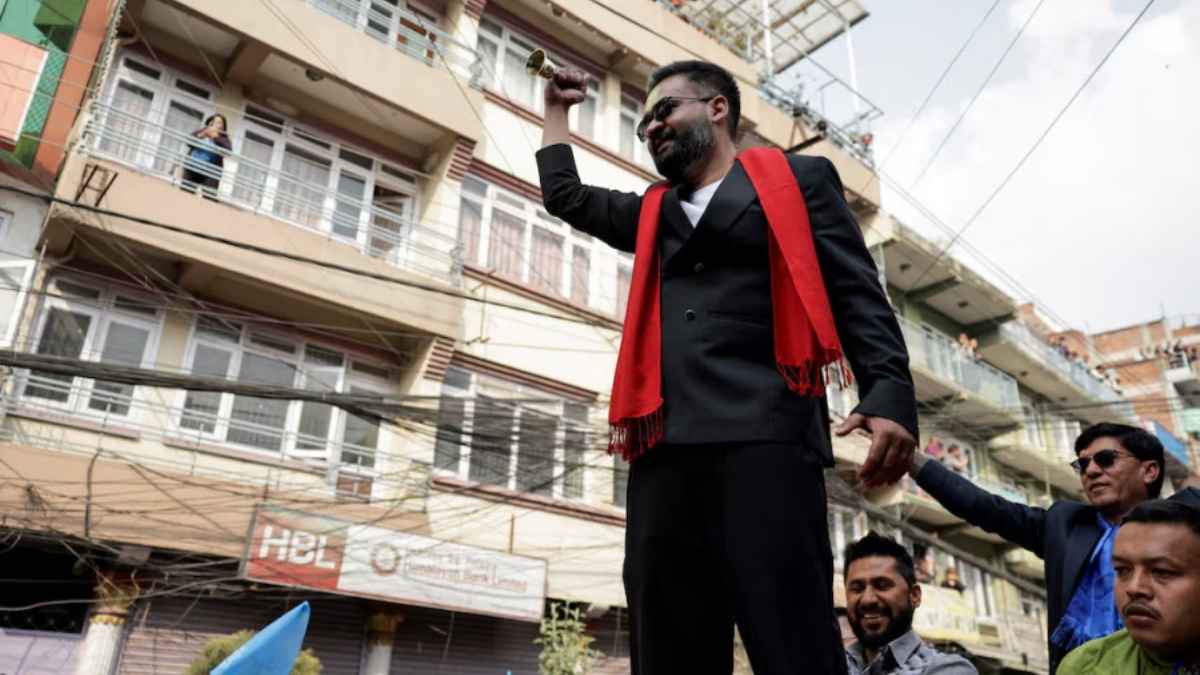
Early results from the snap general election suggest a landslide for the Rastriya Swatantra Party (RSP) and its prime-ministerial candidate, Balendra Shah, an engineer and former mayor of Kathmandu known as Balen. With votes still being counted, the RSP has already won 23 seats and is leading in more than 95 constituencies for the 275-seat House of Representatives. Its closest rival, the Nepali Congress, trails far behind in single digits. Its leader, Gagan Thapa, is expected to lose in Sarlahi-4 to his RSP opponent. In Jhapa-5, Mr Oli’s own stronghold in the eastern Terai plains, Mr Shah was ahead by nearly four to one.
The scale of the upset owes everything to the months before the election. In September 2025 thousands of young Nepalis took to the streets of Kathmandu and other cities. They were angry at political paralysis, at corruption endemic in the old parties, at a system that seemed to offer them no future beyond remittance work in the Gulf or Malaysia. The protests, organised largely through messaging apps, forced Mr Oli’s resignation and led to the snap poll. What started as a negative verdict against the old guard has become a positive mandate for the new one.
Mr Shah is an unlikely revolutionary. He rose to prominence not through student politics or party hierarchy, but as a rapper and a structural engineer who fixed Kathmandu’s potholed roads with surprising efficiency after his election as mayor in 2022. His appeal is technocratic and generational. He speaks the language of delivery rather than ideology. His supporters, many of them first-time voters under 30, do not reminisce about the Maoist insurgency or the monarchy. They want garbage collected, permits issued online and jobs created. The old parties, with their ageing leaders and dusty manifestos, had no answer to that.
Yet the scale of the RSP’s surge poses its own difficulties. A party that barely existed three years ago is now on track to lead a government, meaning its candidates are mostly novices. That inexperience is part of their appeal—it signals a break with the past—but governing a fragile economy requires more than good intentions.
The new administration will also have to navigate an awkward geopolitical position, wedged between India and China. Previous governments balanced the two giants with varying degrees of clumsiness. A young, untested team in Kathmandu will be watched carefully in Delhi and Beijing. Both capitals have grown comfortable with the old political class. Mr Shah, who campaigned on sovereignty and self-reliance, is an unknown quantity.
For now the mood in Kathmandu is one of disbelief and elation. “This is even a bigger upset than we expected,” Kunda Dixit, publisher of the Nepali Times, observed as the results trickled in. The final seat count, including proportional representation allocations, may take a week. But the direction is already evident. The generation that filled the streets in September filled the ballot boxes on March 5th. The task now is to fill the void left by the old order, a challenge that will define Nepal’s next decade. ■




