Photograph by Sayombhu Mukdeeprom Sony Pictures Classics-2
THE RESIDENTS of Kathmandu for years measured their days by the hours the electricity stayed on. The schedule of load-shedding—eight hours without power, then four with, then twelve without—dictated when factories ran; when students studied; when restaurants fired up diesel generators. At the crisis peak in 2015, the capital endured eighteen-hour blackouts. The Nepal Electricity Authority (NEA) was a byword for rot. Billions in losses. A quarter of its power was stolen. And its staff recruited through patronage rather than competence.
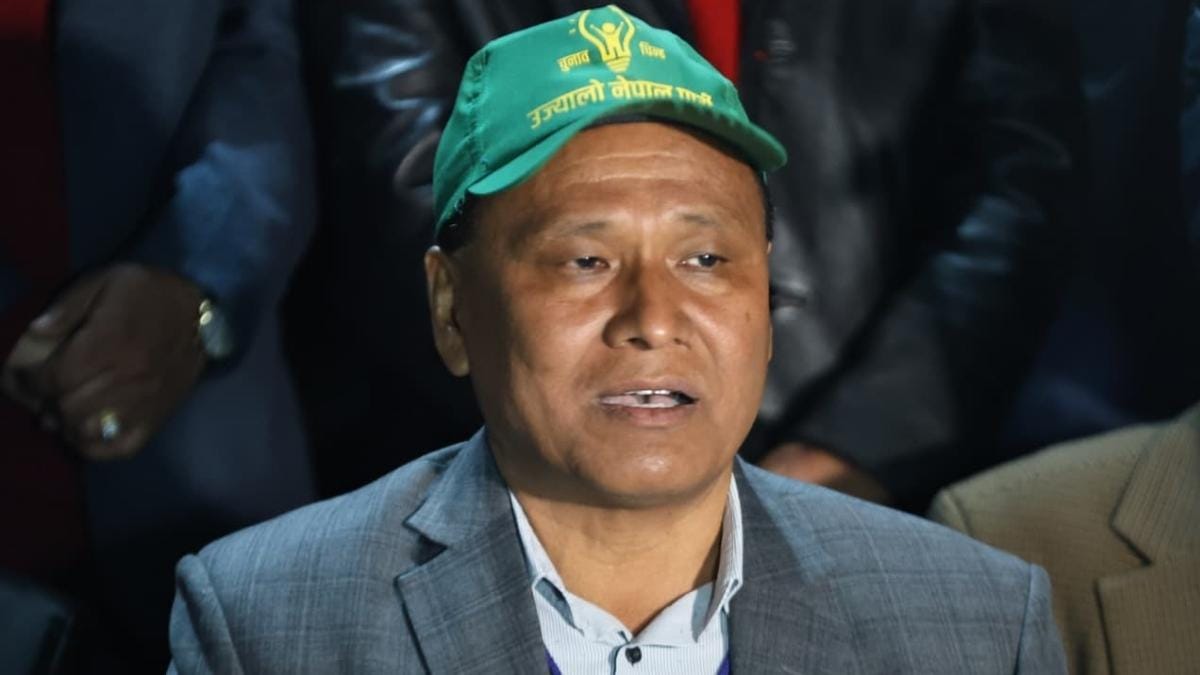
Then Kulman Ghising fixed it. Within fifteen months of his appointment as managing director in 2016, Kathmandu’s scheduled outages ended. Within three years the NEA turned a profit. Distribution losses fell from 27% to below 15%. Electrification climbed from 72% of households to over 92%. An engineer with no political base became the most trusted public figure in Nepal, celebrated on social media with a reverence usually reserved for saints.
On March 5th Mr Ghising stood for parliament in Kathmandu-3 as the candidate of his own newly formed Ujyalo Nepal Party. He came second. Raju Nath Pandey of the Rastriya Swatantra Party (RSP) took 46% of the vote; Mr Ghising managed 27%. The margin surpassed 7,500 votes. In a constituency where his personal approval rating was high months before the election, the man who ended Nepal’s power cuts could not secure one ballot in four.
The result appears, at first glance, a brutal verdict on technocrats who stray into politics. That reading is too simple and misses what the election actually showed about Nepal’s democratic moment.
Mr Ghising’s achievement at the NEA was existential for a country exhausted by political paralysis. He demonstrated that Nepali institutions could work. The economic value he created runs into the hundreds of billions of rupees: eliminating load-shedding added perhaps two percentage points to GDP a year, a cumulative gain surpassing $2bn over seven years. International investors revised their Nepal risk assessments downward. Cross-border transmission lines with India, which Mr Ghising championed, now underpin a hydropower export industry that could eventually generate more revenue than tourism.
Yet administrative legitimacy, however hard-won, does not convert into votes. Nepal’s electoral system punishes candidates without machinery. The RSP spent four years building ward-level organisation in Kathmandu: volunteer networks as well as digital mobilisation and door-to-door contact programmes. Mr Ghising’s party was running its first election. Voters who wanted reform had a nationally viable option in the RSP. Casting a ballot for Mr Ghising risked wasting it on a symbolic gesture, and enough Kathmandu residents made that calculation to deny him victory.
Mr Ghising ran for prime minister rather than focusing on his local constituency. That raised expectations, making his 27% vote share seem like a failure. If he had presented himself as a reform-minded newcomer, the same result could have been seen as a starting point. Instead it came across as a rejection.
But the numbers suggest a more nuanced situation. Mr Ghising’s 11,171 votes surpassed the combined total for the Nepali Congress and CPN-UML, the legacy parties that have governed Nepal for most of its democratic history. In a capital constituency during a wave election for a rival reform party, that is not humiliation. It is a constituency, one that will watch whether RSP’s government actually governs in the way Mr Ghising’s NEA tenure modelled.
For the RSP, the result contains its own lesson. The party won Kathmandu-3 because voters wanted Kulman-style competence at the national level, not because they rejected competence itself. The most consequential decision RSP’s government will make in its first 100 days is not any legislative bill but who it appoints to lead Nepal’s broken public enterprises. The Nepal Oil Corporation bleeds cash. Nepal Airlines cannot maintain its fleet. The Drinking Water Authority supplies Kathmandu for a few hours each week. Each presents a turnaround opportunity if the right person is installed with political protection to match Mr Ghising’s.
What of Mr Ghising himself? His political career is not over; it has barely begun. Several paths are open: a second electoral contest in 2031 with better organisation; a technocratic or regulatory role in an RSP government (which would be politically popular and institutionally astute); an advisory position on energy and infrastructure policy that preserves his contribution without parliamentary presence. The worst outcome—for Mr Ghising and for Nepal—would be his retreat from public engagement in response to electoral defeat.
Democracies need more than election winners, meaning they need people who make institutions work; who demonstrate that the state can deliver; who leave behind physical and cultural residue that outlasts any single tenure. The digital billing systems Mr Ghising installed at the NEA continue to reduce revenue leakage. The transmission lines he accelerated continue to carry power. The proof that Nepali institutions are reformable continues to shape investor perceptions.
None of that appears on a ballot paper. But the lights are on in Kathmandu because of Kulman Ghising. The task for Nepal’s new government—and for Nepal’s democracy—is to ensure that his model of institutional excellence becomes the norm rather than the exception. That, more than any individual election result, is the lesson Kathmandu-3 offers for the country’s future. ■