
IMAGE VIA MEA PHOTO GALLERY
ON SEPTEMBER 9th 2025, as crowds torched the prime minister’s residence in Kathmandu, Nepal’s geopolitical future was being rewritten in smoke. K.P. Sharma Oli fled. Seventy-seven people were dead. Into the wreckage of the old political order stepped a structural engineer and former rapper named Balendra Shah, whose party had existed for less than four years.
The Rastriya Swatantra Party now looks set to lead Nepal’s next government after the March 5th election. Once improbable, its rise was propelled by a surge of Gen Z anger, a savvy alliance with Shah—Kathmandu’s hugely popular mayor who resigned in January—and the growing exhaustion of voters with parties that have governed, failed and returned to power for three decades.
Far less attention has gone to what an RSP-led government would actually do once it inherits Asia’s most delicate balancing act: a landlocked state squeezed between India and China, economically dependent on the first and diplomatically courted by the second.
Nepal’s strategic position is unusual in ways outsiders tend to underestimate. India accounts for roughly 65% of the country’s trade. Fuel, medicines and much of its food arrive across a single southern border. When relations sour—as they did spectacularly in 2015, when India imposed an unofficial blockade lasting months—the consequences appear immediately. Petrol queues stretched for kilometres. Hospitals rationed supplies. The blockade failed to achieve its objectives but it demonstrated that Nepal’s freedom of manoeuvre is constrained by geography in ways no manifesto can overcome.
China’s interest in Nepal takes a different form. Beijing has cultivated relationships mainly through Nepal’s communist parties, signing Belt and Road agreements under Oli’s tenure, funding infrastructure studies and pressing for tighter controls on Tibetan refugee communities. Several BRI projects remain unfinished. Yet the diplomatic architecture—such as the party-to-party ties and the accumulation of goodwill—has been patiently assembled over a decade.
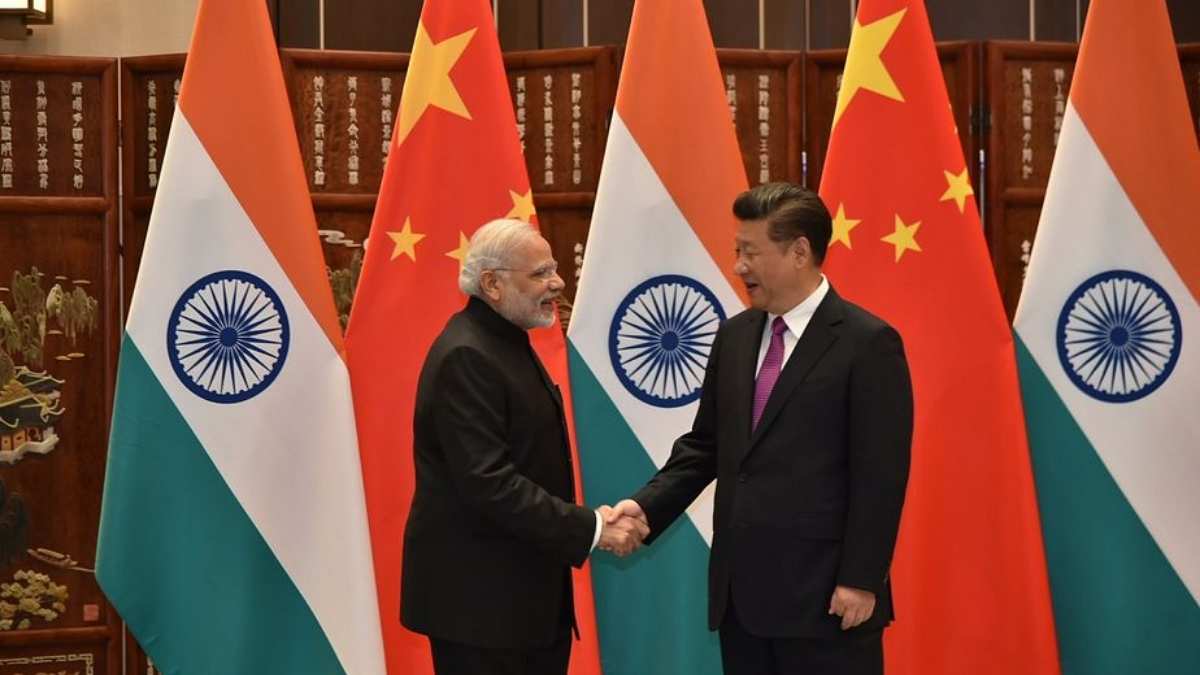
An RSP government would inherit both relationships with limited institutional memory for managing them. The party’s foreign-policy slogan—repositioning Nepal from a “buffer” to a “bridge” between its two giant neighbours—sounds appealing. Trilateral connectivity, energy corridors and transit trade form a coherent vision in theory. In practice the idea assumes a degree of Sino-Indian goodwill towards Nepal that remains elusive. India and China seek influence rather than mediation. A Nepali government presenting itself as a neutral conduit may soon discover that both sides prefer dependable partners to intermediaries.
The troubling concern surrounds Shah himself. He has publicly endorsed “Greater Nepal”—a nationalist claim to territories currently inside India, including parts of Uttarakhand and Bihar. Oli made his own territorial gesture in 2020, adding disputed lands to Nepal’s official map and triggering a prolonged chill in relations with Delhi. Shah’s position carries greater political charge: he presents it as historical justice rather than diplomatic symbolism. Delhi’s mandarins, already wary of the RSP’s diplomatic inexperience, will watch closely for signals that a Shah-aligned government intends to govern with the same instincts that animated his speeches as mayor.
The RSP’s saving grace may lie in its economic agenda. Its hydropower diplomacy framework—pursuing short-, medium- and long-term energy export agreements with India and Bangladesh—stands as the most detailed external economic strategy in any party manifesto. Nepal’s hydropower potential is vast. Installed capacity has reached some 4,086 megawatts and could double by 2030. Electricity exports to India, provided the political relationship holds, could generate $500m to $800m a year within five years. That revenue would ease Nepal’s heavy reliance on remittances, which currently equal about 25% of GDP. Energy therefore offers the RSP a path for turning its “bridge” rhetoric into practical policy, tying Nepal commercially to India while reducing the leverage created by trade dependence.
Whether Shah’s government can sustain diplomatic discipline long enough to secure those agreements is the central uncertainty. An inexperienced foreign ministry, lacking the institutional habits built through decades of strategic hedging, will face its greatest test in the slow, technical work of managing two powerful neighbours whose interests rarely align.
Nepal has faced similar ambitions before. Every generation of its politicians has promised to turn geography from vulnerability into opportunity. Most eventually discovered that the mountain, as it were, stays where it is. The RSP’s reformist energy appears real. Its foreign-policy challenge is formidable. ■




