
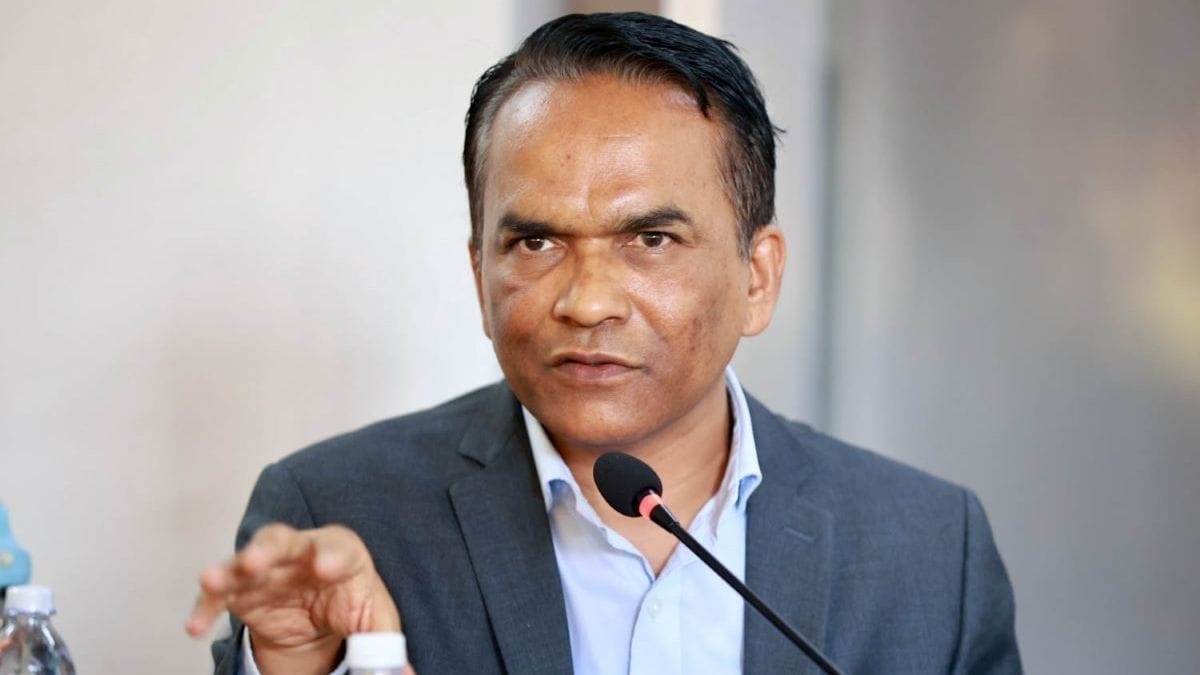
IMAGE VIA ARTHA SAROKAR
BISWO POUDEL has had a comfortable ten months. Since becoming governor of the Nepal Rastra Bank in May 2025, he has watched foreign-exchange reserves swell to $22.8bn, enough to pay for 18 months of imports. Inflation, which touched 8.08% in 2022, now dawdles at 3.25%. The banking system is not in crisis. For a central banker in a volatile economy, these are the spoils of a quiet life.
Yet a quiet life is not the same as a successful tenure. The NRB’s own data, published with a diligence that shames many of its peers, leads to a different conclusion: of policy transmission that has broken down; of credit flooding into gold loans while starving productive sectors; and of a governor who seems content to manage the status quo rather than fix it.
Start with the achievements, for they are real. Mr Poudel inherited an economy that had been whipsawed by covid and the Ukraine war. The previous governor had raised rates late and hard. Mr Poudel reaped the reward. The fall in inflation owes much to a collapse in food prices but non-food price growth has also steadied at around 3.7%. The balance of payments is in hefty surplus, thanks to a remittance boom that has seen money sent home by Nepalis abroad rise 65% in the seven months to February. On the classic central-bank metrics of price and external stability, Mr Poudel passes.
The trouble begins where the textbooks end: with the messy business of getting cheap money to the people who need it. Since taking office, Mr Poudel has slashed the policy rate from 5% to 4.25%, a continuation of the easing cycle begun under his predecessor.
Yet private-sector credit grew at just 6.7% year on year in February, one of the weakest rates in a decade. Lending rates, at 7%, have barely budged. The spread between what banks pay for deposits (3.5%) and what they charge borrowers has compressed only slightly. In a functioning system, rate cuts flow through to the real economy within months. In Nepal, they pool as excess liquidity in the banking system, where they are mopped up by the NRB.
The scale of that mopping-up is extraordinary. In the first seven months of this fiscal year, the central bank absorbed Rs31.6trn ($214bn) through its standing deposit facility and other tools—more than double the amount in the same period last year. Banks, in other words, are so awash with cash that they are happy to park it at the NRB for 2.75% rather than lend it to businesses at 7%.
The reason is not hard to find. Banks are overwhelmingly secured against land and buildings; 73% of outstanding credit is collateralised by fixed assets. When property prices stagnate, as they have, banks become profoundly risk-averse. Lending to a farmer or a small manufacturer requires judgement. Parking money at the central bank requires none.
This is where the governor’s record darkens. The NRB has the tools to address such blockages: it can lean on banks through moral suasion or adjust risk weights. Yet there is little evidence that Mr Poudel has used them effectively. Instead the data show credit drifting away from the productive sectors the central bank is supposed to support. Lending to agriculture has contracted by 1.4%. Loans to microfinance institutions are down 10%. The number of women-entrepreneur borrowers has fallen by 42% in a single year.
The winner from this misallocation is conspicuous. Gold and silver loans have surged 26% in a year, to Rs107bn. Households are pawning their jewellery to meet consumption needs because legitimate productive credit is unavailable or unaffordable. This is not a sign of a healthy financial system: it is a sign of one consuming its own seed corn. A 26% annual growth in gold-backed lending is also a concentration risk that the NRB barely acknowledges.
The financial system is failing to channel its extraordinary windfall of foreign currency into productive investment. The credit transmission mechanism is gummed up. The priority sectors mandated by law are being starved. On monetary transmission and development policy, two of the five core dimensions of the NRB’s mandate, the governor is failing.
The economy cannot afford to have its central bank comfortable while the productive sectors starve for credit. Mr Poudel has shown he can manage stability. He has not yet shown he can do more. ■





