IMAGE VIA LINKEDIN
NEPAL HAS spent three decades proving that removing a bad government is the easy part. Replacing it with something better is the work that breaks countries. On Saturday morning, police hauled K.P. Sharma Oli—74, twice kidney-transplanted, four times prime minister—from his home in Bhaktapur and drove him to a hospital bed that became, within hours, the most politically charged mattress in the Himalayas.
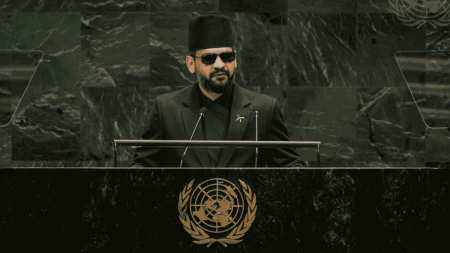
The charge: criminal negligence in the deaths of 76 people during last September’s Gen Z uprising. The arresting authority: a government barely 24 hours old, led by a detached rapper.
The temptation is to read this as a democratic dawn. A corrupt old order finally called to account; the streets that bled in September now producing something like justice. Nepal’s young insurgents, who brought down Mr Oli’s government with their phones and their fury, have now placed their man in Singha Durbar and their commission’s recommendations into law. Progress, surely. It is a reading best resisted.
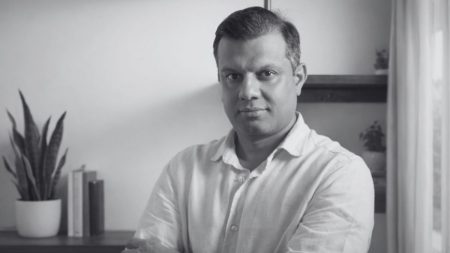
The problem is not that Mr Oli is innocent: he almost certainly bears some responsibility for the deaths his security forces enabled. The problem is that the new government’s first act was not to convene parliament or signal a reform agenda, say. It was an arrest. Conducted on day one. Using an urgent warrant of dubious legal standing, signed off by a 37-year-old home minister who had never run so much as a district office before Friday. Whatever justice looks like, it rarely arrives this fast or this conveniently timed.
Sudan Gurung is the hinge on which this drama turns. He rose from the barricades of September. That is why his enemies will come for him first.
The CPN-UML has branded him “inexperienced, chaotic, and controversial”, which is a fairly good summary of every new home minister Nepal has ever had, but lands harder when the court may prove them right within 48 hours. If the Kathmandu District Court declines to endorse the urgent arrest warrant—as it may well do, given that Mr Oli was hardly about to flee to Bhutan—Mr Gurung’s opening gambit collapses. The investigation continues but the government’s authority does not.
There is also the matter of what the Karki Commission actually found. It did not establish that Mr Oli ordered the shooting. It found negligence—a failure to stop what was happening. That is a serious accusation. That is a serious accusation. Sections 181 and 182 of Nepal’s National Penal Code require prosecutors to prove personal recklessness and not only that things went badly on someone’s watch. Defence lawyers will note with some justice that the commission’s report is a recommendation rather than evidence. Courts have acquitted on flimsier grounds than that. Nepal has never prosecuted a former prime minister.
The selective application compounds the difficulty. The Karki Commission named as well as politicians, the former police chief and the head of the Armed Police Force. No action has been taken against the security services. This is no coincidence: a new government needs the security forces more than it needs legal symmetry.
Yet every asymmetry becomes a weapon in the hands of the defence. Mr Oli’s lawyers will argue, plausibly, that he is being tried for the acts of men his government chose not to deploy against protesters but also chose not to restrain.
None of this vindicates Mr Oli, whose talent for making bad situations worse is well-documented across three decades of Nepali politics. His party’s immediate street mobilisation—protests in Kathmandu within hours, emergency secretariat meetings, alongside social-media denunciations—hardly suggests a movement confident in its leader’s innocence. It is the behaviour of a machine that knows how to fight and has been waiting for a reason to. The Nepali Congress, whose own Ramesh Lekhak sits in the same custody, faces an awkward alignment with its old rivals.
Balendra Shah’s government holds real democratic legitimacy: a mandate as well as a generation’s worth of pent-up demand for something different. That is a valuable thing. Yet using that legitimacy for arrests that are legally questionable risks losing it when the real challenges begin, from economic reform and rebuilding institutions to instilling a political culture that sees accountability as a principle instead of as a weapon.
The question Nepal faces is not about Mr Oli’s right to face justice: he probably should. It is whether a government built on enforcing justice can handle the chaos it unleashes, from appeals to street protests.
Today’s arrest may yet look, in hindsight, like the first scene of a real reckoning. Or it may look like the moment a promising experiment in accountability consumed itself before it had properly begun. By Sunday evening when the court rules, the answer will be clearer. It will not be pleasing either way. ■