IMAGE: BALKRISHNA CHETTRI
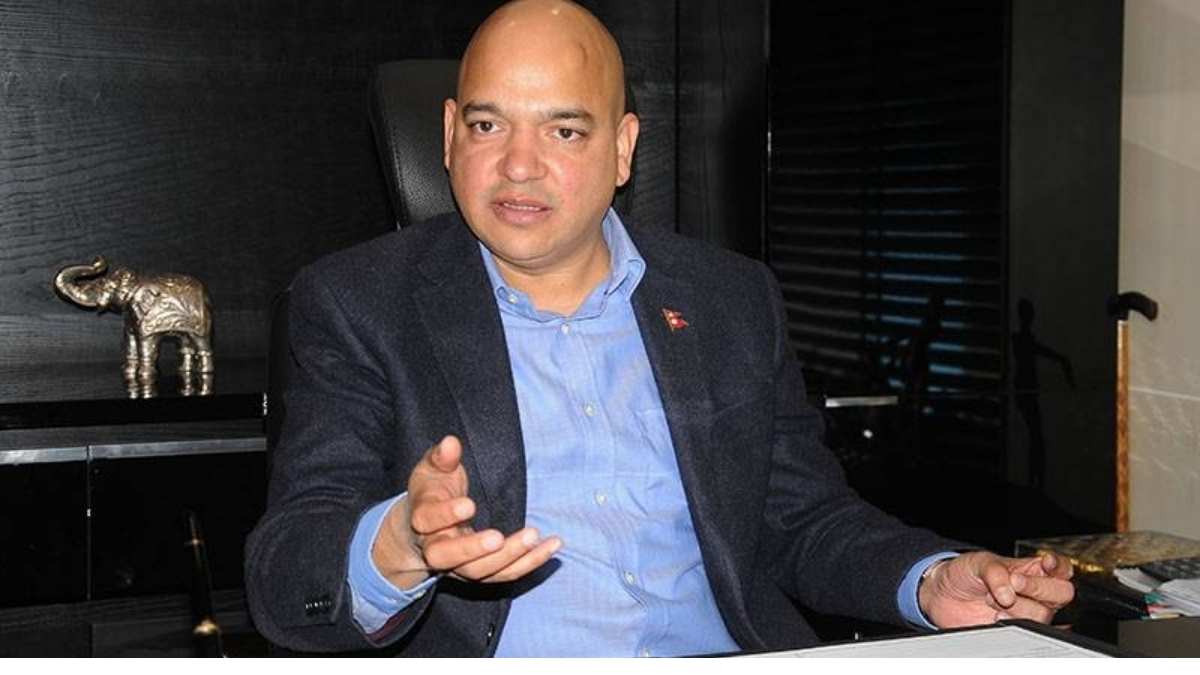
IN THE space of less than a month, Nepal’s most prominent business figures found themselves in handcuffs. Among others, Shekhar Golchha (pictured), Deepak Bhatt and Sulav Agarwal were paraded before cameras, accused of everything from organised crime to customs fraud. No charges have yet stuck. The government calls this cleaning house. The private sector calls it a shakedown.
The relationship between the state and the companies that generate 81% of Nepal’s GDP has rarely been cosy. But a new phrase now circulates in boardrooms in Kathmandu: “detain first, investigate later”. Business leaders accuse the government of Balendra Shah, a former rapper turned mayor turned prime minister, of trading predictable regulation for coercive drama. The result, they fear, is a creeping climate of fear that will choke the very investment the country desperately needs.
The private sector has carried Nepal through decades of instability, from civil war to constitutional crisis. It accounts for 86% of employment. Yet its members now describe a state that treats them as vampires. Chandra Prasad Dhakal, a senior figure in the Federation of Nepalese Chambers of Commerce and Industry, argues that the government’s attitude must change. The private sector, he says, is the engine of the economy, not a piggy bank to be smashed open whenever the treasury feels empty.
What has changed is not the law but its application. Nepal still retains anti-black-marketing statutes from the days of rationing, vague enough to justify almost any intervention. The current administration appears to be using them with abandon. Rajendra Malla, another industry voice, observes that the government’s posture is control-oriented, rather than facilitative. Punishment, he insists, should follow due process, rather than precede it. That is not a radical proposition. That it needs stating at all tells you how far trust has collapsed.
The proximate damage is evident in the mood of those who write cheques. Hemraj Dhakal of the Nepal Chamber of Commerce warns that arrests without proof are lowering business morale. Domestic investors are pulling back. Foreign direct investment, never abundant in a landlocked country with difficult geography, is now drying up faster than usual. One suggestion doing the rounds is to introduce advance bail provisions, so that no executive need spend a night in a cell awaiting a hearing. The very fact that such a reform is under discussion suggests how bad things have become.
Jyotsna Shrestha, a rare female voice in a male-dominated business establishment, puts the objection harshly. Arrests should follow investigation, not the other way around. Her view is widely shared. Gyanendra Lal Pradhan, an entrepreneur, notes the particular gall of targeting people whose taxes fund the state in the first place. When businessmen feel they could be arrested at any moment, he argues, you no longer have an investment climate. You have a lottery.
All of this poses a puzzle. Swarnim Wagle, a well-regarded economist who now serves in government as finance minister, describes the situation as a necessary cleansing phase. His argument, laid out in recent speeches, is that cronyism and policy capture have corrupted Nepal’s economic model for too long. The system, he contends, has distorted incentives so badly that even honest actors are pushed towards dishonesty. His goal is to replace crony capitalism with clean competition even if the short-term pain is acute.
On his first day in office, Mr Wagle scrapped 15 outdated laws and shut down government bodies that he says existed only to harass businesses. His stated aim is to turn each rupee of public investment into seven rupees of private capital. He speaks of building a “weightless, distance-free economy” through digitalisation, overcoming Nepal’s landlocked status with fibre-optic cables rather than roads. That is a vision any business school would applaud. The problem is that the enforcement arm of the state seems to be operating on a different script.
Rabi Lamichhane, chairman of the ruling party, offers reassurance of a different sort. His message to business is that your protector should be policy rather than politicians. He acknowledges the fear of crackdowns but says the goal is to remove bad actors, rather than to criminalise an entire class. The private sector has carried the country through every crisis of the past three decades, he notes. It deserves a system based on rules and not connections. Yet he also warns that short-term discomfort is inevitable. Lower profits during transition, he says, are the price of future stability.
That is a hard sell to a businessman watching his office raided. And the government’s own administrative moves undercut the message of predictable rules. A proposal to bring the Department of Money Laundering Investigation back under the Prime Minister’s Office has alarmed anti-corruption experts. The Financial Action Task Force, the global standard-setter, recommends that such bodies be institutionally independent, typically housed under finance ministries. Putting them under the prime minister creates a tool for political pressure not a shield against dirty money. Critics see Mr Shah following the path of his predecessor, K.P. Sharma Oli, who centralised power by placing key agencies under his direct control. The plan to reduce the number of ministries to 17, while expanding the prime minister’s office to oversee roughly 50 departments, smells less of reform than of consolidation.
Some officials in the finance ministry privately argue that the anti-laundering unit should stay where it is. The fact that the prime minister disagrees raises an ugly question: does he distrust his own finance ministry or does he want the power to press charges against whomever he chooses? Either answer is troubling.
The bigger truth is that Nepal stands at one of those moments that will look obvious in retrospect. Per capita income is low but both the country’s business community and its finance minister see strong potential for growth. The country sits between India and China, two giants with capital to deploy. Its diaspora sends home billions a year. The ingredients for a take-off are all there. But take-offs need confidence. And confidence needs a state that can distinguish between a fraudster and a job-creator.
The business community’s demand is obvious, though apparently hard to deliver: listen first, act later, not the reverse. Until that principle takes hold, the best and brightest will keep their money in their mattresses or send it to Dubai. And Nepal will stay what it has always been: a country of breathtaking potential, forever just about to arrive. ■
This story has been updated.