
IMAGE: MUKESH POKHREL
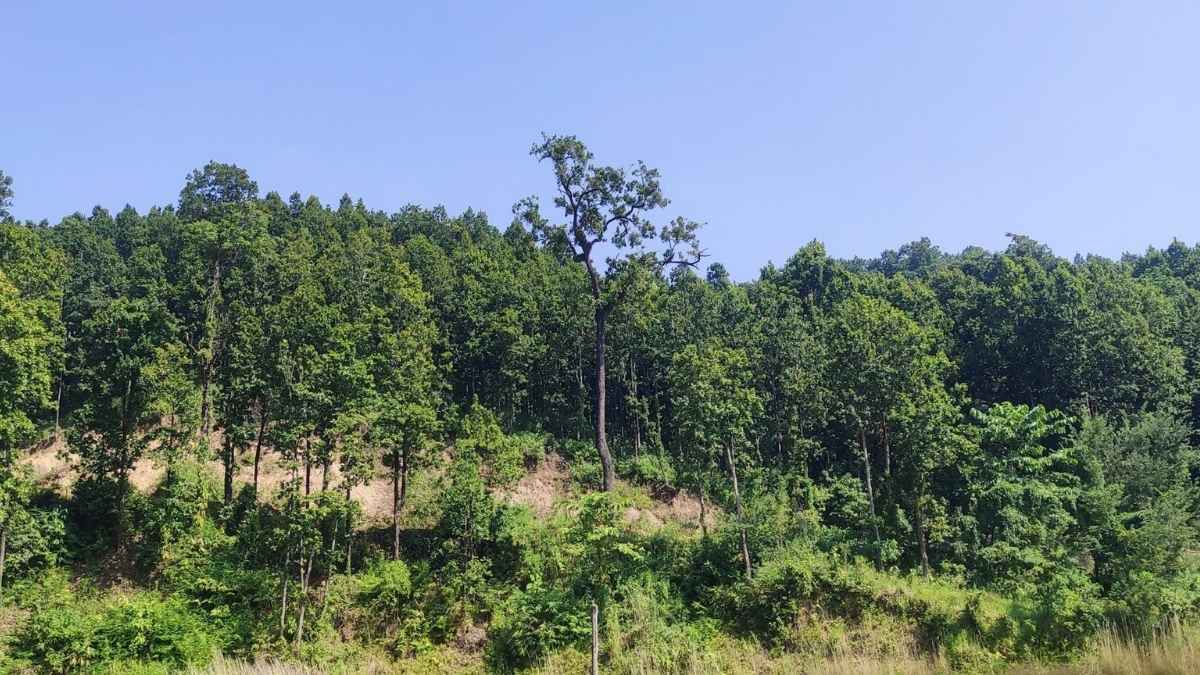
IN THEORY the deal looks like a tree-hugger’s dream. In January Nepal signed an agreement with the LEAF Coalition, which pays countries to protect forests through carbon credits, worth up to $55m—the first Asian country to do so. The premise is that rich polluters pay Nepal to keep its forests standing. The country’s stunning reforestation—forest cover has climbed from 29% to 46% in three decades thanks to some 23,000 community forest groups—has turned it into a potential carbon vault. For a poor, remittance-dependent economy, the temptation is to see this as a new cash crop, one that needs no factories or migrant workers. That would be a mistake.
The problem is not the trees. Nepal’s forests genuinely store carbon: between 1.2 and 1.4bn tonnes of it. The question is whether that carbon can be turned into a reliable foreign-exchange earner.
The global voluntary carbon market is in the middle of an integrity crisis. Low-quality credits still dominate. A recent investigation found that nearly three-quarters of large carbon projects in Brazil failed to deliver the promised climate benefit. Buyers are waking up. They no longer want promises: they want proof. Nepal’s LEAF credits, verified under the TREES standard, are a cut above.
Yet the science of forest carbon remains contested: additionality (would the trees have grown anyway?), permanence (what if a fire releases the carbon?), leakage (does protection here push deforestation elsewhere?). They are the difference between a durable asset and a speculative bubble.
Nepal’s institutional inheritance gives it a head start. The community forestry system is real not a Potemkin village. Those 22,000 user groups manage nearly 2.4m hectares and have been doing so since the 1990s, long before carbon markets existed. That means the country has something many others lack: a track record of conservation driven by local incentives, rather than by distant carbon accountants. The government’s draft benefit-sharing plan allocates 80% of carbon revenues to communities. In principle that could turn forest stewardship into a source of rural development, funding schools and health posts while rewarding preservation.
But principles are cheap. Implementation is where carbon dreams die. Nepal’s federal system, introduced in 2015, has created three layers of forest governance that often clash. Many community groups are struggling to renew their operating plans because district forest offices are understaffed. Young people are leaving villages, weakening the very institutions that made reforestation work. And the legal ownership of forest carbon remains a grey zone between community use rights and state sovereignty. Until that is clarified, every tonne sold carries the risk of a future land war.
The political risks are even starker. In Brazil’s Pará state, prosecutors are trying to cancel a $180m carbon deal with the same LEAF coalition, arguing that communities were not properly consulted. A Munduruku leader put it bluntly: “They are selling our air, our lives, without even consulting us.”
Nepal is not the Amazon but the warning applies wherever carbon finance meets weak governance. If money flows to Kathmandu but gets stuck in bureaucratic sludge, communities will rightly see the whole exercise as a colonial-style land grab. The backlash could unravel decades of conservation success.
So what to do? First, scale down the rhetoric. Carbon revenues will never rival remittances, which exceed $12bn a year. Even a highly optimistic expansion to all provinces might yield $100m annually. Treating forest carbon as a supplementary income stream rather than a macroeconomic saviour would reduce the pressure to cut corners. Second, fix the basics before chasing more deals. That means enacting a clear carbon-ownership law, streamlining community forestry administration and building provincial capacity to manage benefit-sharing. The newly announced Nepal Carbon Authority could help, but only if it focuses on transparency.
Third, diversify buyers. The LEAF agreement is a start, but bilateral deals under Article 6 of the Paris Agreement—with Norway, Singapore or South Korea—could offer higher prices and longer-term certainty. Each deal should be negotiated with the same care a poor country would bring to an oil contract: watch for locking in low prices and insist on technology transfer and capacity support (not only cash).
Nepal’s forests are a genuine climate asset. Already they have already pulled off one of the developing world’s most impressive conservation turnarounds. But turning that achievement into a lasting source of foreign exchange means building the governance as well as science and trust that make carbon markets work. Absent that, the only thing growing faster than the trees will be the gap between promise and reality. ■




