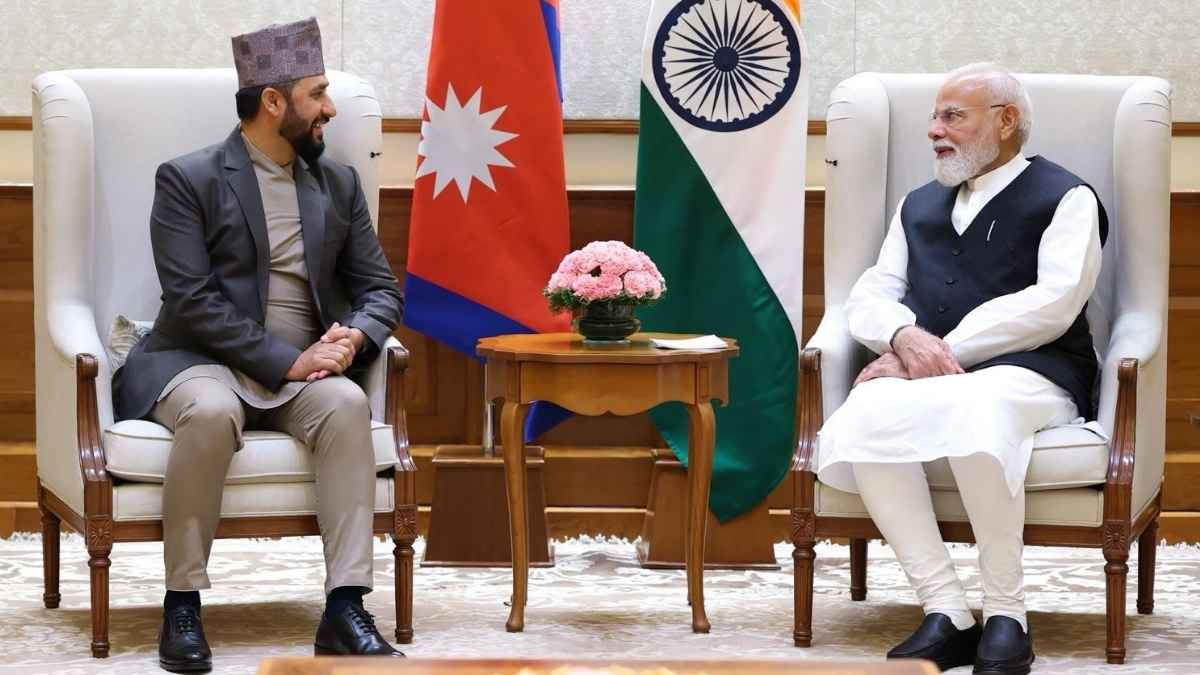
IMAGE: INDIA’S PRIME MINISTER
CHINA HAS a style in Nepal. It is patient and it does not panic when a friendly government falls or an unfriendly one arrives. When the RSP swept to power in March with 182 seats, defeating the Communist formations that had been Beijing’s most reliable interlocutors for two decades, Chinese officials did what they always do when Nepali politics surprises them. They waited.
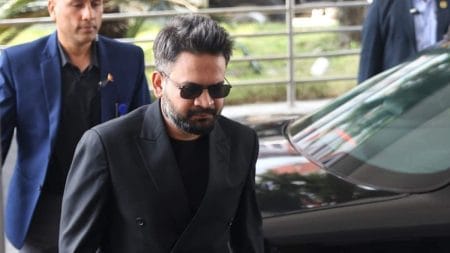
It is now June. They are still waiting. Rabi Lamichhane has been to New Delhi. He met prime minister Narendra Modi, external affairs minister S. Jaishankar, national security adviser Ajit Doval and the president of the BJP. Not a single comparable engagement has taken place between the RSP and any senior Chinese official. The Chinese ambassador to Nepal, Chen Song, has been doing his rounds—meeting finance minister Swarnim Wagle, calling on various ministers—but at a level that does not require Beijing’s attention. The Observer Research Foundation, India’s most prominent foreign policy think tank, described China’s post-election posture towards Nepal’s new government in one accurate phrase: “deliberate restraint”.
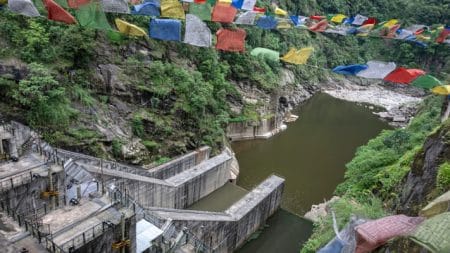
That is not because China lacks interests in Nepal. It has them everywhere. The Belt and Road Initiative (which Nepal signed up for in 2017, generating enormous excitement and more than a little Indian anxiety) has, nine years later, not produced a single implemented project. The Pokhara Regional International Airport, which opened in 2023 and was built with a Chinese soft loan of $215.96m, is itself an ongoing controversy: the airport has attracted far fewer international flights than projected and the loan repayment is now a live fiscal concern. Every other BRI project, from roads and energy to the industrial park in Damak and the Kerung-Kathmandu railway, has remained at the level of feasibility studies and official enthusiasm that has never converted into concrete and steel.
The railway is worth dwelling on, because it is both the most ambitious and the most illustrative of how China’s Nepal strategy works. The proposed 73-kilometre Kerung-Kathmandu line would be, if built, one of the most technically audacious railways in the world: more than 98% of it would run underground through the Himalayas, punching tunnels through a geological zone of plate collision that engineers describe as presenting six distinct categories of major challenge.
The estimated cost is $5.5bn, more than 10% of Nepal’s annual GDP. The Chinese consultants are expected to complete the feasibility study by the end of this month. The study has been underway since 2022. When the MOU for the study was signed during Chinese foreign minister Wang Yi’s visit to Nepal in March 2022, it was already the latest in a series of preliminary agreements stretching back years. A senior Nepali foreign ministry official told a local newspaper recently: “Once high-level visits start, some conversations might begin”. That sentence is a precise summary of where things stand.
What China has not done and cannot easily do is push hard at this moment. The RSP’s instincts towards China are notably cooler than those of the governments it replaced. In 2024, before K.P. Sharma Oli visited Beijing, senior RSP leaders were already making clear they wanted greater transparency on the terms of BRI projects before any new commitments. Shah’s own 100-point policy programme notably omitted the China-Nepal Industrial Park planned for Damak, Jhapa: an exclusion that was read in Beijing, correctly, as a deliberate signal. RSP’s platform contains no affirmation of BRI enthusiasm and big emphasis on Nepal’s sovereignty in making its own strategic choices. Zee News described Shah’s stance as: “not explicitly anti-China, but wary of BRI projects”.
China’s pressure on Nepal in the months since the election has operated through the traditional channel, ie the ambassador’s office, rather than through high-level political engagement. The asks have been consistent with Beijing’s long-standing concerns: Chen Song, in meetings across various ministries, has reportedly urged Nepal not to issue identity cards to Tibetan refugees and to refrain from signing the US State Partnership Program, which would create a formal military-to-military relationship between Nepal and an American state national guard. Both requests are ones China has made of Nepal repeatedly and across multiple governments. Neither has been definitively resolved in China’s favour under any government.
Meanwhile, the India dynamics that China is watching from a distance have their own complexity. India’s economic embargo on Nepali goods that contain Chinese components—a policy that constrains Nepal’s ability to industrialise using Chinese-financed factories—continues. India’s refusal to purchase electricity from Nepal’s hydropower projects where Chinese firms have any involvement continues.
These two Indian policies together make Nepal’s stated “equidistance” between its neighbours practically impossible: every time Nepal builds something with Chinese money and tries to sell the output to India, it runs into a wall. Nepal’s actual economic dependence is with India. The geopolitical aspiration to balance between the two is real. The economics makes it very hard to execute.
That is, in one sense, good news for Beijing. China does not need Nepal to be enthusiastically pro-China. It needs Nepal to remain uncertain; to keep the question open; to not make irrevocable choices in India’s direction. A Nepal that is sceptical of BRI but not formally rejecting it is more useful to China than a Nepal that has signed up fully: full commitment would require delivery, which China has not been able to produce. Managed ambiguity—such as the feasibility study that takes four years as well as the MOU that sits unsigned and the industrial park that stays on the map without a groundbreaking—costs nothing and keeps the option alive.
What would disturb that equilibrium is a Nepali prime minister visiting New Delhi and making specific, binding economic commitments: a power purchase agreement for hydropower, a bilateral investment treaty, a formal framework for Indian manufacturing investment in Nepal’s special economic zones. Shah has not done any of these things, and his self-imposed moratorium on foreign travel means he will not do them soon. Lamichhane met Modi this week and the discussions, as described by Jaishankar’s own account, focused on “development partnership and people-to-people ties”: warm but not specific.
China can live with warm and unspecific. What it cannot live with, and what it will be watching for, is the moment when Nepal’s relationship with India moves from gestures to binding architecture. That moment has not arrived. The railway feasibility study will be completed, reportedly, by this month. The BRI will remain a conversation. The ambassador will keep doing his rounds. And Beijing will keep waiting: which, in Nepal, has historically been its most effective strategy. ■