IMAGE: KHABARHUB
FOR MOST of his career, Swarnim Wagle got to be right from a safe distance. As a senior economist at the World Bank in Washington, then chief economic advisor at the UNDP covering 36 countries across Asia and the Pacific, he built a reputation diagnosing the sort of fiscal dysfunction Nepal suffers from: from weak revenue mobilisation and poor capital spending to budgets that promise more than they deliver. After the 2015 earthquake, he co-led the assessment that secured a $4bn reconstruction pledge: proof that technical work could move real money. None of that prepared him for what happens when the diagnosis is his own to write and his own to act on, inside a cabinet room in Singha Durbar rather than a conference room in Washington.
The collision came almost immediately. A month before presenting his first budget, Wagle released a stark situation report on April 27th that read like the kind of document his old employers would have approved: it acknowledged plainly that “weak allocation, low spending and poor quality of capital expenditure had affected economic growth” for years. That diagnosis was honest and correct, a rare thing in Nepali public finance.
Yet the Rs2.12trn budget that followed proposed an unprecedented deficit framework, targeting Rs410bn in domestic borrowing alone. While net new borrowing is lower due to heavy debt servicing obligations, this massive framework pushes Nepal’s cumulative public debt towards the Rs3.5trn mark, effectively yanking up the implied historic per-capita debt burden past Rs115,000. Critics were quick to note the irony: this is the same Wagle who, before joining government, had repeatedly criticised the ballooning debt run up by previous administrations, and whose own party had campaigned explicitly on cutting aid dependency and limiting excessive borrowing. The manifesto and the budget framework, prepared by the same man, now sit in tense contradiction.
The contradiction shows up again in the tax structure. The budget initially doubled the income tax exemption threshold to Rs1m and cut the top marginal rate by ten percentage points—relief concentrated on salaried, urban earners—while introducing a 3% “Education Equity Fee” on private-education services. For most families outside Kathmandu, public infrastructure is not a realistic alternative; the families forced into private setups by the state’s own underinvestment felt they were paying extra for the privilege.
An economist trained in the basics of progressive taxation does not arrive at this combination by theoretical instinct. He arrives at it through coalition arithmetic and the rapid, defensive policy pivoting that defines Singha Durbar. Facing severe blowback from the urban middle class, Wagle scrambled just days later on June 3rd to amend the Economic Bill, inserting a sub-clause into the Income Tax Act to allow parents to deduct up to 25% of private tuition fees from their taxable income. To salvage the progressivity of the equity fee, the ministry legally ring-fenced the revenue specifically to double nutrition allowances for Dalit students. It was a classic concession: a state apparatus too threadbare to absorb the cost of helping the poor, forced to build complex, ad-hoc workarounds on the fly to quiet the vocal middle class.
Even the budget’s most basic premise ran into a wall the textbooks did not anticipate. Nepal’s interest rates have fallen to historic lows, and banks are sitting on enormous unlent deposits, eager to extend credit. By any standard model, that combination should be unlocking investment. It has not. Bankers say businesses are no longer chasing cheap credit; they are prioritising capital safety over returns, having been “visibly shaken” by the political upheaval of the September 2025 Gen Z movement that upended the old networks many of them relied on. Cheap money cannot solve a confidence problem, and Wagle’s budget offered no real instrument for confidence—only a target, 7% growth, that sits more than three points above the most credible external forecasts.
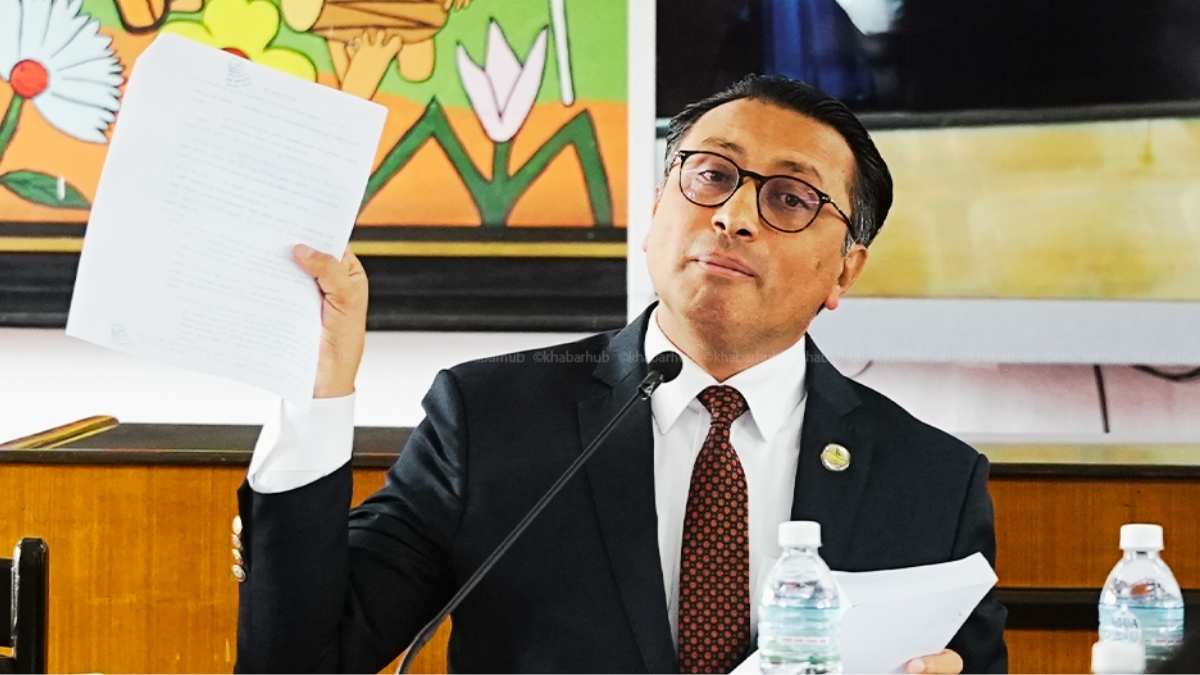
The weeks after the budget showed how differently policy works on paper and in real life. Facing ugly questions in parliament from an aggressive opposition alleging that tax provisions on electric vehicles had been leaked and altered, Wagle did not respond with the data-driven rebuttal his CV would suggest. He fiercely told the MPs questioning him that their own scandals would be exposed too, and dismissed critical reporting as the work of “rags”. It was the least World Bank thing he has said in public office and arguably the most Nepali. Twenty-five years of international development work had trained him to write the correct diagnosis. Nothing in that training prepared him for a hostile parliamentary floor at nine in the morning, with coalition partners watching and his own personal credibility under brutal attack.
Wagle is not a failed economist. He is a competent one discovering, in real time, that the hardest part of fixing Nepal’s public finances was never the analysis. Nepal’s economists have known what is wrong for a decade; the April situation report proves Wagle knew it before he ever took office. What the job has shown him, in just a few months, is that knowing the answer and being able to deliver it inside Singha Durbar’s dirty politics, salary demands and campaign debts are two entirely different kinds of expertise—and only one of them was on his résumé. ■