
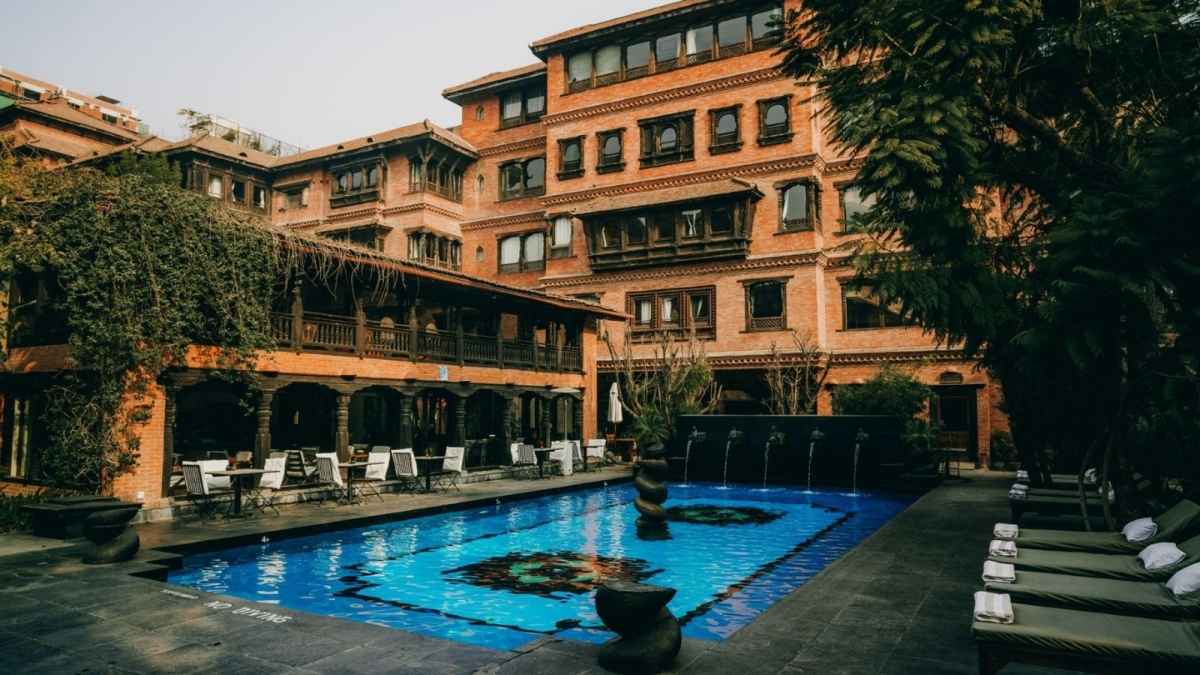
IMAGE: DWARIKA’S HOTEL
THE BUILDING boom has been astonishing. Marriott, Hilton, Hyatt and IHG have all arrived or expanded in the past few years, joining heritage properties like the Yak & Yeti and the newly independent Soaltee. Nepal’s hospitality sector now produces some Rs326bn a year and employs nearly 388,000 people, according to the first detailed national hotel survey in two decades. On a spreadsheet, this looks like an industry the country should be proud of.
Look closer and the picture sours. Tourist arrivals in 2025 crossed 1m for only the third time since the pandemic, growing roughly 1% year on year—essentially flat. Analysts have been warning for some time that the rush of new five-star brands into Kathmandu has created what they bluntly call a capacity overhang: too many marble lobbies competing for a luxury traveller base that has not grown to match the new supply. One earlier industry report counted 27 additional five-star hotels already in the pipeline, on top of what existed, with most concentrated in the same small patch of the Kathmandu Valley.
Then came September. The Gen Z protests that toppled the previous government also tore through the hotel sector with startling specificity. Roughly 30 properties were directly hit by vandalism or arson, including major international brands, according to the Hotel Association of Nepal. Industry-wide losses approached Rs25bn, with some 20,000 workers affected. The Hyatt Regency Kathmandu, operated by Taragaon Regency Hotel, suffered looting, injuries and a death among guests during the peak of the riots, and has remained completely closed since September 9th. The company’s net losses expanded by over 87% in the aftermath of the closure, compounding a pre-existing dip in revenue. City Hotel Limited posted a net loss of Rs55.65m. Oriental Hotels, which runs the Radisson, saw occupancy slide to 37% from 43% and posted a Rs29.55m loss, citing competition from the wave of new chain arrivals as a contributing factor, not just the unrest. Hotel Association data put sector-wide occupancy at 20-25% in the aftermath, against a typical peak-season norm of 80%, with some individual properties as low as 5%.
The irony is what happened just before all this. In the last full fiscal year, the combined net profit of Nepal’s listed hotel companies rose by nearly 80% while total revenue barely moved, a pattern that usually means cost-cutting rather than real growth. Hotels were already squeezing margins to stay profitable on flat demand before a single window was broken. The unrest did not create the oversupply problem, meaning it just made it impossible to ignore.
Infrastructure has not helped the case for optimism. Regional airports in Bhairahawa and Pokhara, meant to spread luxury tourism beyond the congested valley, remain largely quiet, held back by flight-rights disputes and a long-standing European Union ban on Nepali carriers. A five-star resort is only as good as the runway and road that reach it, and Nepal has built the hotels faster than it has built the access.
The cranes, by most accounts, are still moving. New projects with financing already secured are proceeding on schedule, while others, like Marriott’s planned Moxy Kathmandu, face delays. Whoever opens next is betting that Kathmandu’s luxury market will eventually grow into the capacity already built for it. The last eighteen months suggest that bet has been losing for a while. ■





