IMAGE VIA THE ANNAPURNA EXPRESS
YAM KUMAR Rupakheti, a migrant worker from Nawalparasi, arrived in Croatia on a visa valid for only a month and a half. His agent arranged a one-year temporary residence card, after which he found his own work—warehouses, food delivery, painting. The card expired. He bought a bus ticket and travelled straight to Italy, legally, because Croatia had just joined the Schengen zone and his residence permit was still valid. “When I left Nepal,” he said, “my visa was valid for only a month and a half.” He ended up, legally, in Italy. This is not a Gulf story. The Gulf has no version of that bus ticket.
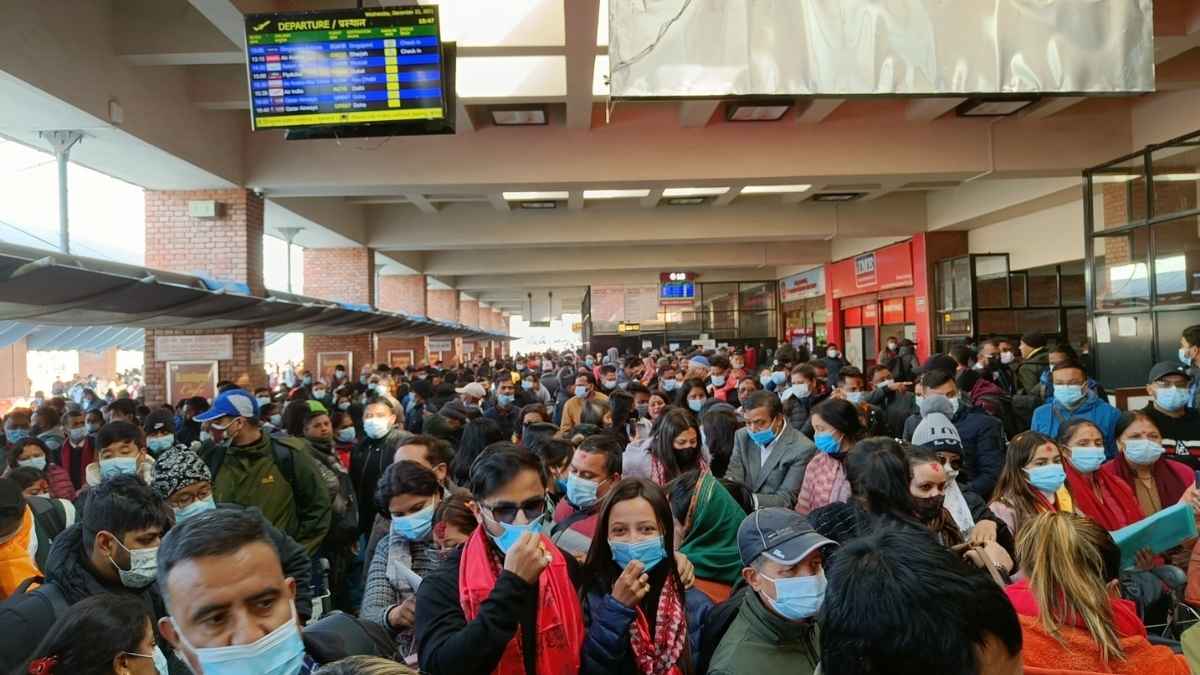
In the first eleven months of fiscal year 2025-26, 53,951 Nepali workers received new labour approvals for 24 European nations, giving Europe a 14.7% share of the total outbound Nepali workforce, up sharply from 8.69% the previous year.
Across the same period, 367,000 Nepalis left for 160 countries in total under newly issued labour permits. The Gulf still dominates at 55.4% and Malaysia accounts for 15.9%, but Europe is the fastest-growing corridor by a substantial margin.
Romania has become the largest European destination, receiving 24,767 Nepali workers—roughly 46% of all Europe-bound migrants—in eleven months. Croatia, which issued 75,000 construction and residence permits in 2025, saw Nepal become its second-largest source of foreign workers, with 35,635 Nepalis in active employment. Both countries joined the Schengen zone in recent years, and their entry into document-free Europe is the primary reason they have become attractive not merely as destinations but as gateways.
The reason European employers are hiring at this scale is obvious. According to the European Labour Authority’s Labour Shortages and Surpluses Report 2025, workforce deficits in the European labour market are no longer temporary bottlenecks but have evolved into big challenges. Non-EU nationals make up 92% of home-care workers and up to 18% of highly skilled medical professionals across European healthcare systems. The continent needs workers. Nepalis, who typically earn four to six times more in a Croatian construction role than for equivalent work at home, are filling a vacancy that no domestic European population is large enough to fill.
The aspiration driving this migration, though, is different from what drove the Gulf model. Kumari Waiba spent seven years as a cook at a five-star hotel in the UAE before moving to a hotel in Bulgaria. Her earnings and savings are lower in Europe than they were in the Gulf. But she is working towards a permanent residence card that would let her bring her family. “Once I secure a permanent residence card,” she said, “I can bring my family over.” The Gulf has never offered this. Qatar and the UAE have no easy pathway to permanent residency for South Asian migrant workers, however long they stay. Europe, with its residency progression and family reunification rights, offers something the Gulf cannot: a future that accumulates rather than one that resets every two-year contract.
One demographic shift is particularly striking. In the first eleven months of this fiscal year, 12,482 women received labour approvals for Europe—23.91% of all Europe-bound migrants. Compare that to the Gulf, where women make up only 9.3% of Nepali labour outflows. The care economy, the hospitality sector and the factory floor in Eastern Europe have created a labour corridor for Nepali women that the Gulf’s legal and cultural restrictions largely prevented.
What has not changed is the work itself. “Most Nepali workers heading to Europe are going for non-skilled 3D jobs—dirty, dangerous and demeaning—which aren’t vastly different from the jobs in the Middle East,” said Rajeev Pokharel, a former official at Nepal’s Department of Foreign Employment. The Schengen card is new. The bricklaying is not.
Europe has also become an individual-migration market in a way the Gulf never was. Individual new permits rose from 44% of Europe-bound migration in 2021-22 to nearly 70% by 2024-25. Workers find jobs through employer contacts, diaspora networks and Facebook groups rather than through the licensed manpower agencies that dominate Gulf recruitment.
Since last July the Department of Foreign Employment has received nearly 7,000 complaints of fraud, most about having to pay high recruitment fees for European jobs. The agencies have not disappeared; they have adapted, and in the less regulated individual market, they are difficult to monitor.
Nepal has no formal labour agreements with Romania, Croatia or most of the countries receiving its workers at scale. The latest labour migration report mentions arrangements with Romania and Germany, but analysts describe these as not formal labour agreements: only expressions of intent. A worker in Bucharest who falls ill, gets cheated or whose temporary residence card is not renewed has no bilateral framework behind them. The modern Nepali migrant has a Schengen stamp. They do not yet have the protection that should come with it. ■