IMAGE: REUTERS
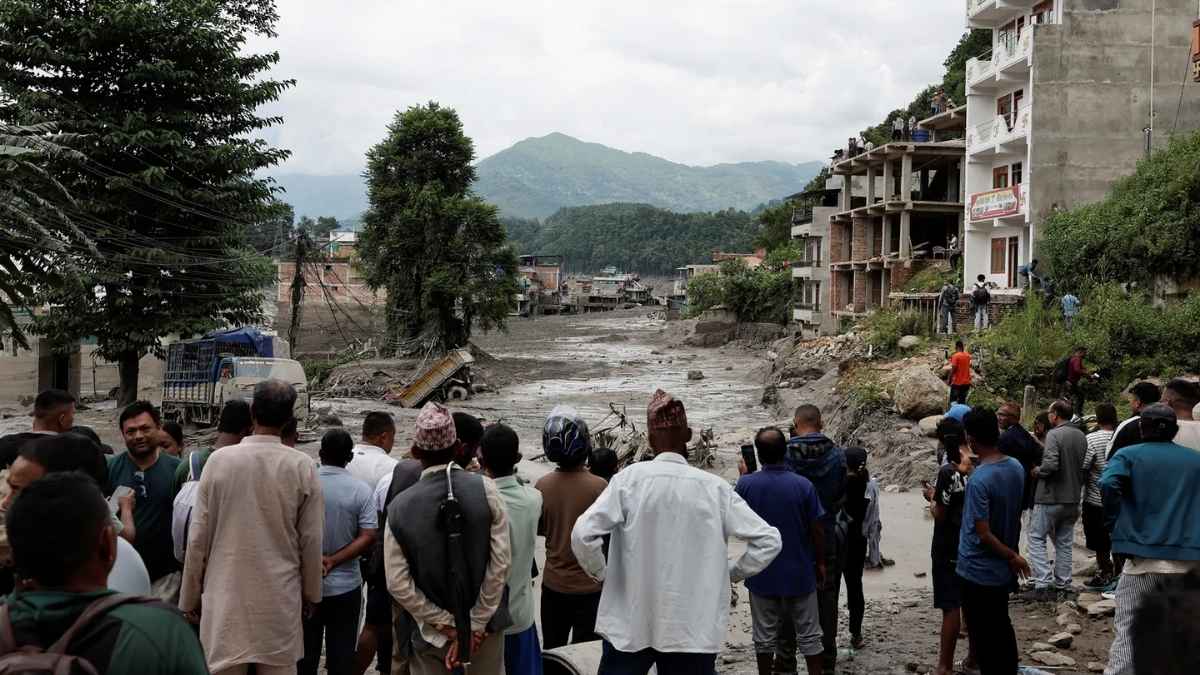
THE GLACIER that collapsed on the Nepal-Tibet border last week did not care about per capita income targets. It moved and the economy moved with it—downwards. The Bhotekoshi flood has killed more than 1,000 people and left over 4,200 missing. It has knocked out 748 megawatts of hydropower capacity, damaged the vital trade route to China, and left Finance Minister Swarnim Wagle with a reconstruction bill of $4bn to $5bn. The Rastriya Swatantra Party’s promise of a $100bn economy in five years now looks like a bad joke.
For years Nepali officials have travelled to climate summits with a familiar refrain: the country is a victim of a crisis it did not cause, and the rich world must pay. The argument has a surface logic. Nepal contributes less than 0.1% of global emissions. It sits on a mountain range that is warming faster than almost anywhere else on earth. The glaciers are retreating. The glacial lakes are growing. The disasters are getting worse.
But the world that was once willing to listen is listening no more. The great green retreat is underway.
The United States, under President Trump, withdrew from the Paris Agreement in early 2025. In January 2026 it withdrew from the United Nations Framework Convention on Climate Change and the Intergovernmental Panel on Climate Change. The Energy Secretary gave the International Energy Agency a one-year deadline to abandon its net-zero agenda or face a US withdrawal. The Environmental Protection Agency stopped estimating the value of lives saved in its cost-benefit analyses for new pollution rules. Billions of dollars in clean energy funding have been cancelled.
Europe, long the vanguard of climate action, is walking back its own regulations. The European Union has proposed to relax its carbon-pricing system and allow automakers to sell gasoline-burning cars for longer. It has replaced the 2035 combustion-engine phase-out with weaker CO2 standards. The German energy minister has called for the EU to loosen its “rigid” adherence to climate neutrality and allow itself to miss its 2050 net-zero goal by up to 10%. European oil giants Shell, BP and Equinor have dialled back their renewable ambitions and doubled down on oil and gas.
Britain is following suit. The new prime minister has signalled a retreat from net-zero rules to prioritise cost-of-living concerns. Reform-led councils are scrapping net-zero targets. The party has committed to repealing the 2008 Climate Change Act and the legally binding target of net zero by 2050.
Even Big Tech has abandoned the cause. Meta quit the global renewable energy initiative RE100 in July, opting instead to power its data centres with natural gas. Microsoft has slashed its investment in carbon removal by 80%. Google, Amazon and Microsoft have all seen their carbon emissions rise by double digits. The AI boom has made clean energy pledges inconvenient, so the pledges have been dropped.
The message is obvious. The world is not coming to Nepal’s rescue. The loss and damage fund agreed at COP27 remains largely empty. The promised $100bn a year in climate finance for developing countries has never materialised. And now the countries that made those promises are busy dismantling their own domestic climate policies. They are not in a position to help; and they are not inclined to try.
Nepal has a choice. It can keep begging for help that will not come. Or it can prepare for the worst.
Preparation means accepting that the glaciers will keep collapsing. The monsoon will keep intensifying. The floods and landslides will keep coming. The question is will Nepal be ready when they happen?.
Ready means building roads that do not wash away when the river rises. It means designing hydropower tunnels with escape routes, and not death traps. It means early warning systems that give people more than thirty minutes to run. It means community-level disaster plans that do not depend on soldiers with excavators arriving days too late. It means accepting that the first 48 hours belong to the people on the ground, and not to international rescue teams that may never come.
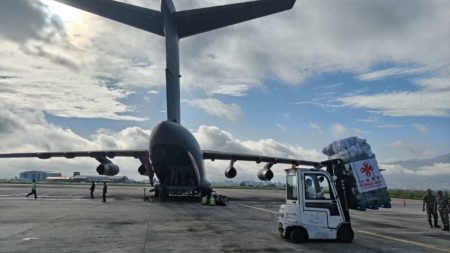
The RSP government has spent its time on Facebook posts and cabinet scuffles. It has refused foreign help out of vanity, then accepted it too late. It has learned nothing from 2015 except that foreign teams cause coordination headaches. The real lesson of 2015 was that Nepal needs a system to coordinate them. Instead the government chose to go it alone and the trapped paid the price.
The $100bn dream is not dead. But it will not be reached by waiting for the world to save Nepal from its mountains. The world has other priorities now. The glaciers do not. The next flood is only a monsoon away. Nepal should stop pleading and start digging. ■