IMAGE: CHINESE EMBASSY IN NEPAL
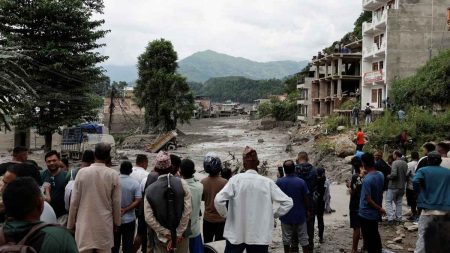
AT 8:35PM ON August 26th, less than twelve hours after the Bhote Koshi flood swept through central Nepal, an Indian Air Force C-130J aircraft took off for Kathmandu carrying ten tonnes of humanitarian supplies. The first relief flight landed that night. By September 3rd India had sent five flights, totalling more than 74 tonnes of emergency material, along with tunnel rescue contingents and a 19-member forensic team. Indian Ambassador to Nepal Naveen Srivastava said: “The day the disaster took place, we had gotten in touch with the Nepali government”.
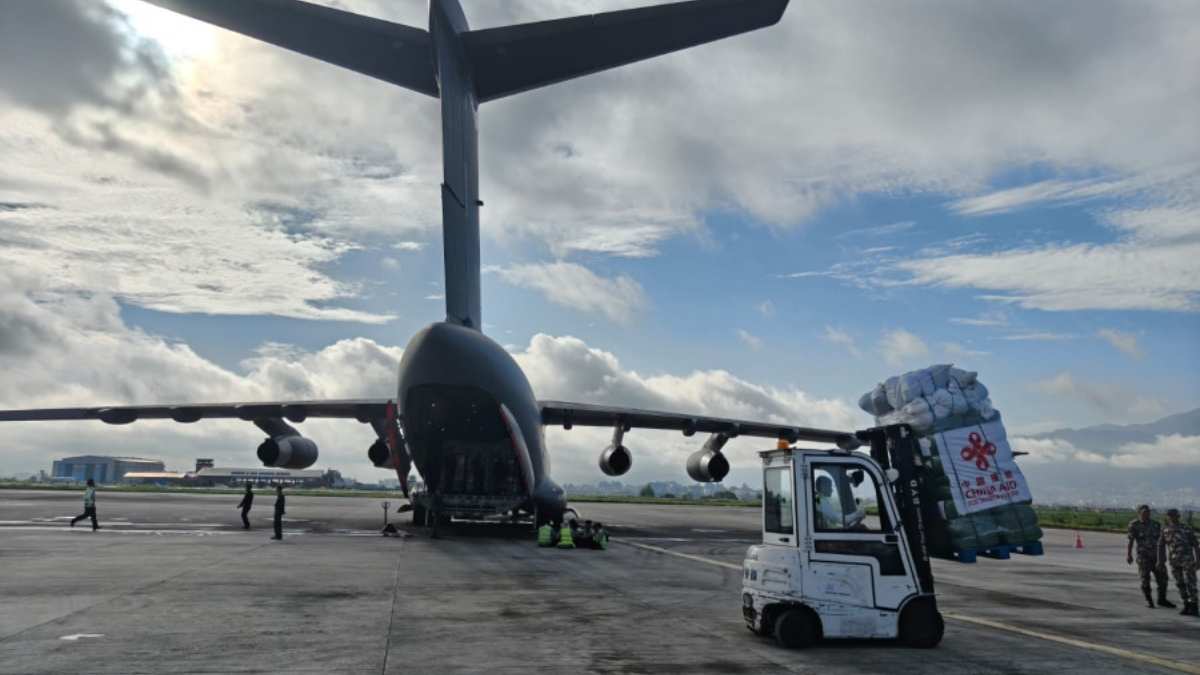
China’s response, though substantial, arrived at a different tempo. Beijing provided $2 million in emergency cash assistance from the Chinese government and another $200,000 from the Red Cross Society of China. The first batch of 50 tonnes of relief supplies reached Kathmandu on August 30th. A second batch followed, then a third, delivered by a People’s Liberation Army Y-20A transport aircraft on September 3rd. Chinese tunnel rescue experts were dispatched to hydropower sites where workers were trapped. Beijing also shared satellite imagery, hydrological data and early-warning information on an upstream barrier lake.
The distinction between the two responses is not merely one of quantity. India’s speed reinforced its self-styled role as the region’s “first responder”. China’s offering, by contrast, leaned on cash and sequenced shipments—a slower but more flexible form of assistance. Both countries, which have historically competed for influence in Nepal, were keen to be seen helping. Yet Kathmandu met both with a peculiar caution.
On August 28th, Nepal declined offers from India, China, the United States, Britain, Japan, South Korea, Sri Lanka and Bangladesh to deploy foreign search-and-rescue teams. The government insisted that its own security forces were capable of handling the operation. The decision, according to a senior foreign ministry official, was informed by the 2015 earthquake, when the arrival of large numbers of foreign teams created big coordination and management problems, including competition among countries. Nepal had not forgotten the chaos. (Eventually it relented, however.)
Instead of foreign boots on the ground, Kathmandu asked countries to channel financial contributions through a one-door mechanism, the Prime Minister’s Relief Fund. It also accepted material aid and specialised technical support such as tunnel rescuers and DNA analysis equipment, but insisted on retaining control over operations. That was deliberate: foreign rescue teams meant overlapping chains of command; financial assistance meant Nepali authorities decided where resources went.
The aid flowing in was considerable. The World Bank offered up to Rs 25 billion—roughly $160 million—in emergency assistance. Britain pledged £5 million ($6.79 million) and emergency responders. The United States committed $500,000 and a disaster-response adviser. The European Union added another Rs 89 million ($5.8 million) for shelter, cash assistance, healthcare and sanitation.
Yet even as it accepted this support, Nepal pressed a tougher claim. Foreign Minister Shishir Khanal called for “climate-related compensation” from the United States, India and China, the world’s three largest greenhouse gas emitters. He described it as a “moral liability,” rather than charity. Nepal, which contributes virtually nothing to global emissions, was making clear that humanitarian aid and climate justice were not the same thing.
The competing aid offers from India and China reveal an uglier reality. Nepal stands between two rivals, each eager to demonstrate goodwill, each watching the other’s moves. For now the aid is arriving. But the disaster has also opened a conversation about who bears responsibility for the melting glaciers that made it possible. That conversation, unlike the relief flights, will not be resolved in a matter of days. ■