
IMAGE: FLICKR
THE BHOTE Koshi river, which descends from the Himalayas along the Nepal-Tibet border, is usually a turquoise ribbon of meltwater. On August 26th it became a wall of mud, boulders and debris. Tsunami-like waves raced more than 100 kilometres downstream, submerging villages across northern and central Nepal. By September 5th the government count stood at over 1,300 dead and 4,216 missing. Among the missing were roughly 600 foreign tourists, many of them Indian pilgrims bound for Mount Kailash.
The disaster struck at the worst possible moment for Nepal’s tourism industry. September through November is the peak season, accounting for some 40% of annual visitor arrivals. The post-monsoon skies clear. The mountains unveil themselves. And the trekking routes fill with foreigners. This year expect the trails to be empty. The Dom Himalaya Hotel in Kathmandu’s Thamel district had seen bookings for the season top 90%. Within a week of the flood, one-fifth of those reservations had been cancelled.
The damage to tourism infrastructure is extensive. Officials estimate that 142 hotels, 57 restaurants, 141 tourist vehicles and 27 heritage sites have been damaged. The Langtang, Gosaikunda, Parvati Kunda and Natali trekking routes have been destroyed. The Rasuwagadhi–Timure border crossing, a key gateway for pilgrims and overland travellers, remains closed. The preliminary loss to the tourism sector tops Rs 50bn ($$328.95m). Total economic losses are estimated at $5bn, roughly one-tenth of the country’s annual GDP.
Tourism is Nepal’s third-largest source of foreign income. In 2025 more than a million foreigners visited. The sector contributes some 6.6% of GDP and supports more than a million jobs. Those jobs are not easily replaced. As one travel operator says, a cancelled October trek does not wound the government; it wounds a household that has staked its entire season on that booking.
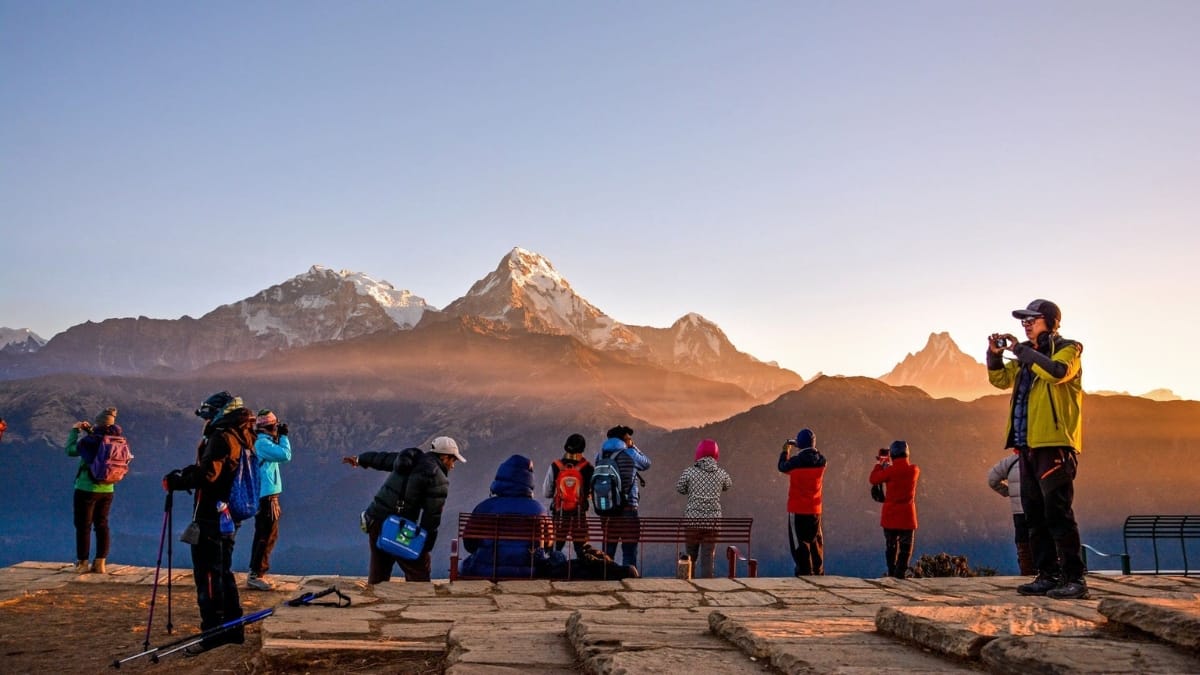
The government has scrambled to contain the damage. Tourism Minister Khadak Raj Paudel took to Facebook with a video and a hashtag, #NepalCalling. He urged travellers not to “scratch Nepal off their travel list”. His plea was that the floods are localised; the airports are open; and the main tourist destinations—Kathmandu, Pokhara, Chitwan, Lumbini, the Everest and Annapurna regions—are safe.
The tourism industry has echoed the plea. Rajendra Lama, a trekking entrepreneur with two decades in the business, has spent his days on the phone trying to persuade anxious clients not to cancel. Bharat Jung Pandey, president of the Nepal Association of Tour and Travel Agents, said there had been no mass cancellations yet, but concern is rising. Juliana Shrestha, co-founder of Duluwa Outdoors, reported that bookings had been affected and itineraries diverted, though no tours had been scrapped outright.
The problem is perception. Terrifying footage from the disaster zone has circulated widely on social media. Potential visitors see washed-out roads, collapsed bridges and bodies being pulled from rivers. They do not see the distinction between Rasuwa district and the rest of the country. The industry is fighting an optical war as much as an economic one.
The United States added to the difficulty on August 31st, issuing a Level 2 travel advisory for Nepal—”Exercise Increased Caution”—and designating the Rasuwagadhi–Timure–Syabrubesi corridor as Level 4: Do Not Travel. Other governments may follow. Such advisories, however prudent, reinforce the impression that Nepal is unsafe.
The sector was already fragile. Tourist arrivals in August fell 3.65% year on year to 85,444. Last September’s youth uprising had pushed arrivals down to roughly 79,000, below the monthly average of 90,000. The Iran war dampened European and North American arrivals earlier this year. Each shock has left the industry weaker and more exposed.
The irony is that most of Nepal is indeed unaffected. The Everest region, the Annapurna circuit and the lakeside streets of Pokhara: all operate as normal. But rationality is not the currency of travel decisions. Fear is. And fear has a long half-life. Even if the roads are rebuilt and the trails reopened, the cancellations that have already occurred will not be uncancelled. The season that was meant to revive tourism after years of turbulence may instead become another chapter in its slow and painful unravelling. ■





