IMAGE: THE KATHMANDU POST
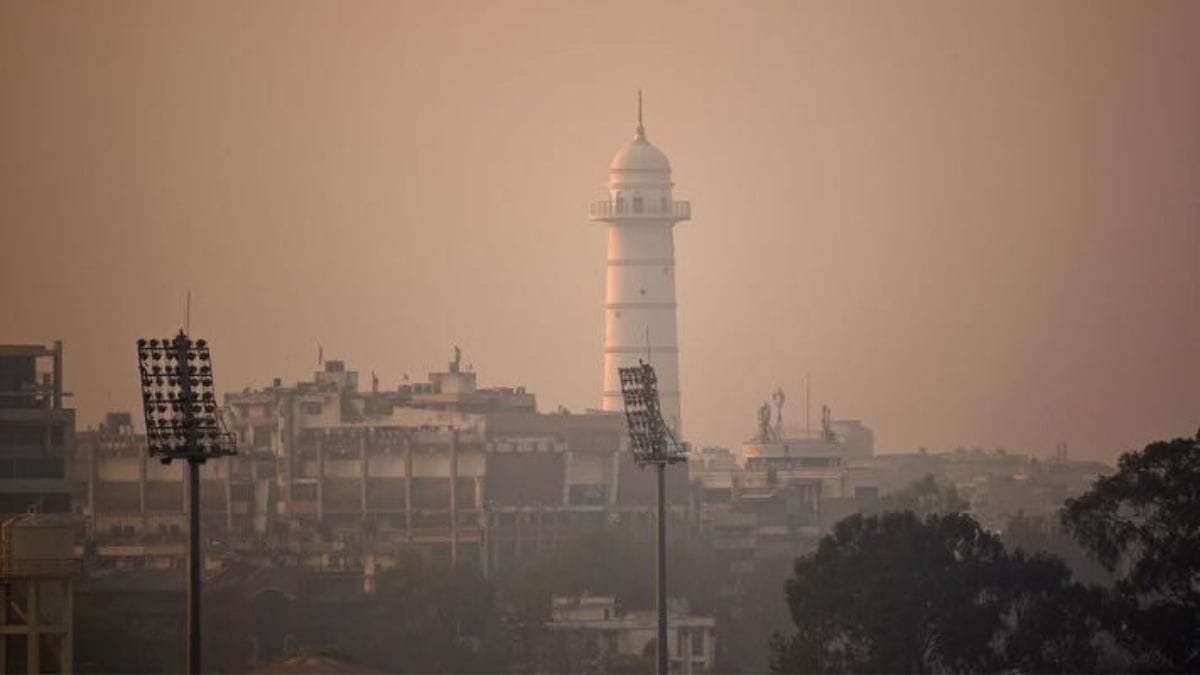
EVERY YEAR air pollution causes about 26,000 premature deaths in Nepal. It is the country’s leading risk factor for death and disability, ahead of malnutrition and tobacco. The average Nepali loses 3.4 years of life expectancy.
The main culprit is fine particulate matter, PM2.5, particles smaller than 2.5 microns that lodge deep in the lungs and other organs. In 2021 concentrations were highest in Kathmandu and the Terai, the southern plains near India. The World Health Organization’s ultimate annual mean target is 5 micrograms per cubic metre; its interim goal is 35. Nepal’s hotspots TOP both by wide margins. Trends over the past decade show little improvement.
The health toll is broad. Air pollution contributes to 75% of chronic obstructive pulmonary disease cases, 46% of strokes, 44% of ischaemic heart disease, 41% of lower respiratory infections, 38% of lung cancer, 30% of neonatal problems such as low birth weight and preterm birth, and 20% of diabetes.
The economic cost tops six percent of GDP a year. Labour productivity falls as workers take sick leave and thinking is impaired. Tourism and aviation suffer.
Without new measures, the diagnostic review estimates that average PM2.5 concentrations will reach 52 micrograms per cubic metre in the Kathmandu Valley and 42 in the Terai by 2035. That is above the WHO interim target and would bring tens of thousands of additional premature deaths, especially among children and the elderly, and a heavier burden on hospitals and the economy.
The sources differ by geography. In the Kathmandu Valley, industrial production, cooking and mobility are the main contributors; and they are expected to stay dominant over the next decade unless action changes. Industrial fuel combustion, led by boilers, is expected to rise significantly. Forest fires dominate in the dry months from February to May and are the fourth-largest local source of annual average exposure. About a quarter of the valley’s pollution comes from outside it, and over half of that from outside Nepal. Hills do not stop the flow: wind and atmospheric conditions carry pollutants in.
In the Terai, transboundary pollution is even stronger. Two-thirds of PM2.5 exposure crosses international borders, mostly from the Indo-Gangetic Plain and Himalayan Foothills, a region of high agricultural and industrial emissions.
Three measures can bring the Kathmandu Valley to 35 micrograms per cubic metre. The first is cleaner production technology, chiefly cleaner boilers in industry, which is dominated by small and medium enterprises. Boilers running on electricity or pellets and briquettes with adequate filters confer the largest abatement.
The second is cleaner cooking: electric induction stoves or fan-assisted biomass stoves. Near-universal electricity access in the valley makes adoption easier. The third is inspection and maintenance of heavy-duty vehicles, with enforced repair or scrapping of non-compliant vehicles, and an upgrade of light-duty vehicles to the Euro IV emissions standard.
Even with perfect implementation, more expensive actions would be needed. Since most pollution comes from neighbouring countries, Nepal’s priority is to act locally and work with nearby regions.
Cleaner air can improve energy security by reducing imported fossil fuels and ease congestion and fuel costs in transport. It can also bring job losses in polluting industries unless green jobs are created. Nepal’s air will improve only if domestic measures and regional cooperation advance together. ■