IMAGE: BYD NEPAL
NEPAL HAS neither oil wells nor car factories, and little obvious claim to lead the world in anything with a battery. On one measure it does. In 2025 over two-thirds, ie 68%, of new cars sold here were electric or plug-in hybrids, reckons the International Energy Agency. In India the figure was just under 4%. The reason is that Nepal’s tax code makes a petrol car dear and an electric one merely expensive: and Nepalis, like drivers everywhere, can do sums.
The lead is one of share, in a small market. Nepal’s electric-car sales rose fivefold from about 2,500 in 2022 to about 13,000 in 2025. India’s rose 65% in the first quarter of this year to over 55,000, so Nepal’s entire fiscal year of electric-car imports—10,847, to mid-July—is about a fifth of what India sold in three months. Percentages flatter the small. They also say something true about direction: a country that buys all its petrol abroad, almost entirely from India, has more reason than most to stop.
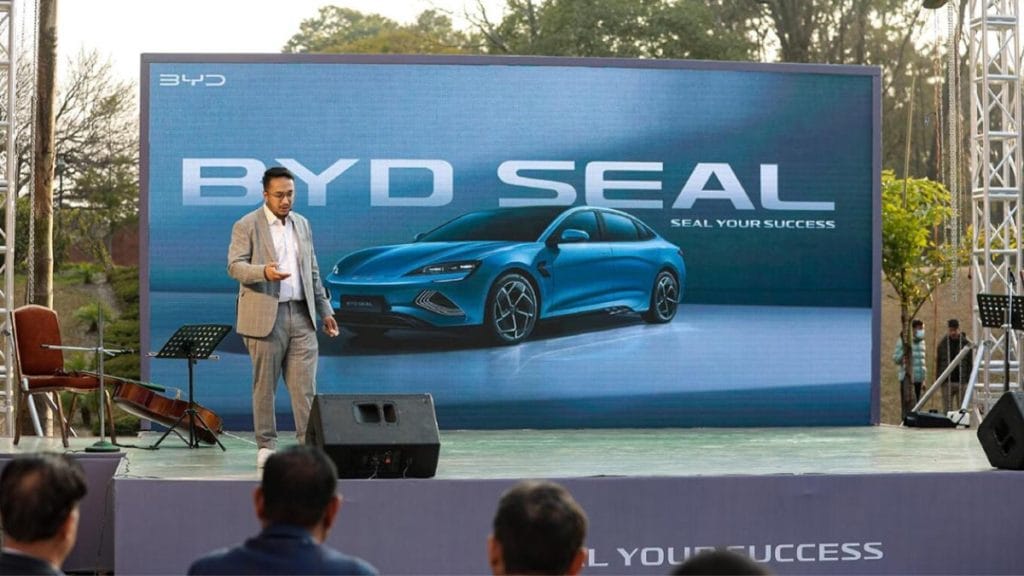
China supplied the cars. Of the roughly 16,700 electric four-wheelers Nepal imported in 2024-25, 13,338 came from China and 3,247 from India. BYD models were among the best sellers this year. Banks helped by lending against a big share of an electric car’s price until the central bank tightened the loan-to-value limit last year. Dealers said at the time that many buyers depend on loans.
Then the Strait of Hormuz closed. In March, usually a slow month, importers reported that inquiries, bookings and deliveries had risen by 50% to 60%, and that about 90% of bookings turned into sales, according toreports. From mid-March to mid-April electric cars made up 824 of the 1,072 cars imported, or 77%. Prices rose as freight costs and the dollar strengthened. In a country that had spent weeks short of fuel and had shut offices on Sundays to save it, a car that runs on domestic hydropower looked like insurance.
Yet the lead was wobbling before the war. In 2025-26 electric car, SUV and van imports fell 20.11%, to 10,847 from 13,578, whereas petrol imports rose 19.72%, to 4,959. Electric vehicles still took 68.6% of the total, but the direction had changed. Importers attributed part of the fall to fewer arrivals before the budget than a year earlier, and the earlier tightening of bank financing pointed the same way.
The budget of May 29th then rewrote the rules. Customs duty on private electric cars, which had run from 15% to 80% according to motor power, became a flat 20%. Excise duty was abolished and replaced by a “Clean Infrastructure Investment Fee” that rises with the vehicle’s value. Fiscal Nepal calculated that the total tax on an entry-level electric car rose from 43% to 46% of its value. Importers warned that pricier models would go up by anywhere from Rs200,000 to over Rs10m. The Finance Ministry said the old system had let importers understate motor power to pay less tax and that the new fee would pay for charging stations as well as battery management and domestic production. Those who sell the cars called it a threat; the ministry called it a repair.
So far the market has shrugged. In the first month of the new fiscal year, mid-July to mid-August, Nepal imported 689 electric cars, against 160 a year earlier, alongside smaller volumes of petrol, diesel and plug-in hybrid cars. A dozen or more new electric brands had arrived ahead of autumn motor shows, which probably explains the stock and says little about demand. One month in a country where a few hundred cars is a busy week proves nothing in either direction.
The tax rate that matters is the one on petrol cars; and the budget left it alone. A buyer weighing an electric car against a petrol one in Kathmandu still faces a chasm in tax of the sort a customs officer would call generous. Older AP-reported figures put the total tax burden on petrol cars at 238%, against about 10% for electric ones; current rates should be checked with customs. That chasm, not enthusiasm for the climate, built the market. It could also be eroded by a rupee that has weakened by some 10% against the dollar, which raises the rupee price of an imported car and the tax on it with it.
Customs data for the first quarter of the new fiscal year, which ended in mid-October, will show whether the new fee has dented the market. Full national totals were not yet consolidated as of this writing. The tax code made Nepal the leader in electric driving in South Asia, with no oil and no car factory to its name. By the turn of the year the customs figures will show whether its drivers chose electric cars or only followed the cheaper road. ■