IMAGE VIA GLOBALGIVING
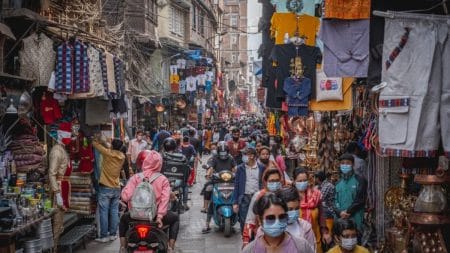
EVERY EVENING Nepal’s international airport fills with young people hauling suitcases and employment permits. Many are heading to the Gulf or Malaysia. Others are trying their luck in Europe or America. Their departure is a brutal economic calculation made in family homes: how much can a son earn in Qatar compared with Kathmandu? How fast can a daughter repay the loan taken to send her abroad? What future can a graduate expect if the best available job pays less than the cost of living?
Balendra Shah came to power promising a different answer. His Rastriya Swatantra Party (RSP) swept the March election after youth-led protests helped bring down the previous government. Shah, a former rapper and mayor of Kathmandu, offered an alternative to a political class that had spent years changing ministers while young Nepalis changed countries. The party promised to create 1.2m jobs and turn Nepal into a hub for information-technology exports.
The scale of the ambition matches the scale of the frustration. Its delivery will be gruesome.
Nepal’s youth unemployment rate was estimated at 20.6% ahead of the election, according to Reuters. Around 1,500 Nepalis were leaving daily for foreign employment, the report said. The precise flow changes over time, but the incentive behind it is durable. Overseas employers offer wages that can be several times those available at home. Remittances support families and the national economy, while the departure of workers drains Nepal of skills and ambition.
The latest economic figures make the contradiction plain. In its October 2026 update, the World Bank said remittances had reached 35.8% of GDP in the last fiscal year. Yet private-sector credit barely increased relative to the size of the economy, suggesting that abundant savings were failing to translate into stronger domestic demand and investment. Economic growth slowed to 3.9% in fiscal year 2025-26.
Remittances are a lifeline. They are also evidence of a rotten economic model that sends workers abroad because employers at home struggle to create enough productive jobs. Money sent from Dubai or Doha can pay for education, housing and consumption. It can also finance imports while the next generation prepares to flee.
Shah has already spoken about the problem. In September he urged young lawmakers to create employment opportunities through innovation and information technology, and encouraged them to develop independent sources of income. The message, reported by Onlinekhabar, was sensible. Its significance will depend on what happens beyond the meeting room.
Nepal needs a government that makes entrepreneurship less punishing, rather than one that lectures young people to become entrepreneurs. A small business can spend months navigating permits, taxes, electricity connections and local officials. An investor must consider policy changes and the risk that a political relationship matters more than a good product. A technology company selling services abroad needs reliable infrastructure, predictable regulation and access to skilled workers. Motivational speeches can never supply these things.
The government’s first task is to make it easier for existing firms to grow. Manufacturing, tourism, construction, hydropower and digital services could all employ more people, provided businesses can invest with confidence. Nepal has cheap electricity potential, a large diaspora and workers who have demonstrated their ability to compete internationally. These are useful advantages. They can never compensate indefinitely for unreliable administration and a domestic market with limited purchasing power.
The promised 1.2m jobs need scrutiny. A headline target means little without a timetable or a sector-by-sector plan. The government must also define what counts as employment. A short-term public works position is very different from a stable technical career, particularly when pay is low and work is informal. It should publish how many jobs are created, what they pay and how many last beyond a year. It should also distinguish private-sector hiring from jobs funded by the state.
There is a danger in treating migration itself as a failure. Working abroad can be a rational choice and the freedom to move is valuable. Nepalis should be able to seek opportunity overseas without being forced to do so by the absence of credible options at home. The objective is to make staying a choice.
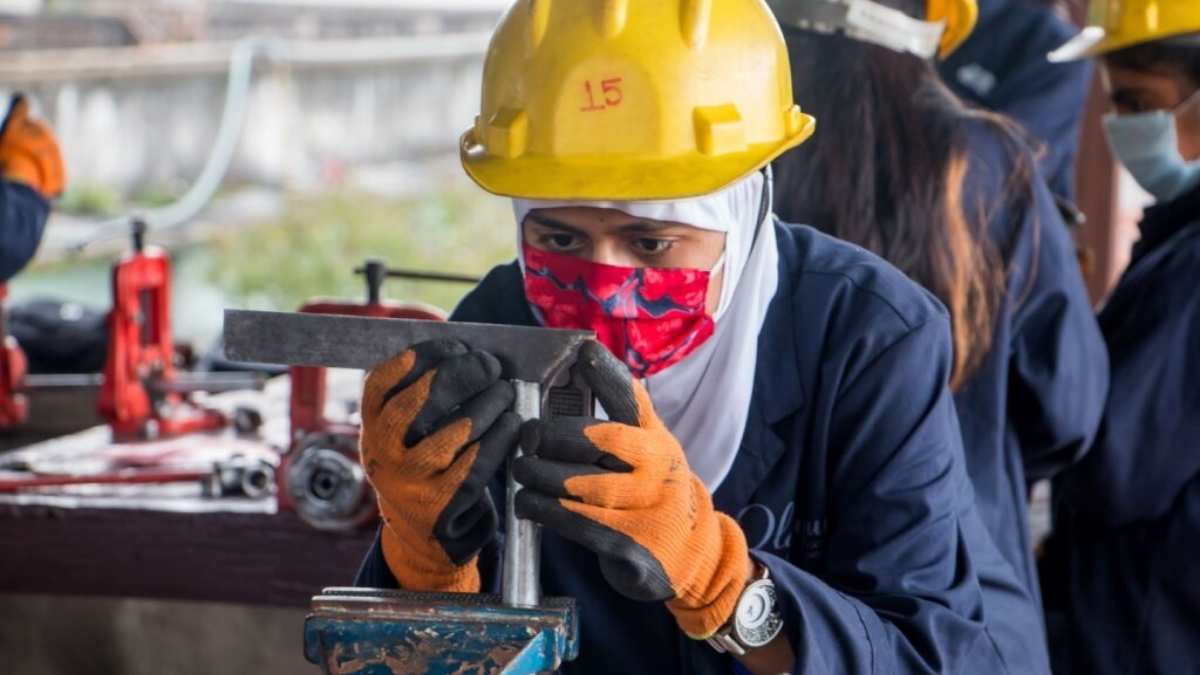
That requires better wages as well as more vacancies. Employers will struggle to pay competitive salaries when firms are small and investment is weak. Training programmes can help but they will achieve little if their graduates return to a labour market with few suitable jobs. Universities also need closer links to employers, with technical and vocational training designed around actual demand rather than the supply of certificates.
The state itself must change. Shah’s popularity rests partly on the promise that rules will apply to people with connections as well as those without them. Young workers will have little reason to trust that promise if public appointments remain political prizes or businesses still need personal access to officials to get routine decisions made. Faster commercial dispute resolution and consistent tax rules may sound less dramatic than an anti-corruption raid. They matter more to an employer deciding where to open a factory.
There is also a limit to what one prime minister can achieve quickly. Nepal’s economy is exposed to its neighbours and to demand for migrant labour in the Gulf. Its government must manage fiscal constraints, weak implementation capacity and an investment climate shaped by years of uncertainty. A parliamentary majority provides room to legislate. It can never make every ministry effective overnight, nor can it create millions of well-paid jobs by decree.
The political risk is that expectations move faster than the economy. The Gen Z protests were driven by anger at corruption and a sense that the system offered too little to people who had followed its rules. A younger cabinet may change the appearance of government while leaving the incentives of the economy intact. If that happens, disillusionment could be sharper because the new leadership won power by promising that the old excuses had run out.
Shah has an opportunity to measure progress in terms that young people understand: the salary available to a first-time employee, the time required to register a business, the number of firms exporting services, the share of graduates finding work related to their skills, and the cost of starting a career without borrowing heavily from family. These indicators would tell Nepalis more than the number of reform announcements.
For a young Nepali weighing a job in Kathmandu against one in the Gulf, patriotism is unlikely to settle the question. The payslip will. ■