IMAGE: RATOPATI
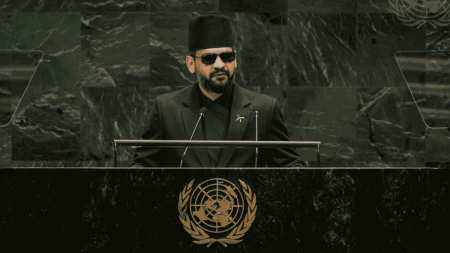
THE MOST dangerous moment for a political outsider arrives not when the establishment attacks him, but when he starts to find its habits useful. Balendra Shah swept into office on a wave of Gen Z fury and a basic promise: to make the Nepali state function. His Rastriya Swatantra Party won 182 of 275 seats in March, a mandate for demolition. Eight months later, the bulldozers have arrived. The question is what they have flattened.
Mr Shah deserves some credit for early speed. The arrests of former prime minister K.P. Sharma Oli and former home minister Ramesh Lekhak, over police killings during last September’s protests, sent a blunt message that former office-holders could face investigation. Clearing a backlog of 2.4m driving licences and allowing businesses to register in two days are unglamorous fixes that cut the time citizens waste dealing with a useless state. Small cooperative depositors have begun to see fragments of their stolen savings returned.
These are useful repairs. They are also the easy part. Running a government is a grinding contest of institutional detail, and the early evidence suggests Mr Shah’s team has an unusual gift for announcing reform while flunking its delivery. Ministers claimed 70 of 100 first-100-day commitments were complete. An independent review found 38. The difference between those numbers is the story of this administration.
The economy offers no cover for the government’s inaction. The World Bank expects GDP growth to slow to 3.9% this fiscal year. Inflation has fallen to 3.1% and reserves are healthy, but those are gifts of remittances and monetary conditions, not of policy. The signal that should alarm Kathmandu is private investment. Credit to the private sector has barely budged while non-performing loans have hit a record 5.7%. Businesses complain of inconsistent decisions and uncertainty about government intervention. A government that breeds fear around routine commercial decisions will struggle to generate jobs, however loudly it shouts about transformation.
The deeper rot is political. Mr Shah promised to end interference in public institutions. Instead his government has leaned on ordinances and appointments that reek of favouritism. The abrupt dismissal of 1,594 political appointees was sold as a purge of patronage. Mass removals disrupted public bodies without building anything better. Swapping one set of political appointees for another achieves sweet bugger all.
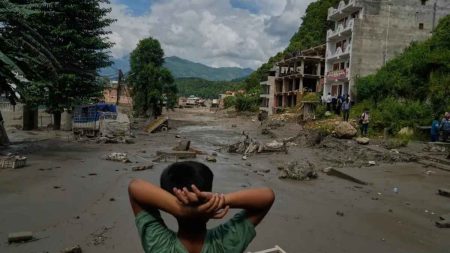
The eviction of informal settlements along Kathmandu’s rivers was a failure of execution. Bulldozers arrived before the promised registration and resettlement process was complete. The Supreme Court halted the campaign. Recovering public land is legitimate. Displacing families without alternatives is a lousy way to pursue it. His response to communal violence in Madhesh, which killed four people in July, was slow; a prime minister’s job includes showing up when the state is struggling to keep order.
The most serious controversy is the removal of Inspector General Dan Bahadur Karki before the end of his tenure, following a scandal involving an alleged political fixer with claims of improper access to senior officials. Journalists were detained after reporting on the affair. Mr Shah ordered their release, but the episode raises questions about pressure on the police and the freedom of the press. A government elected to clean up the state should welcome scrutiny of its own advisers.
True, Mr Shah has inherited a country with decades of institutional damage, and eight months is too short to repair it. But a large parliamentary majority gives him room to build institutions rather than govern through personal authority. Instead he is centralising power, governing by decree and spectacle, and treating the state as an enemy to be occupied rather than a machine to be repaired. The old political class has lost its monopoly on power. The country still lacks convincing evidence that it has gained a better way of governing.
Nepal’s new broom has swept away some of the old mess. It has also started to look like a weapon. The promise was to bury the politics of patronage and impunity. Eight months in, the funeral has been postponed, and the gravediggers are learning to love the shovel. ■