IMAGE: THE CANADIAN PRESS
FOR DECADES governments in poorer countries knew exactly who to call when they needed a trade deal or, say, diplomatic backup. Washington topped the list. That habit is getting expensive. Donald Trump’s administration has butchered foreign assistance, stormed out of international organisations and turned economic relations into a transactional shakedown. The result is a fat opening for countries lacking America’s global reach but flush with, say, money or regional muscle. They are charging into it.
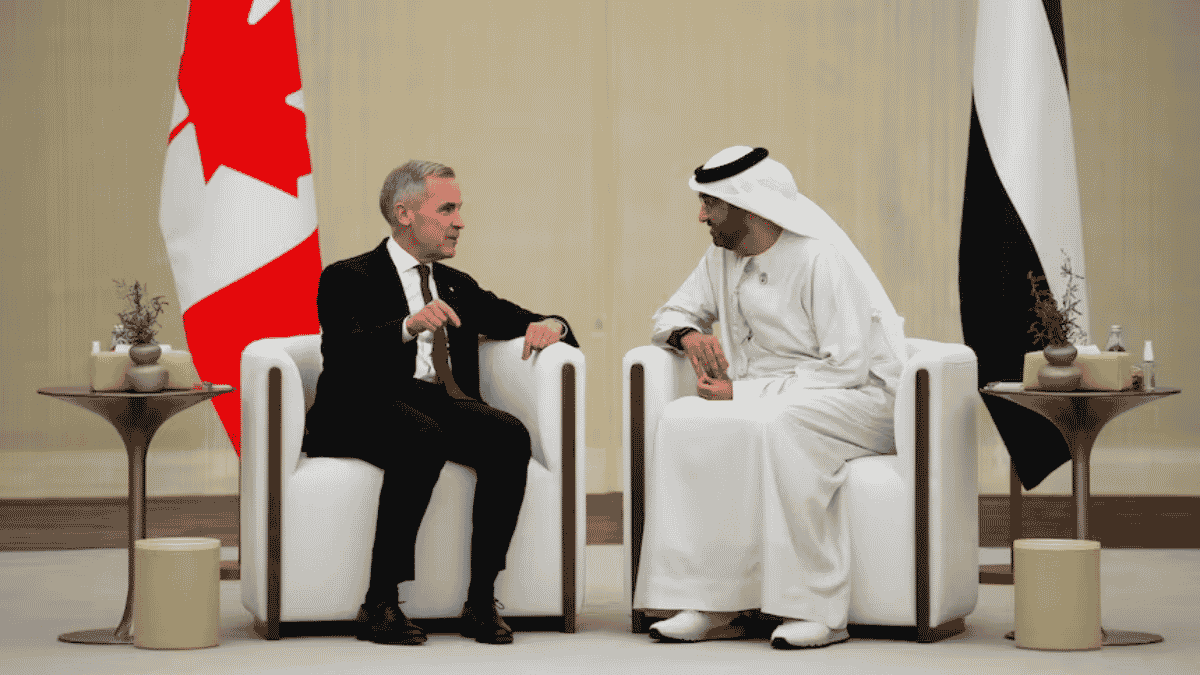
Canada offers a good example. Prime Minister Mark Carney has made diversification a central foreign-policy objective, arguing that dependence on the American market leaves his country vulnerable to Washington’s political mood swings. On October 27th Canada and the United Arab Emirates launched a strategic partnership and signed a comprehensive economic agreement. The deal, stitched together after 47 days of negotiations, is expected to remove or reduce tariffs on more than 99% of current Canadian exports to the UAE. The Emirates also announced a $70bn investment commitment to Canada. Ottawa says it wants to double two-way trade with the UAE over the next decade.
Canada is hunting markets for its energy, minerals and agricultural products. The UAE wants access to technology, investment opportunities and a deeper role in global supply chains. Both are hedging against an American relationship that has become gruesome to predict.
India is running a different playbook. It has expanded ties with Europe while clinging to close economic and defence relationships with Russia and maintaining its security partnership with America. New Delhi has also used its perch in the Global South to demand a greater role in international institutions. Its appeal lies in sheer size: a massive market, a growing industrial base and a diplomatic channel to countries that distrust Western leadership.
India plays it selfish. It will defend its own commercial interests before swallowing the costs of global leadership. Its reluctance to open sensitive sectors to foreign competition shows the limits of its enthusiasm for a more liberal trading order. Developing countries should treat India as a valuable partner, zero expectation that it will act as their collective representative.
The Gulf states bring a different weapon: capital. The UAE, Saudi Arabia and Qatar have used sovereign wealth, energy investment and mediation to build influence across Africa and Asia. They can finance, among others, ports and logistics networks at a time when Western development budgets are bleeding. The UAE’s expanding partnership with Canada also shows how Gulf cash can connect markets far beyond the region.
Turkey has chased a similarly aggressive approach, particularly in Africa, where its construction companies, defence exporters and diplomatic missions have planted flags. Its commercial reach gives governments an alternative supplier and financier. Brazil, meanwhile, has sought greater influence over climate finance and the reform of global institutions, using its leadership of the Global South to squeeze richer countries over the costs of climate change.
These efforts matter because the funding drought is real. The OECD estimates that multilateral development finance could contract by 23-30% between 2023 and 2027 as major donors slash aid budgets. The United States drives much of that retreat, yet Britain, Germany and France have announced cuts too. Middle powers cannot fill the entire shortfall. Their capital and diplomatic activism can, however, hand developing countries more options when traditional funding dries up.
The danger is that the new market for influence becomes a market for dependency. A Gulf-backed port may improve trade while handing its financier long-term control over a strategic asset. A Chinese or Indian infrastructure loan can create useful capacity while dumping repayment obligations on a government that struggles to meet them. Turkish defence equipment may come cheaper or faster, but it breeds dependence on spare parts and maintenance. The flag on the financing agreement changes; the underlying risks fester.
There is also zero evidence these countries are forming a coherent alternative to American leadership. India and Brazil scrap over trade and security priorities. Gulf states claw for investment and regional influence. Canada stays deeply chained to the American economy and security system. Their cooperation will be selective, stitched around individual projects rather than a common political vision.
That fragmentation may actually help smaller countries. Governments can compare offers and negotiate better terms, provided they possess the expertise to assess them. Nepal, for example, could chase Gulf investment in energy and infrastructure while using Indian access to regional electricity markets and Chinese capital for selected transport projects. It should judge each proposal on its financing costs and long-term obligations. Playing partners against each other calls for credible institutions at home.
The larger shift is from a world where Washington set the terms to one where more countries compete to offer them. That creates room for governments previously stuck with zero bargaining power.
America’s retreat has created a market for influence. The winners will be countries offering reliable finance, useful technology and access to markets. The winners among developing nations will be those capable of bargaining hard, rather than swapping one powerful patron for another. ■