IMAGE: NARENDRA MODI/FACEBOO
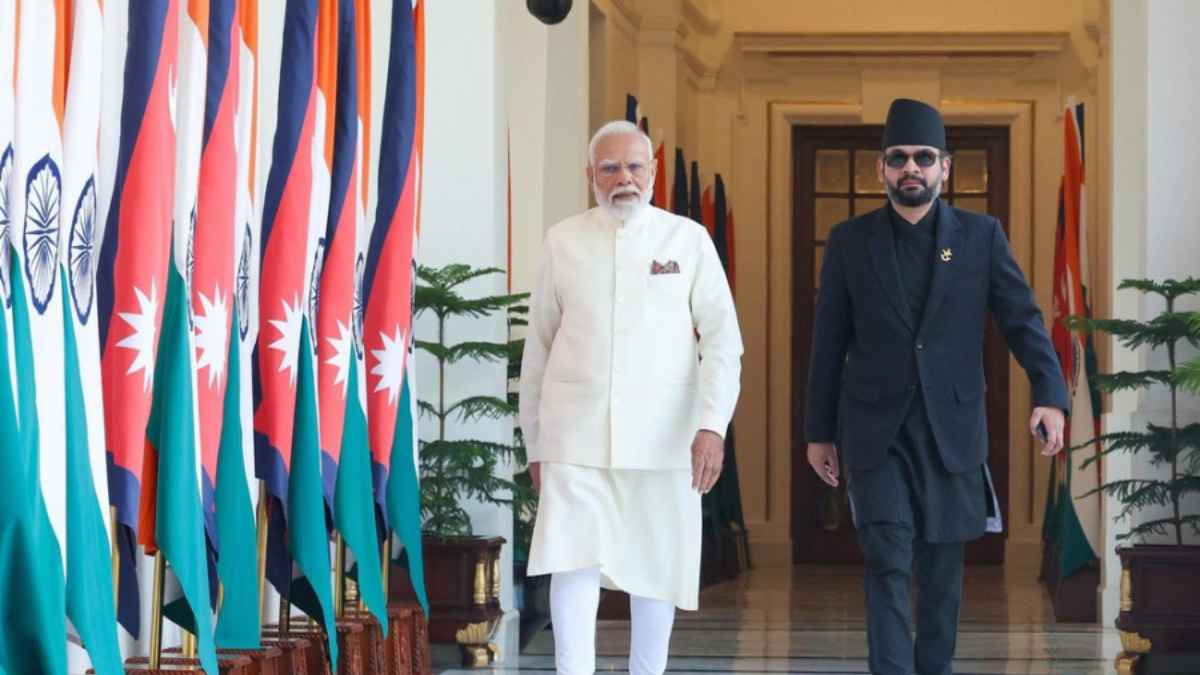
EIGHT MEMORANDUMS of understanding, a motorable bridge, a petroleum pipeline, a new train service and a $1.6bn flood recovery package. The two-day state visit by Nepal’s prime minister, Balendra Shah, to India, his first bilateral foreign trip since taking office in March, produced a long list of deliverables. The agreements, signed on Monday at Hyderabad House in New Delhi, cover forensic science, police training, civil service capacity building, satellite communications, Ayurveda, urban development, health and livestock. They are aimed at strengthening institutional partnerships between the two countries.
The security agreements are crazy. Nepal Police’s Crime Investigation Department will collaborate on academic and research work with the National Forensic Sciences University in Gandhinagar, Gujarat. The National Police Academy will partner with India’s Rashtriya Raksha University. Nepali civil servants will receive capacity-building training through India’s National Centre for Good Governance and the Department of Administrative Reforms and Public Grievances, working with Nepal’s Administrative Staff College under the Ministry of Federal Affairs and General Administration. Nepal’s Ministry of Information and Communication and the Indian Space Research Organisation signed an agreement on establishing a satellite communication network using the South Asia Satellite.
The two prime ministers, Shah and Narendra Modi, jointly inaugurated a motorable bridge connecting Darchula in Nepal with Dharchula in India and the second phase of the Motihari-Amlekhgunj petroleum pipeline project. They laid foundation stones for an integrated check post at Banbasa in Uttarakhand, a greenfield petroleum storage terminal in Jhapa and the 669-megawatt Lower Arun Hydropower Project. They also flagged off the Saryu-Kamala Express, a weekly passenger train linking Janakpur Dham in Nepal with Ayodhya Cantonment in Uttar Pradesh. The 604-kilometre journey will take around 19 hours and begins regular operations on November 28th, offering a direct rail connection between the two religious sites without requiring passengers to change trains.
The Lower Arun project is the most consequential of the energy deals, and the most complicated. The Rs92.67 billion plant will generate electricity using water discharged from the 900MW Arun-3 project. That water will travel through a 17.4-kilometre tunnel to the Lower Arun powerhouse. As with Arun-3, Nepal will receive 21 per cent of the electricity free of charge. The developer will pay capacity and energy royalties: for the first 15 years of commercial operation, Rs400 per kilowatt of capacity and 7.5 per cent of energy; after that, Rs1,800 per kilowatt and 12 per cent. The project is being developed by SJVN Lower Arun Power Development Company, a subsidiary of India’s state-owned Satluj Jal Vidyut Nigam.
Yet the foundation stone has been laid before the money is fully arranged. Yangki Ukyab, chief executive officer of the Investment Board Nepal, said the ceremony marked the project’s transition towards the construction phase, though the physical groundbreaking would take place in Nepal. The developer has awarded Package 1, covering the main tunnel, spill tunnel, audit facilities and access roads, to Dineshchandra R Agrawal Infracon for Rs18.38 billion. The same contractor has also secured Package 2, worth Rs25.48 billion, according to the company’s website. But financial closure has not been achieved. “The company has already acquired the land required for the Lower Arun project using its own equity,” Bhupendra Thapa, spokesperson and joint secretary at the Investment Board, told Kantipur in October. “Financial closure and the process of awarding construction contracts are being taken forward simultaneously.” Ukyab said the company had begun preparatory work with its own investment and expected financial closure soon. The developer says 253 of the 268 households directly affected by the project have received compensation totalling around Rs999.8 million.
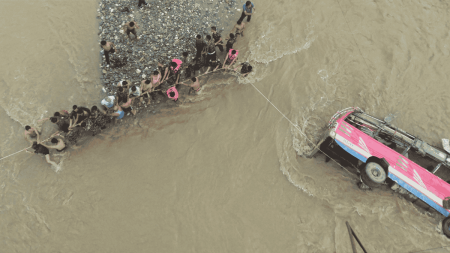
The flood package announced by Modi addresses a more urgent crisis. Floods in August killed 1,500 people, left more than 5,200 missing and destroyed roads, bridges, power plants, farms and homes. Nepalese authorities estimate losses at $4.7bn. A study by World Weather Attribution in September found that human-caused climate change was a key factor in destabilising the mountainside whose collapse triggered the floods. Rising temperatures had thinned glaciers and thawed permafrost, weakening the ice and frozen ground that held mountain rock in place.
Modi said the $1.6bn would help restore infrastructure, rebuild communities and support people who lost their homes and livelihoods. Nepal earlier received $20m from the UN Fund for Responding to Loss and Damage, the fund’s first allocation, approved at an emergency board meeting in October. That is less than 1 per cent of the recovery bill. “This shows that the global community can take the right decision at the right time to help those who are most vulnerable to climate change,” said Maheshwar Dhakal, a senior official in the climate and environment ministry, though he described the sum as small compared with the losses suffered.
The context for India’s generosity is regional. Delhi seeks to strengthen ties with Nepal amid China’s growing economic and infrastructure influence. The two countries share close historical, economic and cultural links, but relations have periodically been strained by political and territorial disputes. Nepal remains heavily dependent on India for fuel and other essential supplies, but energy ties are becoming more reciprocal: India imports around 1,200 megawatts of electricity from across the border. The agreements signed this week, and the projects inaugurated, extend that interdependence across security, civil service training, satellite communications and transport. At a joint press conference, Shah invited Modi to visit Nepal and said Nepal was ready to welcome Indian investors. “We have embarked on a development partnership,” he said.
Whether that partnership extends to financing the projects it celebrates is to be seen. The Lower Arun foundation stone has been laid, but the developer must still secure the loans to build it. The flood recovery package has been announced, but the UN fund’s first allocation covers a fraction of the damage. The train will run weekly from Ayodhya to Janakpur, and the bridge now connects Darchula to Dharchula. The eight MoUs commit the two governments to further cooperation. The money, in each case, is the next test. ■