Three years ago a political party in Nepal promised to demolish the rotten old house of establishment politics. Now it is struggling to keep its own house in order.
The Rastriya Swatantra Party (RSP), born in 2022 amidst widespread disillusionment with the mainstream political class, arrived like a fire alarm in a smoke-filled room. Led by the telegenic former TV host Rabi Lamichhane, the party surfed a wave of populist outrage to become the fourth-largest bloc in parliament. Its core message was simple: the old guard is corrupt and incompetent and out of touch. We are none of the above.
Yet today the RSP looks alarmingly familiar. Its founder is in jail. Its ideology is in tatters. Its internal discipline resembles that of a student union on strike.
The RSP’s entry was electric. Six months before the 2022 elections, it didn’t even exist. By the end of that year it had secured 20 seats, outperforming some veteran parties. It gained a 21st seat in a 2023 by-election, drawing energy from the growing urban middle class and diaspora citizens, especially younger voters. Rather than reform the old order, the RSP set out to construct its own: leaner and cleaner and (allegedly) less compromised.
That glow has since dimmed. Lamichhane is accused of embezzling cooperative funds across several districts—the kind of crime he thundered against on national television. The party insists the case is politically motivated, part of a vendetta by the establishment he threatened. It points to his previous stint as home minister, during which he pursued high-profile investigations into the Bhutanese refugee scam; the Patanjali land controversy; and various dodgy dealings involving top leaders. The courts have thus far disagreed.
Moreover the RSP campaigned on a platform of systemic reform and opposition to political collusion. Yet within two years of winning office it had joined the government twice—first with the Maoist Centre and later with the UML, two of the very parties it had denounced. This tactical flip-flopping, though not illegal, was enough to sour many voters who expected principled distance from the mainstream.
Critics, like political analyst Shreekrishna Aniruddh Gautam, argue the RSP squandered a historic opportunity. They jumped into bed with the same forces they said they’d fight. The party became harder to distinguish from the rest.
Wanted: someone to blame
Worse, the party appears unable to function without Lamichhane at the helm. The acting president, DP Aryal, cuts a low-profile figure. Key events including the much-hyped general convention have been indefinitely delayed. Infighting has intensified. Mukul Dhakal, the party’s former general secretary, was sidelined after launching a 32-district review campaign, then accused colleagues of personal vendettas and exited in acrimony.
The party’s ideology is no sturdier. For all its passion, the RSP is vague on economic policy or anything. It has built its brand on anti-corruption and outsider appeal, but has yet to translate those slogans into a coherent theory of governance. The RSP wanted to change the system but it has become the system.
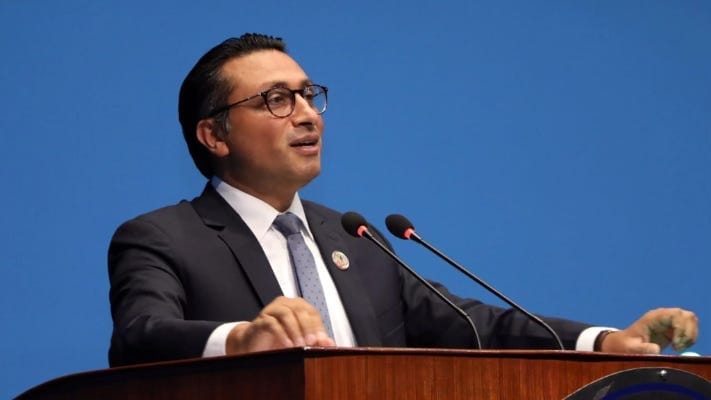
That said, not all is lost. It has shown unusual dexterity in mobilising the diaspora and the youth, areas in which legacy parties lag. At least five of its MPs are currently on international outreach from the Gulf and India to Australia and America. The Harvard man Swarnim Wagle, the party’s vice-president and a former World Bank economist, has become its most prominent emissary abroad.
That global touch, though electorally marginal at home, lends the RSP a veneer of modernity. It also suggests the party may be playing a longer game: cultivating ideas and capital and credibility in places where traditional parties dare not tread. Whether that translates into votes in 2027, however, is another matter.
Populist outsiders rarely stay outsiders for long. Many succumb to the temptations of power or collapse under the weight of inexperience. Nepal’s history provides no shortage of cautionary tales: from the revolutionary fervour of the Maoists to the royalist nostalgia of the RPP. What sets the RSP apart for now is its attempt to occupy the elusive space of technocratic populism: modern and media-savvy and morally outraged.
Yet moral outrage is easier to sustain in opposition than in office. The real test of the RSP is whether it can evolve into a mature political institution with clear values; a second line of leadership; and policies that outlive its founding personality.
Should the RSP elect Swarnim Wagle as its leader? In the short term: yes. In the long term: only if the party wants to survive. Wagle brings exactly what the party currently lacks, which are credibility and competence. He is neither tainted by scandal nor shackled by cult-like loyalty to Rabi Lamichhane. His technocratic reputation and ability to speak to both domestic reformists and international observers would lend the party much-needed ballast at a time when it is adrift like a kite.
With Lamichhane’s parliament badge now revoked, electing Wagle would send a clear signal: that the party is more than one man’s YouTube channel with a parliamentary pass. It would be a shift from populist performance to policy professionalism: the kind of evolution every protest party must make if it hopes to govern rather than only grandstand.
Some may argue Wagle lacks mass appeal or the confrontational charisma that powered the RSP’s rise. True—but the populism engine has sputtered. What the party needs now is staying power rather than shock value. And though he may not command crowds like Lamichhane, Wagle commands respect, which at this stage is rarer and more politically valuable.
If the RSP continues to orbit Lamichhane’s legal fate and media persona, it risks becoming Nepal’s Aam Aadmi Party in reverse—flaring up fast, then folding under the weight of unmet expectations and internal contradictions.
Electing Swarnim Wagle would not guarantee victory in 2027. But it would give the party a fighting chance to turn from a cautionary tale into a case study in political maturation. A revolution, after all, cannot be reversed. But it can be redirected. ■