Update (July 1st 2025): The Trump administration has scrapped most sanctions on Syria, reopening its access to global finance and doubling down on America’s promise to aid its post-war reconstruction.
When war-hardened rebels become reformist technocrats, even the most jaded investor may raise an eyebrow. Such is the transformation Syria’s new leadership is attempting to project. Following the ousting of Bashar al-Assad in a surprise rebel offensive last December, the country’s interim president, Ahmed al-Sharaa, has traded camouflage for pinstripes and is now courting foreign capital with the zeal of a Gulf emir.
The overtures are starting to pay off. In May President Donald Trump lifted American sanctions, albeit selectively, and Syria’s central bank chief has since announced the country will soon be reconnected to Swift, the global financial messaging network. That might sound technical. But for Syria, long relegated to the financial wilderness, it is a first step toward international legitimacy and more tangibly, access to hard currency. The move is part of a broader plan to liberalise the economy, rebuild the banking sector and woo back the diaspora.
Still, restoring Syria’s place in global finance is easier than restoring its social fabric. And though new investment agreements and photo ops in Riyadh and Paris may excite Damascus’s elite, a less flattering picture is emerging on the ground.
Syria has not enjoyed a moment of macroeconomic optimism in over a decade. Since 2011, when Assad responded to a popular uprising with brutal force, the country has suffered civil war, international sanctions, hyperinflation and the collapse of its banking sector. The pound lost over 90% of its value; the informal economy ballooned; and formal financial channels all but disappeared.
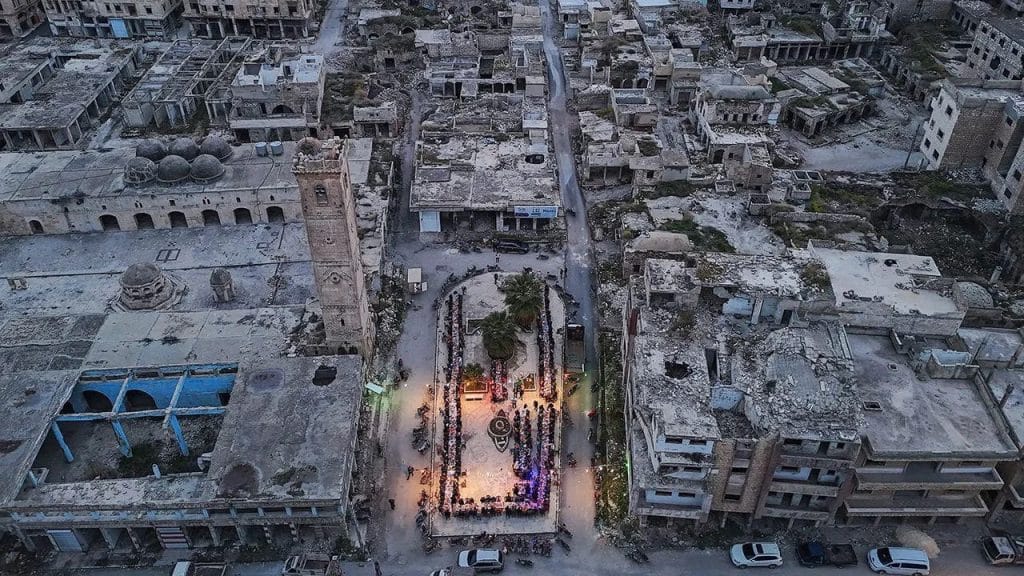
The new government—an unlikely coalition of former jihadists, technocrats and opportunists—promises to reverse course. Abdulkader Husrieh, the new central bank governor, has emerged as the polished face of reform. In interviews he speaks the language of liberalisation: recapitalisation, deregulation, managed currency floats. A former consultant who helped draft Syria’s finance laws under Assad, Husrieh is now the architect of a six-to-12-month stabilisation plan. That may sound ambitious. But in a country where 70% of infrastructure is in ruins, ambition is the only cheap resource left.
The return to Swift is central to that plan. It will allow Syrian banks to process international payments, facilitate exports and imports and reconnect with correspondent banks worldwide. More important, it will help re-legitimise the formal banking system, long bypassed by dollar-carrying hawaladars: informal money agents who have thrived on Syria’s financial isolation.
“We aim to route all foreign trade through the banking sector,” says Husrieh, keen to eliminate the black-market premium that saw up to 40 cents skimmed off every dollar remitted into the country. If successful that could bring more transparency, more tax revenue and less dependence on the shadow economy. It might also trim the appeal of suitcases full of cash, long a staple of Syrian business.
On the monetary front, reforms are under way. The central bank is transitioning towards a managed float of the pound and aims to unify the official and black-market exchange rates, another prerequisite for rebuilding trust. As foreign capital re-enters, currency stabilisation becomes more plausible. But stabilisation is not the same as normalisation.
For one, Syria’s banking system is still hollowed out. The public banks, though still government-backed, lack lending capacity. Private banks meanwhile have little appetite for risk, and even less for deposit-taking without guarantees. Husrieh has promised a new state institution to insure deposits. That, along with possible sukuk issuance (interest-free Islamic bonds), could help resuscitate credit markets.
There’s the issue of investment, too. Gulf states have rushed in with pledges. Saudi Arabia and Qatar have already cleared Syria’s $15.5m arrears with the World Bank and agreed to pay public-sector salaries for three months. Western investors are less eager, wary not only of reputational risks but also of Syria’s patchy property rights and opaque institutions. Husrieh’s reforms may ease those fears. But trust, like infrastructure, takes time to rebuild.
After years of Western efforts to topple Assad via sanctions and diplomatic pressure, it took a former rebel commander with Islamist ties and a flattering smile to break Syria’s isolation. Mr Sharaa has travelled widely and promised widely. He has invited American firms to bid for Syrian oil and hinted at joining the Abraham Accords with Israel. He has also flattered Trump with promises of “greatness”.
Yet although Syria’s new leaders are busy flattering foreign dignitaries, their performance at home leaves much to be desired. The transitional government has yet to impose authority over much of the country. Militias remain armed and fractious. Civil registries outside regime-held zones have not resumed their functions. Identity documents, birth and death certificates, and property titles are in disarray.
Even more worrying is the creeping sectarian unease. Alawite and Druze communities, once pillars of Assad’s power base, feel increasingly marginalised. In Homs, a city marked by sectarian strife, local Alawite leaders complain of lawlessness, kidnappings and a government more interested in optics than order. Christian neighbourhoods in Damascus report harassment by religious hardliners emboldened by the government’s reluctance to challenge them.
The interim constitution signed in March has also raised eyebrows. By leaning heavily on Islamic law, it has compounded fears Sharaa’s government may be trading one form of authoritarianism for another, albeit under new branding. “Foreign legitimacy seems to matter more than local grievances,” notes Mazen Gharibah of the London School of Economics. That may explain the growing discontent even in areas that once welcomed Assad’s fall.
The paradox at the root of Syria’s recovery is this: the parts most visible to outsiders—banking reform, investment deals, diplomatic summits—are progressing fastest. The parts most vital to citizens—security, justice, inclusion—lag behind. That inversion is not uncommon in post-conflict states, where elite consolidation commonly precedes popular reconciliation. But it is particularly perilous in Syria, where wounds are deep and fault lines numerous.
Reconnecting to Swift may help pay for bulldozers and bandwidth. But it will not restore birth registries or prosecute militia warlords. Foreign capital may rebuild roads. It cannot reconstruct trust. And though Mr Sharaa’s international tour has made Syria investable again, it has not made it governable.
For now Syria’s economy is being unshackled. Its society, less so. If the new leaders do not move as quickly at home as they have abroad, the country’s fragile gains may yet vanish in a puff of diplomatic smoke. The lights in Damascus are flickering back on. But power, in more senses than one, remains unevenly distributed. ■