Image: Bajaj Nepal
Nepal’s economic ascent has taken a scenic detour. The peaks and ridges that define its landscape now find an economic analogue: a development route that bypassed the industrial plains and vaulted straight from the agrarian foothills into the airy heights of services. Whereas economists have repeatedly touted manufacturing as the bedrock of modern growth, factories in Nepal never quite roared. Rather its economy now leans heavily on shopfronts, remittance-fuelled construction and fledgling digital services. The pattern has a name: premature deindustrialisation.
Global development theory once sketched a clear path to prosperity. First, farmhands shift into factories. Then as incomes soar and technology advances, economies diversify into services. The model rewarded scale, exports and labour absorption: attributes naturally found in manufacturing. For much of the 20th century it worked. South Korea, Taiwan and China built industrial bases before moving upscale. Nepal by contrast reached for the third rung without a proper grasp on the second.
The figures make this leap evident. During the 1996–2023 period services contributed an average of 2.3 percentage points to annual real GDP growth while industry barely scraped 0.8 points. Agriculture, notwithstanding employing a big share of the population, added even less. The structure of the economy followed suit. Services climbed from 44% to 49% of real output between the conflict and post-pandemic periods. Meanwhile industry stagnated at a subdued 14% of GDP, far below the 30% benchmark seen in peers.
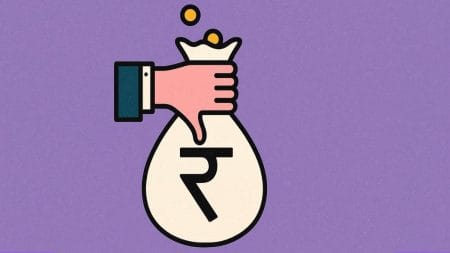
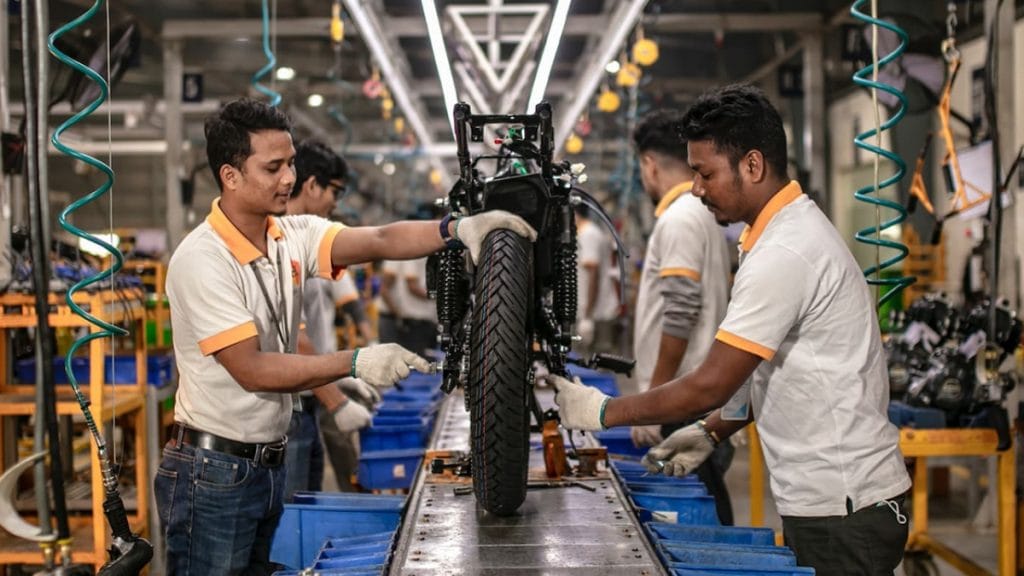
Manufacturing, seen as the engine of industrial dynamism, sputtered. It accounted for a paltry 5.7% of GDP in the most recent period, down from 7.3% during the conflict years. The shrinkage was disguised by a surge in construction, which became the biggest industrial subsector, powered by earthquake reconstruction and easy remittance-fuelled liquidity. When import restrictions bit in 2023, both subsectors contracted, exposing the fragility under the concrete.
Meanwhile a glimmer of promise shone through the turbines. Hydropower output expanded by 15% a year during the repeated shocks period. Installed capacity tripled from 787 megawatts in 2015 to nearly 3,000 in 2024. If transmission lines and cross-border trade agreements keep pace, hydropower could ease the country’s seasonal energy deficits, trim fossil fuel dependency and lower production costs—reclaiming some lost ground for industry.
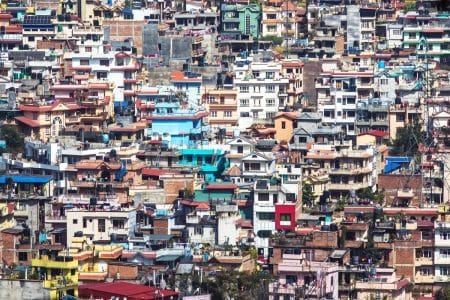
But for now the real weight of growth is in services. Wholesale and retail remain dominant, although their share of GDP fell from 19% to 16% over the same stretch. Real estate, tourism and accommodation services never quite took flight. Despite the nation’s Himalayan allure, accommodation and food services contributed a mere 1.5% to GDP. Tourists still spend around $40 a day, roughly what they might tip in Zurich, owing to poor connectivity and lacklustre amenities.
Digital services provide a spark of modernity. ICT services, though comprising around 4% of GDP, now make up 10% of total service exports. By 2023 digitally delivered services accounted for half of service exports. This pivot, driven by freelance tech workers and outsourcing firms, positions the country better than many of its regional neighbours. Whether it can scale meaningfully is uncertain.
The supply-side dynamics of growth tell a cautionary tale. Capital formation, propped up by remittances and aid, delivered the bulk of GDP growth: around 3 percentage points a year. Following the 2015 earthquake, post-disaster reconstruction boosted the figure to 4.4 points. Labour’s contribution was meagre: only 0.5 percentage points between 1996 and 2023. Productivity growth, as captured by total factor productivity (TFP), was even worse: averaging just 0.25 percentage points across the entire period.
Worse still, TFP turned negative after 2014. Natural disasters, political disruption and a blockade from India in 2015 devastated supply chains. Covid-19 brought further shocks. The fallout was a productivity trajectory more befitting a stagnating economy than an aspiring middle-income one.
The employment patterns reinforce the diagnosis. Structural transformation has been halting. Agricultural employment shrank at a respectable clip—one percentage point a year—but non-agricultural sectors failed to soak up the slack. From 2000 to 2022 employment in industry and services each grew by around 0.25 percentage points a year, trailing comparator countries. The overall employment ratio fell, especially among men. By 2022 non-agriculture employment was at levels lower than all peer economies except Laos.
Women fared even worse. Though their participation rate is relatively high by regional standards, most work is informal and confined to agriculture. Non-agriculture employment for women trails the economy-wide average by 20 percentage points. Realising women’s labour potential will require major shifts: in education, access to finance, labour market flexibility and trade openness.
Nepal’s policy agenda is replete with ambition. The 16th National Development Plan sets a target of 7.1% average growth through 2029. The Ministry of Finance projects 6.7% growth during 2025–2027. These figures float high above the baseline scenario outlined in recent macro-fiscal projections by the World Bank, which suggest growth will stabilise at 4.5% through 2030, then gradually tumble. By 2050 potential growth could slip to 3.3%: a tepid pace for an economy mired in underemployment and infrastructure gaps.
Three levers could lift the trajectory: productivity growth, capital accumulation and labour force expansion. TFP provides the biggest potential boost. If the country manages to reach the 75th percentile of productivity growth observed in other lower-middle-income countries (LMICs), output by 2050 would be 20% higher than under the baseline. Expanding investment to match peer benchmarks would add another 10%. Even small gains in labour participation could lift GDP by several percentage points.
Migration remains a double-edged sword. Remittances now sustain much of the domestic economy including real estate and consumption. If outward remittances were to tank—due to slower construction activity in Gulf countries or new labour restrictions—GDP would suffer. Similarly permanent outmigration could produce a hollowing-out of the domestic workforce. If 20% of migrant families failed to return, GDP could slide by more than 10% from the baseline.
Export growth presents a viable counterweight. Moderate expansion—closing the current export gap over a decade—could elevate GDP by 2% in the medium term. Hydropower exports, particularly to India and Bangladesh, could compound the gain. A $6.4 billion investment programme, currently under discussion, may lift annual growth by 0.5% by 2033. The actual gain could be higher if cheaper electricity stimulates domestic manufacturing.
The nation’s development path now depends on its ability to bend the trendlines. Skipping industrialisation has left it vulnerable to shocks; reliant on migration; and bereft of strong domestic employment. Services, ICT and hydropower provide some hope. Yet without structural reforms to stimulate productivity, ease trade and raise labour absorption, the economy risks hovering in a low-growth equilibrium.
The country’s mountains may be majestic but the path to prosperity is not uphill by default. It calls for clearing the thicket of informal employment, bypassing policy inertia and building a development model rooted in real dynamism: rather than remittance dependency or statistical illusions. Otherwise it may remain a nation of labourers abroad and retailers at home. ■