IMAGE: CamelKW
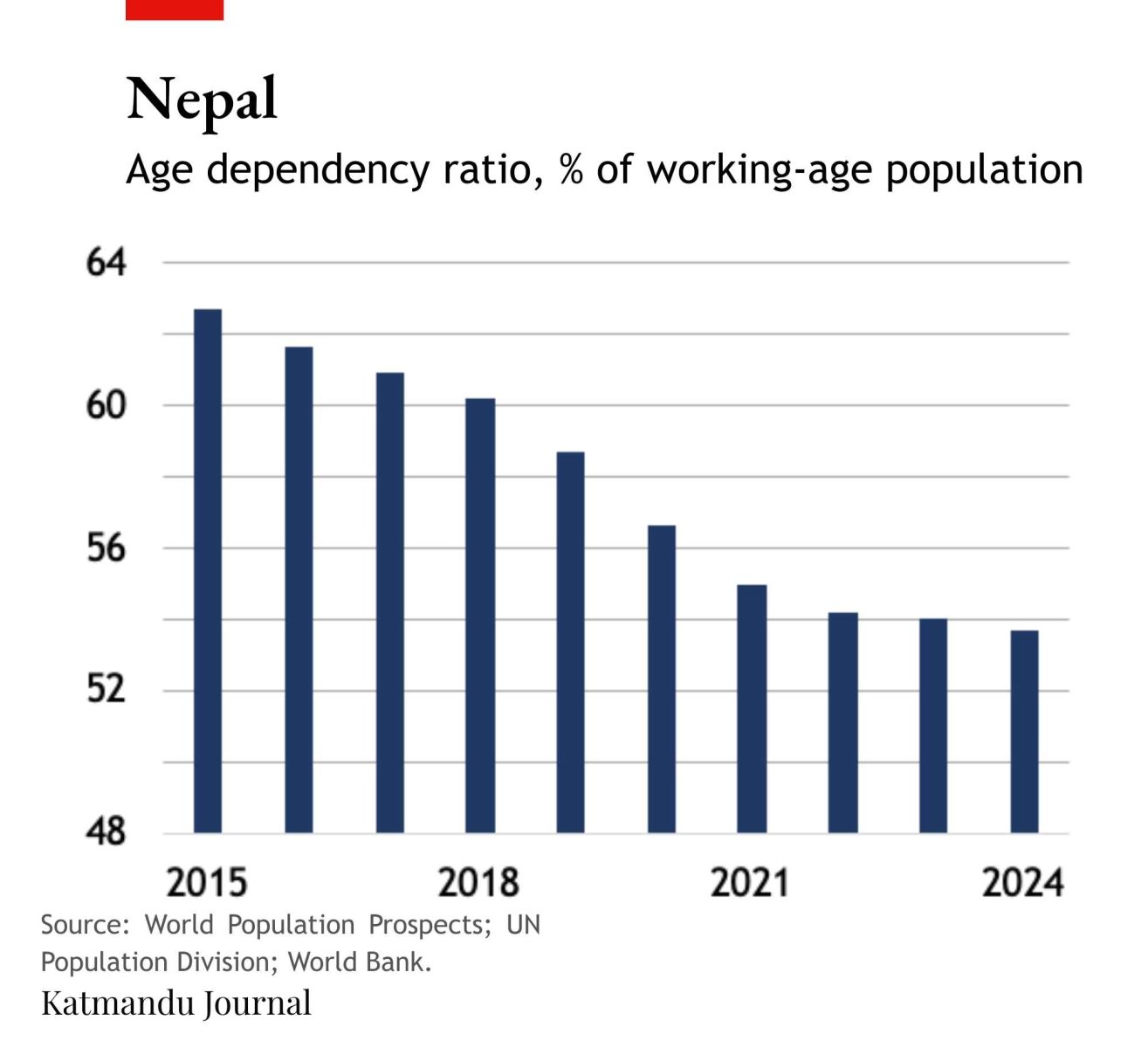
Nepal’s population profile is moving into the sweet spot that economists revere. The ratio of dependents—children and the elderly—to working-age adults has tumbled from 81% at the start of the century to 54% today (see chart below). Fewer young mouths to feed and relatively fewer elderly to care for should in principle free resources for investment and consumption. Demographers call this a dividend. In Nepal’s case it looks more like a puzzle: the numbers promise relief, but the economy has not quickened its pace.
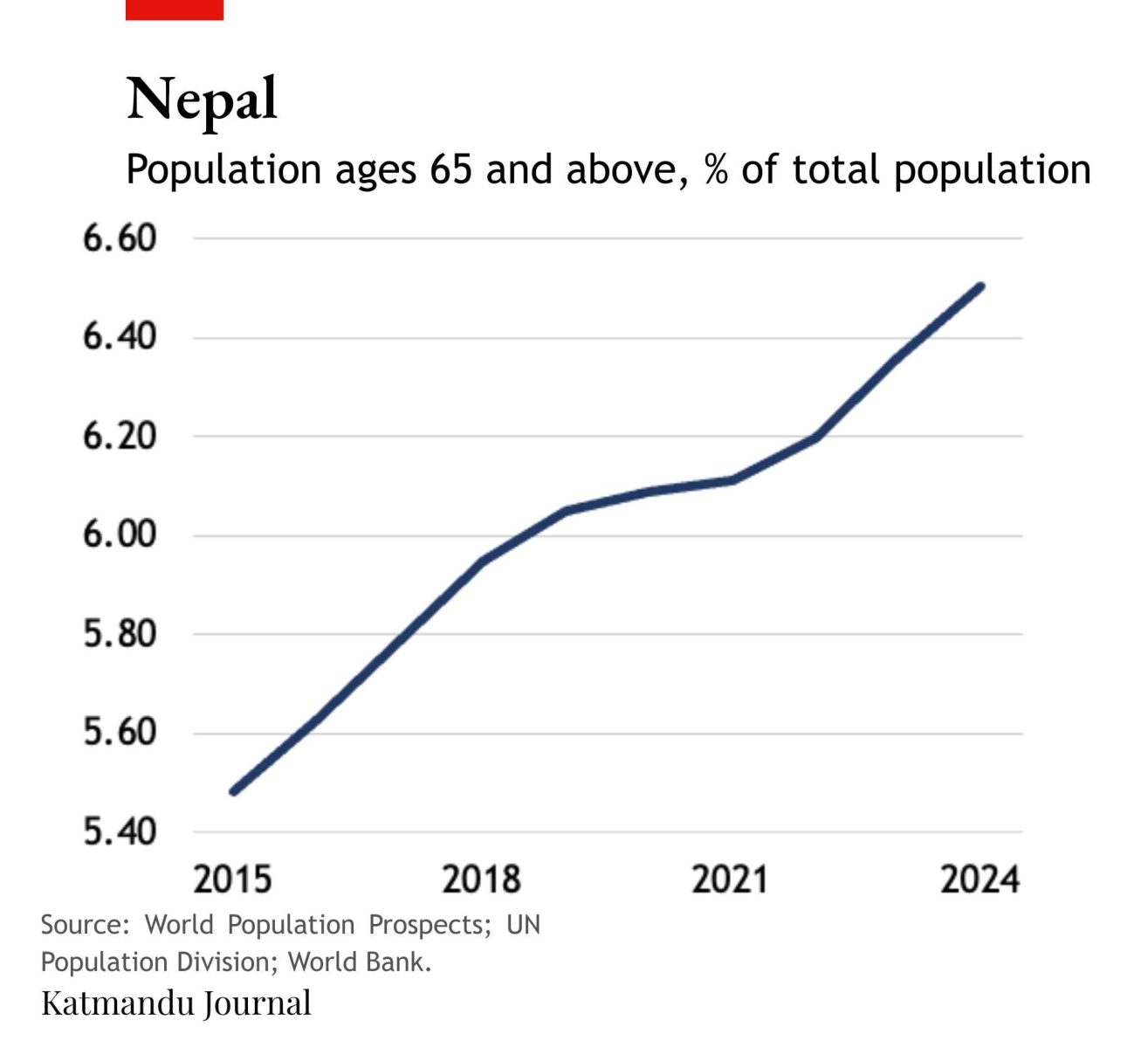
The contours of demographic transition are clear. Fertility is falling, reflected in the shrinking proportion of children under 14, down from 41% of the male population in 2000 to 31% now. The share of toddlers under five has tanked to under 10%. Families are smaller, education levels are growing and more women survive into old age than men. At the other end of the age spectrum, the elderly population is creeping higher. The share of those 65 or older has leapt from under 4% to more than 6% (see chart below). Among men aged 75 to 79 the share has doubled. Though still small, these numbers foreshadow the fiscal strains of ageing: pensions, health care and social protection will demand more resources.
The current picture is dominated by a swelling workforce. The share of men in the prime working years has climbed from 55% to 63% in two decades. The wider population shows the same pattern. Economists would call this a golden hour for labour-intensive growth, similar to South Korea in the 1960s or China in the 1980s. Those countries matched favourable demography with industrial policy, export promotion and schooling reform. Nepal has not. Without reform, the dividend may expire unclaimed (as we explained here).
The time horizon is limited. Over the next 10 to 15 years Nepal will enjoy a favourable ratio of workers to dependents. This can boost savings and investment; strengthen tax revenues; and support household consumption. Yet the dividend is conditional. It materialises only if the workforce is absorbed into productive jobs; supported by adequate skills; and connected to industries that generate growth. Without such conditions, demographic change turns from a windfall into a missed chance.
Signs of strain abound. Migrant departures are large: remittances now contribute around a quarter of GDP. They finance consumption but not structural modernisation. The domestic labour market is dominated by informality. Most employment is in subsistence farming or micro-trade, which sustain families but do not create scale or productivity. The government’s tax base is correspondingly narrow, restricting investment in infrastructure, schools or clinics.
Policy must look in two directions at once. On one side is the present: investing in skills, vocational training and job creation to harness the workforce. Small firms and microenterprises, globally the biggest job creators, require credit, simple bureaucracy and export links. Female participation must be raised through childcare and workplace protection, or half the dividend will be left unused. On the other side is the future: preparing for ageing. Pension systems are rudimentary. Health provision for the elderly is limited. Social support is heavily reliant on families. These buffers need to be built before the bulge of today’s workers grows old.
Demography offers no guarantees. The data show a sinking youth burden and a swelling working-age population, paired with the early stirrings of ageing. That combination is an opening not a destiny. Nepal can channel its surplus labour into productive growth and enter middle-income ranks, or it can drift, exporting its workers and importing remittances while the window closes. Demographic math is simple, economic strategy harder. The dividend, like all windfalls, expires if left unused. And the fiscal bill for old age is on the horizon. ■