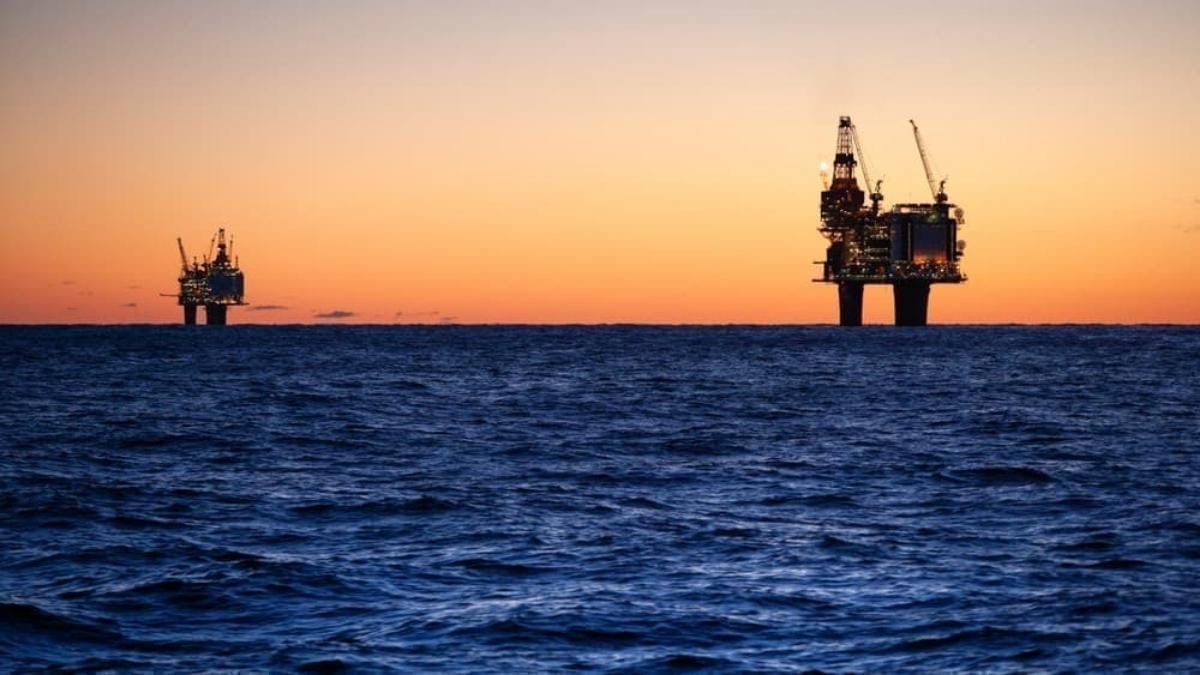
When oil was struck in the North Sea in 1969, few imagined that Norway would become a model for resource-rich nations. Half a century later its sovereign wealth fund, worth around $2trn, is the envy of the world. Equivalent to roughly $340,000 for every citizen, it has underpinned low unemployment, subdued government debt and a welfare system generous enough to cushion life’s misfortunes. Norway looks, from the outside, like a country that has cracked the resource curse.
Yet prosperity is proving complicated to manage. A growing chorus of economists and commentators worry that the oil fund has made the country complacent and bloated, as well as unproductive. The data lend them some support. Norwegians now take more sick leave than any other OECD country, averaging 27.5 days per worker a year. Education spending is among the highest in the rich world—around $20,000 per student a year—but outcomes are slipping. In the OECD’s Programme for International Student Assessment, 15-year-olds in Norway now perform below the organisation’s average in reading, mathematics and science. Even the country’s famed infrastructure programmes are coming under scrutiny, with subway lines costing six times their original budgets and train projects that devour funds while crawling towards completion.
These frustrations have been crystallised in a popular book, The Country That Became Too Rich, by Martin Bech Holte, a former McKinsey consultant. His central claim is Norway has lost its sense of ambition because the oil fund guarantees comfort regardless of performance. He cites tax subsidies for unprofitable energy projects; a household debt burden equal to 220% of disposable income (the highest in the OECD); and welfare rules that reward time away from work. His diagnosis has sold more than 56,000 copies in a nation of 5.6m, a publishing success that suggests the argument strikes a nerve.
Holte’s critics are unimpressed. Norway, they counter, is a small economy buffeted by global winds, hardly the decadent rentier state he portrays. Some argue the real scandal is not squandered wealth but the lost opportunity to be richer still. Others note the fund has largely insulated the economy from the more destructive versions of Dutch disease: the industrial decline that plagued the Netherlands after its gas boom in the 1960s.
Even so, signs of weakness are accumulating. Productivity growth has slowed to the weakest pace among advanced economies over the last two decades. The state devotes around 8% of GDP to disability and sickness benefits, four times the OECD average. Investment in research and development has fallen since the pandemic, and venture capital for start-ups has hit record lows. Tax rules, meant to prevent excessive concentration of wealth, are accused of driving successful entrepreneurs to Switzerland.
Moreover, Norway’s vaunted infrastructure is now plagued by the same waste and delays it once derided abroad. Billions have been poured into a carbon-capture project whose commercial viability is unproven, while a railway line is on course to become one of the most expensive in the world per kilometre. Critics argue the oil fund’s sheer size has sapped fiscal discipline: politicians can tap it for 20% of the annual budget while still obeying the rules that only allow them to withdraw 3% of the fund’s value every year.
The reliance on hydrocarbons endures. Oil and gas account for 21% of GDP and employ 200,000 workers, roughly a tenth of the private sector. The industry’s revenues continue to swell the sovereign fund, especially after Europe sought alternatives to Russian energy. Yet beyond 2050, the Norwegian Offshore Directorate expects output to wane. Managing a transition in which both jobs and budgetary comfort depend less on petroleum will be tough.
What makes Norway unusual is that it is both a warning and an example. It built the world’s biggest sovereign wealth fund precisely to escape the distortions that beset resource exporters. For a while, that model worked well: by investing oil revenues abroad and limiting withdrawals at home, Norway avoided inflation and currency appreciation that hollowed out other economies. But success has created its own paradox. The wealth fund is now so big that even restrained withdrawals permit a flood of spending, with little incentive to prioritise efficiency or reform.
Holte’s prescriptions are blunt: cut taxes, cut spending and tighten the rules governing withdrawals. Such proposals are unlikely to command consensus in a country attached to its welfare state. But the bigger concern—that abundant wealth has dulled the pursuit of productivity and innovation—cannot be dismissed so easily.
Other resource-rich states will watch closely. Norway has long been their reference case for how to transform oil into enduring prosperity. It still is, though increasingly as both inspiration and cautionary tale. Riches can buy stability and comfort. What they cannot buy is ambition. ■