Money moves with politics in Southeast Asia, which comprises 11 countries. In recent weeks investors have poured into Thai assets while rushing out of Indonesian ones, reversing a pattern that had held for years. The shift illustrates how political transitions, whether orderly or abrupt, can swiftly reorder global capital flows in emerging markets.
Thailand’s appeal lies in a perception that the turbulence of recent years is beginning to settle. The arrival of Anutin Charnvirakul as prime minister, following his predecessor’s removal over ethical violations, has produced a rare spell of calm. A cabinet is being assembled and subsidy programmes are being considered. Markets sense that policymaking has regained coherence. The baht has strengthened by 2% against the dollar this month, the best performance in Asia. The stockmarket has risen by more than 4% to a seven-month high.
Foreign investors are responding. After a hefty sell-off in August, outflows from Thai equities slowed to a mere $21m in September. Aberdeen Investments, Gama Asset Management and Valverde Investment Partners, among others, now describe Thai shares as a relative bargain. “This is an opportunity to overweight Thailand amid an improving political and economic climate,” said John Foo of Valverde to Bloomberg.
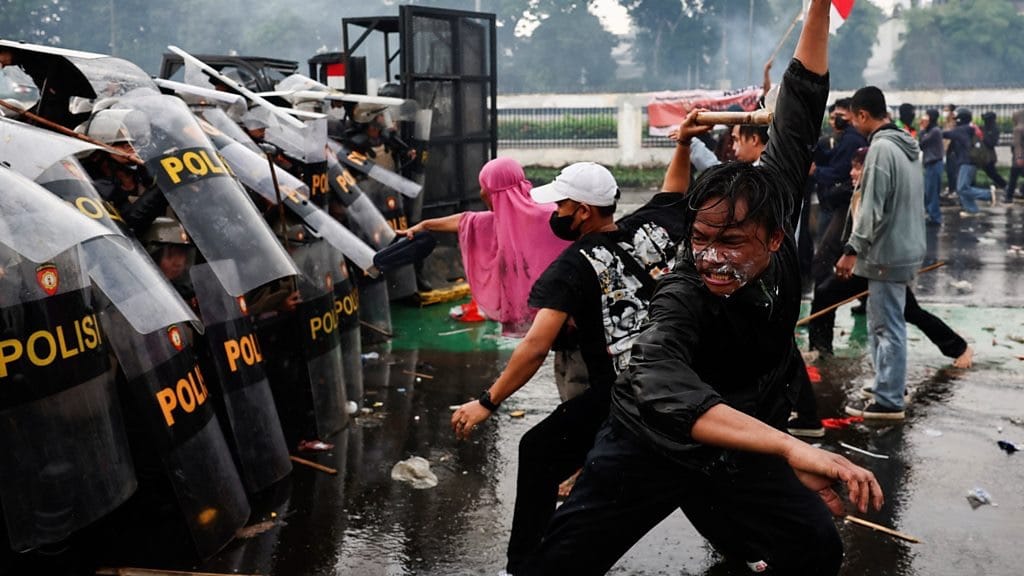
Indonesia tells a different story. The sudden dismissal of Sri Mulyani Indrawati, the respected finance minister credited with years of fiscal discipline, has alarmed investors. Her replacement, Purbaya Yudhi Sadewa, is virtually unknown outside Jakarta. The announcement came in the midst of street protests that turned violent, amplifying the sense of political volatility. In September alone, foreign funds withdrew over $650m from Indonesian equities, the sharpest pullback since April.
President Prabowo Subianto has promised stimulus to revive growth, pledging 200 trillion rupiah ($12bn) in fresh injections for state banks. Yet the move has done little to ease worries about fiscal direction. Investors fret about Mr Prabowo’s populist inclinations such as free school-lunch programmes and heavy reliance on reserves accumulated during past underspending. The rupiah has lost 1.5% against the dollar this year, making it Asia’s second-worst performing currency after India’s. Bond yields suggest markets are bracing for more fiscal stress.
The divergence is stunning given recent history. For decades Thailand was synonymous with political upheaval and Indonesia with cautious stability. Now investors view Thailand as climbing from the bottom, whereas Indonesia drifts from predictability toward risk. Indonesia is undergoing a period of heightened economic uncertainty, warns investors.
That reordering of sentiment is influencing fund allocations across Asia. Some managers say they are financing their new positions in Thailand by trimming stakes in China, Korea and Taiwan’s technology firms. Others remain wary of both countries, preferring to keep exposure limited until the region’s political paths become clearer.
Emerging markets have always been vulnerable to the whims of politics, but the present moment in Southeast Asia underlines the speed at which reputations can change. Thailand is being given the benefit of the doubt after years of disappointment. Indonesia, by contrast, must prove that it can uphold the fiscal credibility built under Ms Indrawati. Investors are patient when growth is steady; they are less forgiving when politics gets in the way. ■