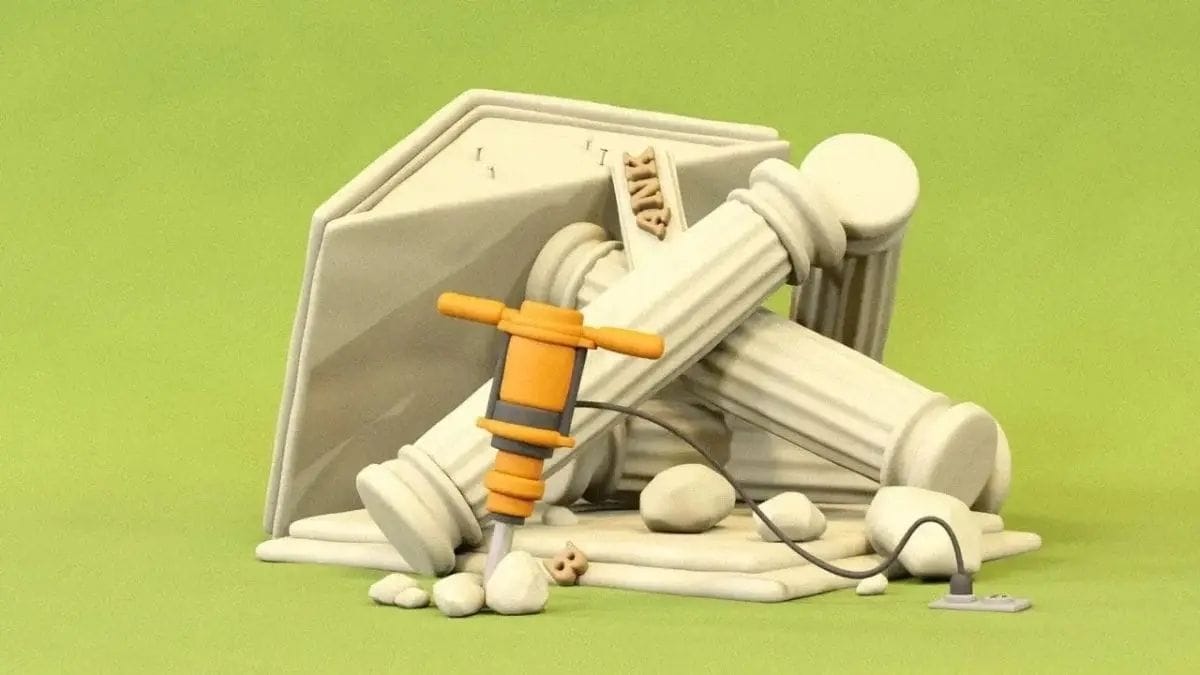
Illustration: Daniel Jurman
Smallness can be a shield. It can also be a trap. Nepal’s economy has seemed immune to the speculative fevers that periodically convulse global markets. With capital controls in place and remittances surging, it appears on the surface to be insulated from the kind of shocks that felled East Asia in 1997. But immunity can breed complacency. And when illusions of safety crack, they do so noisily. Nepal is not in crisis but it is brittle. The foundations of its financial system are softening even as the facade holds.
The most visible crack is in the banks. Official figures put non-performing loans at more than 4% (see this). Privately, bankers fret the true figure is far worse. A practice of “evergreening”—rolling over dodgy loans to avoid labelling them as defaults—is widespread. The Nepal Rastra Bank (NRB), the central bank, appears more a ceremonial body than a rigorous supervisor. It rarely conducts stress tests and even when it does it inspires little confidence. The property sector, a long-time darling of investors, is wildly overheated. Land prices in Kathmandu defy all logic and local income levels. Banks are heavily exposed to this bubble; yet the assets they finance are often illiquid and overvalued, as well as legally tangled. A correction will be more of a brutal plunge than a small dip.
More fragile still is the sprawling cooperative sector. This shadow banking system holds deposits worth some Rs450bn (over $3bn). Many of these institutions are poorly regulated, lack deposit insurance and double as political slush funds. Recent collapses, such as those of Civil Cooperative and Oriental, offer a grim preview. Many operate like Ponzi schemes, paying old depositors with money from new ones. Few are prepared for a coordinated run by savers.
For now, a mighty inflow of cash from abroad keeps the system afloat. Remittances, sent home by Nepalis working chiefly in the Gulf and Malaysia, constitute a quarter of the country’s economic output. This money fuels household spending and provides banks with liquidity, thereby helping stabilise the economy. Yet this lifeline is fragile. Say, an economic downturn in host countries, a geopolitical crisis or a shift towards automation that reduces demand for labour could sever it just as fast. There is no contingency plan for such an event.
Externally, the country spends more on imports than it earns from exports. It borrows to fund infrastructure and subsidise consumption. But global aid is drying up. Debt is climbing, donors are tiring plus the government’s fiscal space is vanishing. The system, in short, is one spark away from systemic stress.
Imagine a plausible sequence of events. A prominent property developer defaults on Rs15bn in loans. Its half-built Kathmandu township, once marketed with glossy brochures, is revealed as a mirage. The collateral—plots of land and promises—proves nearly worthless. Soon after, a cooperative scandal erupts. Whistle-blowers leak documents showing shady links between politicians, banks and large cooperatives. Some Rs30bn vanishes. Branches are shuttered. Angry depositors storm offices.
Then comes digital panic. Social-media influencers breathlessly claim a reputable bank, say NIC Asia, is on the verge of collapse. WhatsApp groups spread doctored screenshots. Crowds queue at ATMs. The NRB’s calm press releases are ignored. The contagion becomes emotional and not just economic. Credit-rating agencies downgrade Nepal. Donor disbursements pause. The Nepali rupee, pegged to the Indian currency, comes under pressure. Importers hoard dollars. Fuel queues return. A long-simmering rot bursts into an open crisis.
Even solvent banks would suffer runs. Credit would dry up as banks call in loans. Small and medium-sized firms, particularly in retail, construction and tourism, would shrivel. Unemployment would rise. The informal economy, which employs most Nepalis, offers little cushion. One bank’s wobble triggers another’s fall. Contagion flattens distinctions; all banks become suspect.
Though the rupee is pegged, its stability is not guaranteed. Pressure on the fixed exchange rate would force the central bank to spend its foreign reserves in a defence that could quickly prove futile. With four-fifths of goods imported, any strain on the currency quickly translates into empty shelves and price spikes. Inflation bites. The middle class, such as it is, evaporates.
The government’s arsenal is blunt. Liquidity injections buy time but not trust. The NRB could expand lending to banks, but its reserves are slim and its credibility slimmer. Forbearance would return: banks would be allowed to roll over loans and delay recognising losses. Talk of recapitalising the banking system would begin. Could the government afford a bail-out? Would the International Monetary Fund step in? The politics of rescue would become more toxic than the crisis itself.
Crises make regimes—and break them. In Nepal the fallout could be volcanic. Street protests would engulf cities. Cooperative depositors—many of them women, teachers, farmers and small traders—would occupy offices. Unemployed youth would flood the streets. Political alliances would crumble. The parties most entangled with the cooperatives would turn on each other. A populist movement, part anti-corruption and part anti-capitalist, could emerge, demanding nationalisation and root-and-branch reform.
Crises may be inevitable, collapses are not. Nepal has a narrow window to act. The central bank must be freed from political interference. Its board must supervise and not socialise. Stress tests must be made credible. A deposit-insurance scheme, guaranteeing perhaps Rs500,000 per saver, must be extended to cover cooperatives to calm nerves and contain runs. The entire cooperative sector must be dragged into the formal system. Patronage must be severed and proper audits enforced.
Real-estate lending needs closer monitoring. Credit should be steered towards sectors that create lasting value such as agribusiness and light manufacturing. If social media can trigger a bank run, it must also be part of the defence. A central bank without a sophisticated digital-communication strategy is a security risk in the modern age.
If a financial crisis comes to Nepal, it will not begin in a skyscraper. It will begin in a cramped cooperative office in Bhaktapur, in a viral rumour from Butwal, in an overpriced apartment in Tokha. The threat is not contagion from abroad but collapse from within. Nepal is not too small to fail. It is just small enough to ignore its own warning signs, until they can no longer be ignored. Unless reforms begin now—before a crisis, not after—the country may soon discover that even the Himalayas cannot shield an economy from its own delusions. ■