TAIPEI
When America approved an $11bn arms package for Taiwan on December 18th, it was the biggest single weapons deal in the history of their relationship. The deal contained HIMARS rocket systems, howitzers, loitering drones and more. To some in Washington, it is the necessary price of deterrence; to Beijing it is another handful of dry tinder thrown onto a smouldering fire.
Yet for the 23.5m people living on the island, the deal is a reminder that their safety depends increasingly on a fragile balance between high-tech manufacturing and old-fashioned firepower.
The historical weight behind the tension is immense. To the Chinese Communist Party, Taiwan is the final, unclosed chapter of a century of national humiliation (the period from the mid-19th to mid-20th century when China was dominated by foreign powers). The Qing Dynasty lost the island to Japan in 1895, and the retreat of Chiang Kai-shek’s Nationalists to Taipei in 1949 created a separate political reality that Beijing refuses to accept as permanent.
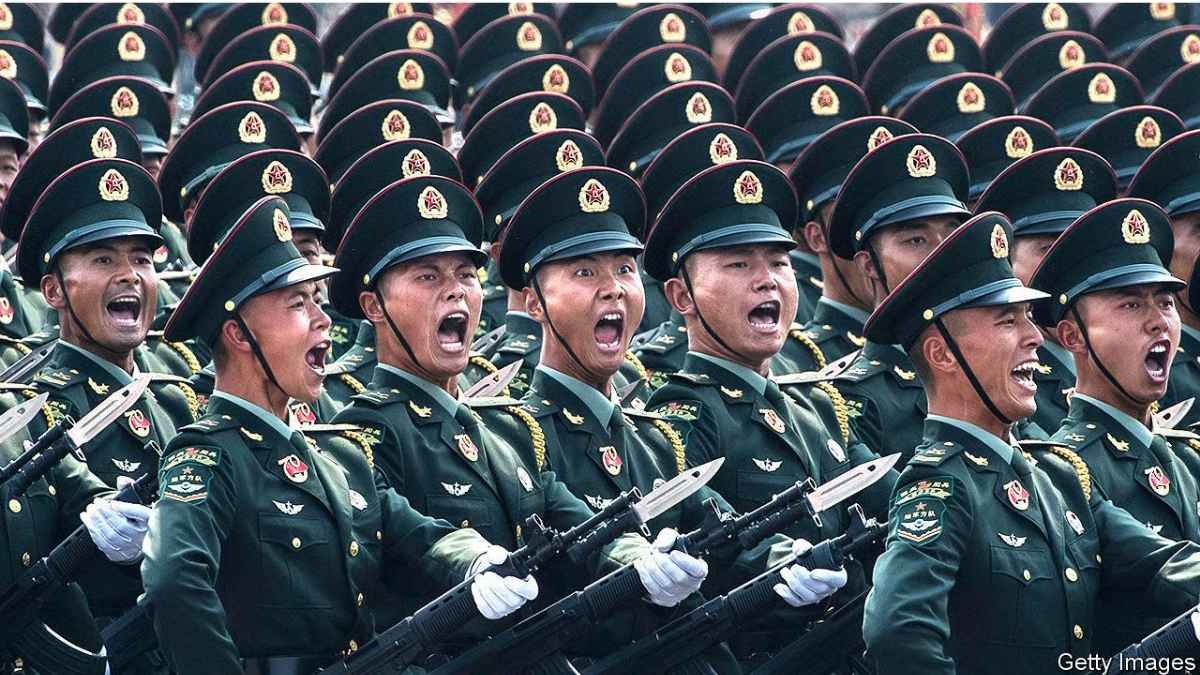
Xi Jinping, China’s authoritarian leader, has desired the “reunification” of the island as a core component of his national restoration. He has reportedly set 2027—the centenary of the People’s Liberation Army—as the target for his military to be capable of seizing the island by force. Whether he intends to pull the trigger is a matter of intense debate, but his generals are certainly making sure the option is on the table.
As a result Taiwan is attempting to transform itself into what military planners call a “steel porcupine”. President Lai Ching-te has proposed a $40bn special defence budget to build the “T-Dome”, a multi-layered air defence system inspired by Israel’s Iron Dome but designed to tackle the far more sophisticated missiles and drones of a superpower.
The goal is to make the cost of an invasion so ruinously high that Beijing decides the prize is not worth the price. This shift towards asymmetric warfare—using small, mobile and relatively cheap weapons to sink big, expensive ships—marks a departure from the days when Taiwan sought to match the mainland ship-for-ship.
Washington’s role in this boiling tension remains defined by a peculiar tradition known as strategic ambiguity. For many decades America has avoided saying exactly what it would do if China attacked, hoping to keep Beijing guessing while discouraging Taipei from a formal declaration of independence that might spark a war. However, the tone has shifted under the Trump administration. The rhetoric is now more transactional, described as “peace through strength” and tied to demands that Taiwan spend as much as 5% of its GDP on its own defence. This approach treats Taiwan like a strategic partner that must pay its way in an increasingly expensive neighbourhood.
The island’s most famous defence, however, is silicon. Taiwan Semiconductor Manufacturing Company (TSMC) produces some 90% of the world’s most advanced computer chips. This “silicon shield” was long thought to be the ultimate deterrent; surely no one would risk a war that would bring the global economy to a halt. But as TSMC opens factories in Arizona and Japan to diversify its footprint, the uniqueness of that shield is thought to slowly fade. Analysts at the Institute for National Defence and Security Research, a think-tank in Taipei, argue that as the world becomes less dependent on the island’s physical factories, the military deterrent must become more robust to compensate.
The risks of miscalculation are growing. China regularly sends fighter jets and aircraft carriers into the waters and airspace around Taiwan to signal its displeasure. Each new arms sale is met with fresh rounds of military exercises that serve as dress rehearsals for a blockade. While the diplomats in Washington and Beijing talk of managing competition, the hardware being moved across the Pacific suggests a much grimmer set of preparations. Investment in the T-Dome and the record-breaking American arms package are signs that the “Davidson Window”—the period in which conflict is deemed most likely—is being taken very seriously indeed.
In the endgame, the future of the Taiwan Strait may depend on whether the logic of deterrence can hold against the tide of Chinese state-driven nationalism, spurred by historical grievance and the demand for territorial reunification. For now the strategy is to buy time. Every missile battery and every drone squadron purchased today is intended to ensure that, when the year 2027 arrives, the calculation in Beijing stays the same as it is today: that the risk of failure is still too great. ■