Won’t get fooled again Image via Nepali Times
AT EVEREST BASE Camp, climbers fret over oxygen and weather. In Kathmandu, politicians fret over power lines. Nepal’s tallest mountain stands there, aloof and unmoved; its politics, by contrast, tend to shake even at the slightest provocation. Few episodes show that better than the saga of the Millennium Challenge Corporation (MCC) compact, a development grant that managed to look, at various points, like a geopolitical trap, a constitutional crisis and a street uprising, all while stubbornly remaining what it always was: money for electricity wires and road repairs.
Strip away the noise and the MCC Nepal compact is simple enough. It is a five-year grant from the United States, first set at $500m and later topped up by another $50m announced in November 2025. Add Nepal’s own contribution and the total strikes $747m. Washington provides $550m, whereas Kathmandu chips in $197m of its own cash, an unusually big sum by MCC standards and the biggest domestic contribution any partner country has made. The money is fenced in tightly. It pays for electricity transmission and for maintaining a small but crucial slice of highways. It does not pay bureaucrats or ministers. It is not a loan, meaning there is no repayment schedule or interest bill. And certainly, there is no hidden clause waiting to spring a debt trap.
That such a prosaic brief stirred such fury says as much about Nepal’s economy as its politics. For decades growth has been pinched by two stubborn constraints. One is electricity. Nepal sits on rivers that thunder downhill and dreams of hydropower riches. Engineers arrive and start sketching eagerly. Yet many power plants have sat idle or run below capacity because there has been no reliable way to move electricity from distant valleys to cities, factories or export points. The other constraint is transport. In a steep, landlocked country, roads matter more than rhetoric. Nepal builds them with enthusiasm and maintains them with reluctance. Potholes spread, vehicles crawl, costs climb and accidents follow. Together these failures levy a big tax on everyone.
The MCC’s logic is refreshingly forthright. Fix the backbone, cut costs and let private capital do the rest. The centre of gravity is the Electricity Transmission Project, with a budget of about $400m. It plans to build roughly 300 kilometres of 400-kilovolt high-voltage lines across the country, around a third of Nepal’s length, and to build three major substations that step power up and down without blowing the grid. A cross-border link to India is part of the deal, turning surplus electricity into something Nepal has long coveted but rarely enjoyed: foreign exchange earned without loading a single truck.
Transmission does not excite crowds. In Nepal it decides futures. Without it, hydropower plants are stranded assets, handsome turbines spinning for no one. With it, load-shedding fades, factories hum and investors stop asking awkward questions. The project also backs reforms that never make headlines: support for the Electricity Regulatory Commission; guidance on tariffs and dispute resolution; and training inside the Nepal Electricity Authority. The estimated economic rate of return is about 12%, a respectable figure for infrastructure whose main virtue is that nobody notices it working.
The second project is smaller and, in its own way, more revealing. About $52m goes into road maintenance. Not shiny new highways with ribbon-cuttings and selfies, but periodic upkeep on about 90 kilometres of strategic roads, plus a pilot scheme using recycled asphalt. There is a prod built in as well: matching funds that reward Nepal for spending more of its own money on maintenance. The goal is to turn upkeep into a habit rather than a crisis response. The projected return, close to 29%, makes economists smile. It captures a cost politicians tend to forget until it is too late: decay.
To run all this, Nepal set up the Millennium Challenge Account–Nepal, a government-owned development board. MCC watches closely, audits obsessively and evaluates relentlessly, but it does not pour the concrete. Timelines are unforgiving: miss them and the money evaporates. Procurement rules are strict and transparency is a condition. This stiffness is the MCC’s signature. It gives grants only to countries that clear governance hurdles and then refuses to renegotiate once work begins. Nepal asked for the compact in 2012 and chose the projects itself.
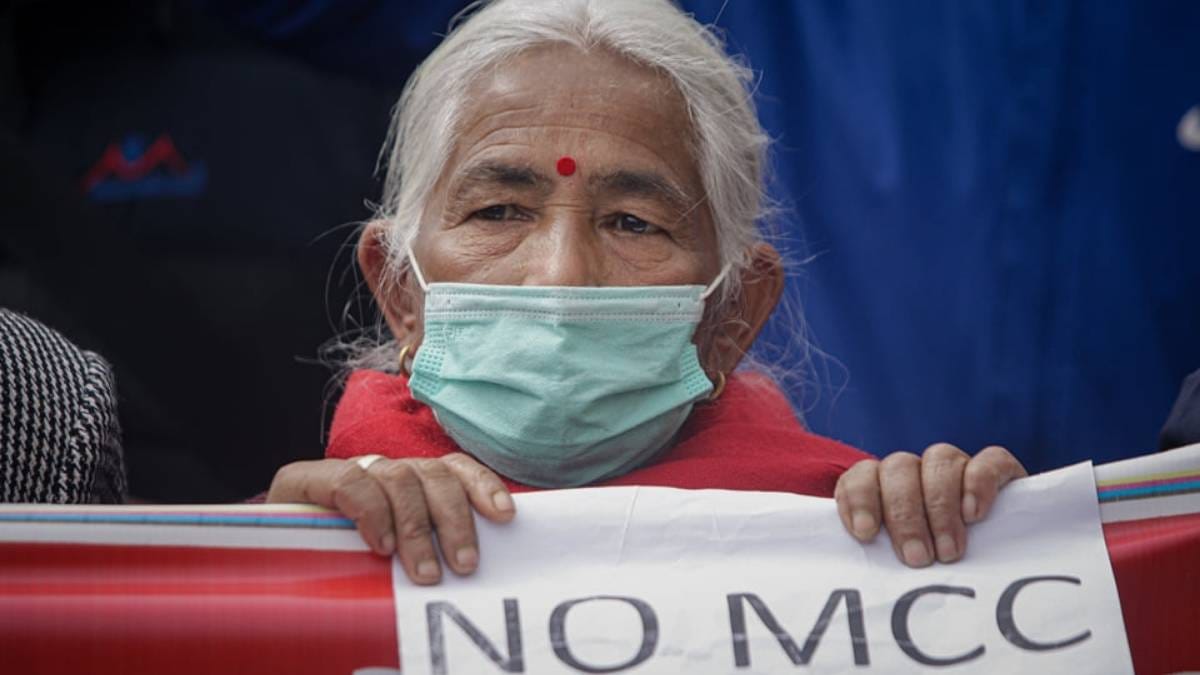
So why did something this technocratic spark protests, effigy-burning and parliamentary paralysis? It began with a phrase. Between 2019 and 2021, American officials described the MCC as part of the Indo-Pacific Strategy, perhaps over-eager to justify the spending to a sceptical Congress. In Kathmandu it landed like a match in a fuel depot. Nepal’s foreign policy rests on careful ambiguity, balancing assertive India to the south, rising China to the north and, increasingly, everyone else. Any whiff of alignment sets off alarms, amplified by a political class who favour symbols over numbers.
Critics warned that the compact would tug Nepal towards America and complicate ties with China, which has its own ambitions under the Belt and Road Initiative. Supporters replied that Nepal already trades power with India, hosts Chinese-built roads and airports, and has managed this juggling act without surrendering its flag. The outrage was selective, driven by ideology rather than sense. After all, a power line does not check passports.
Then came the lawyers. Like every MCC agreement, the compact says it prevails over domestic laws in the event of a conflict. In most countries this clause barely raises an eyebrow. In Nepal it was cast as an assault on sovereignty and even a constitutional coup. Lawyers filled television studios. Politicians reached for megaphones. The ending was pedestrian. Parliament ratified the compact with an interpretive declaration affirming that Nepal’s constitution remains supreme and that the deal does not override national security or foreign policy. MCC accepted the clarification and the sky did not fall.
What followed was a masterclass in elite confusion. Because of the supremacy clause, parliamentary ratification was unavoidable. Parties that backed the compact in government dragged their feet or denounced it in opposition. Some protested against it while holding ministerial office. The Maoist Centre pulled off a rare contortion: approving the deal internally, assuring American officials of ratification, and then leading street protests against it. Smaller left parties cried neo-imperialism. The Nepali Congress held its pro-MCC line, painting the grant as a test of credibility. The CPN-UML adjusted its tone as circumstances changed. The Unified Socialist opposed the deal publicly while staying in government. Time passed. Violence flared. Trust ebbed.
By the time parliament ratified the compact in February 2022, the argument had drifted far from megawatts and asphalt. The MCC had become a stand-in for larger anxieties: Nepal’s place between bigger powers; the gulf between what leaders say abroad and what they shout at home; and the pull between development pragmatism and ideological purity. Infrastructure barely featured.
Implementation began in August 2023. By mid-2025 roughly a tenth of the money had been spent, a third committed and close to half sitting in the pipeline. Surveyors are mapping tower sites. Procurement is ticking along. Deadlines are approaching. The programme is real, and moving.
The bigger lesson is awkward. The MCC did not expose foreign control. It revealed domestic incoherence. Nepal’s leaders were caught speaking in different voices to different audiences, governing and protesting at once, craving infrastructure while fearing the act of deciding. Sovereignty, it emerged, was less at risk from a grant than from the inability to deal with one calmly.
Economists still care because the stakes are tangible. Finish the compact and the country’s grid gains credibility, hydropower turns commercial and transport costs ease in ways few notice but everyone feels. Botch it and the country reinforces a reputation it can ill afford: a place where even free money struggles to turn into steel and stone. Either way, the MCC saga has already yielded a return. It showed how Nepal behaves when geopolitics meets development. The next test will be far more important: whether the wires get built and the roads kept smooth. ■