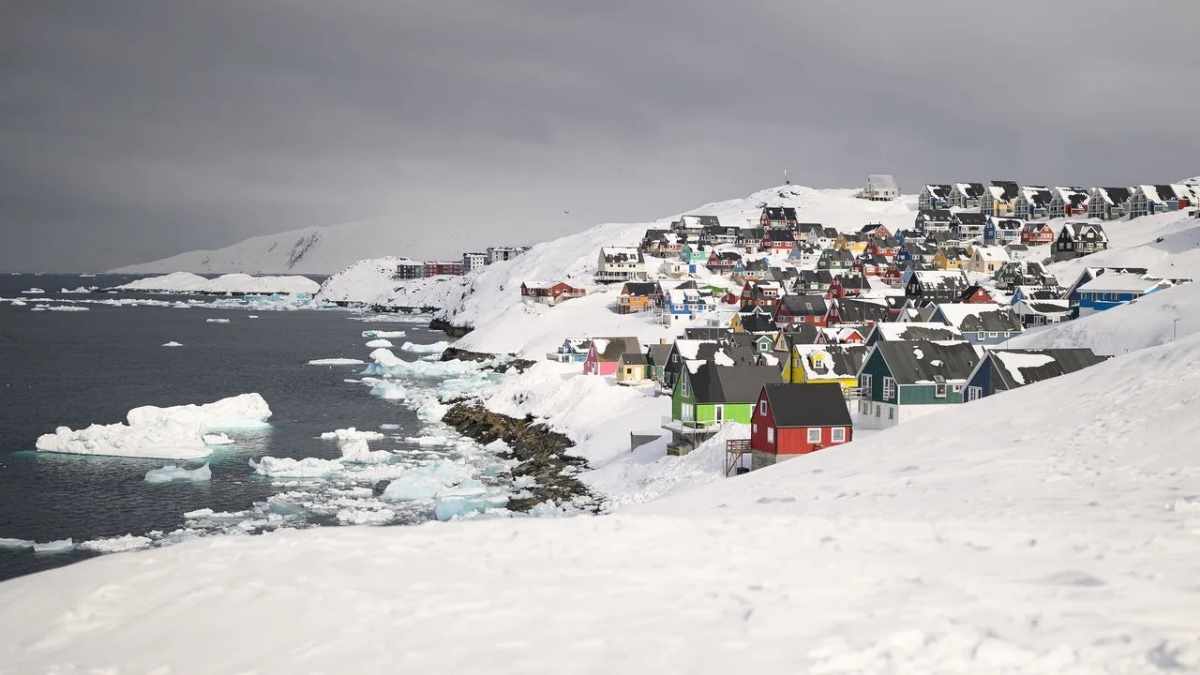
Image: Getty Images
ON THE MORNING of January 3rd, as American special forces were snatching Nicolás Maduro from the tropical heat of Caracas, a different kind of chill was settling over Copenhagen. The removal of the Venezuelan autocrat and the subsequent declaration by Donald Trump that the United States would now “run” the country may have seemed like a Caribbean drama. But for the Danish government, the significance was geographical as much as political. In the eyes of a second-term Trump administration, the Monroe Doctrine—the 19th-century decree that the Western Hemisphere is America’s backyard—is being dusted off and extended all the way to the Arctic Circle.
The connection was made explicit within twenty-four hours. Even as the White House was justifying its intervention in South America as a necessity for “hemispheric security”, the digital world was treated to a provocative image: Greenland, an autonomous part of Denmark, draped in the Stars and Stripes, captioned with the single, ominous word “SOON”. The post, shared by the wife of a senior presidential aide, was followed by Mr Trump himself telling The Atlantic that he “absolutely” needs the territory for defence. What used to be dismissed as a whimsical real-estate obsession has, in the wake of the Venezuelan strike, been recast as a core tenet of a new, assertive American grand strategy.
To Mette Frederiksen, the Danish prime minister, the rhetoric is no longer “absurd”—the word she used to brush off Mr Trump’s initial advances in 2019—but existential. On January 4th she called on Washington to stop “threatening” its allies, asserting that the United States has no right to annex any part of the Danish kingdom. Yet the logic emanating from Washington is increasingly indifferent to the niceties of Westphalian sovereignty. The argument, as articulated by figures close to the administration, is that the Arctic has become a primary theatre of competition with Russia and China. In this view, Greenland—a vast landmass of 57,000 people that is geographically North American but politically European—is too important to be left to the management of a middle-sized European power.
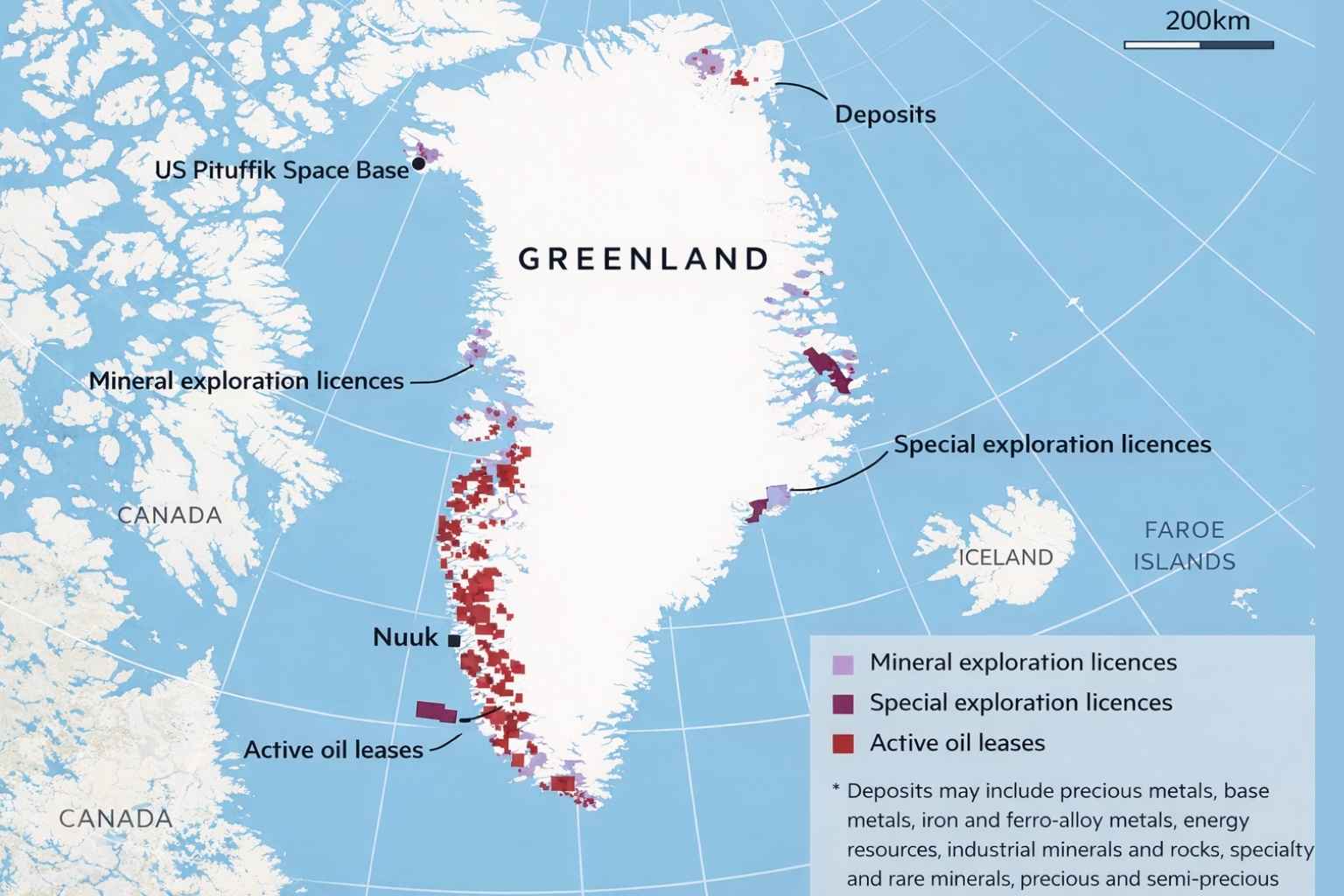
The cornerstone of this concern is the Pituffik Space Base (see map below), the northernmost American military installation.Perched on a remote northwestern coast, it serves as the unblinking eye of the American missile-warning system. While Copenhagen has tried to placate Washington by accelerating its own Arctic spending—committing DKK 27.4bn ($4bn) to new F-35 jets, drones and a naval headquarters in Nuuk—the Trump administration views these efforts as mere tinkering. The appointment of a “special envoy” to Greenland on December 22nd 2025 and the talk of “security management” suggest that Washington no longer sees the NATO umbrella as a sufficient guarantee. It wants direct control.
Curiously, this pressure is having an unintended effect on the delicate internal politics of the Danish realm. Greenland has long flirted with the idea of full independence, a path formalised by a 2009 act of self-government. Many in Nuuk, Greenland’s capital, have historically viewed Copenhagen as a colonial relic. However, the prospect of being “run” by Washington, perhaps on the model of the Compact of Free Association that governs American relations with Pacific island states like Palau, has suddenly made the Danish connection look remarkably comfortable. Jens-Frederik Nielsen, Greenland’s prime minister, was quick to join Ms Frederiksen in condemning the American “disrespect”. For the moment, at least, the threat of annexation has done more to unify the Danish kingdom than decades of diplomacy.
The second-order effect of this northern push is a creeping paralysis within NATO. If the United States begins to treat its allies’ territory as a matter for unilateral “defence” claims, the principle of collective security starts to fray. European leaders, led by the Nordic council, have rallied behind Denmark, sensing that if Greenland can be conceptually detached from the Danish crown, then other strategic outposts might follow. The fear is that Venezuela was no one-off. It was a test case: a world where security interests trump sovereignty.
As the ice melts, the Arctic is opening up to new sea lanes and mineral prospects, making Greenland more valuable than ever. But the real commodity at stake is trust. Copenhagen is betting that by hardening its own defences and remaining a loyal, if agitated, partner, it can weather the storm of American interest. Yet as the administration in Washington turns its gaze from the successes in Caracas to the strategic “necessity” of the North, the Danes are finding that being a close ally is no protection against becoming a strategic objective. Diplomats in Copenhagen would be wise to keep their winter coats close at hand: the geopolitical climate in the Arctic is primed to stay exceptionally volatile. ■