Turn! turn! turn!
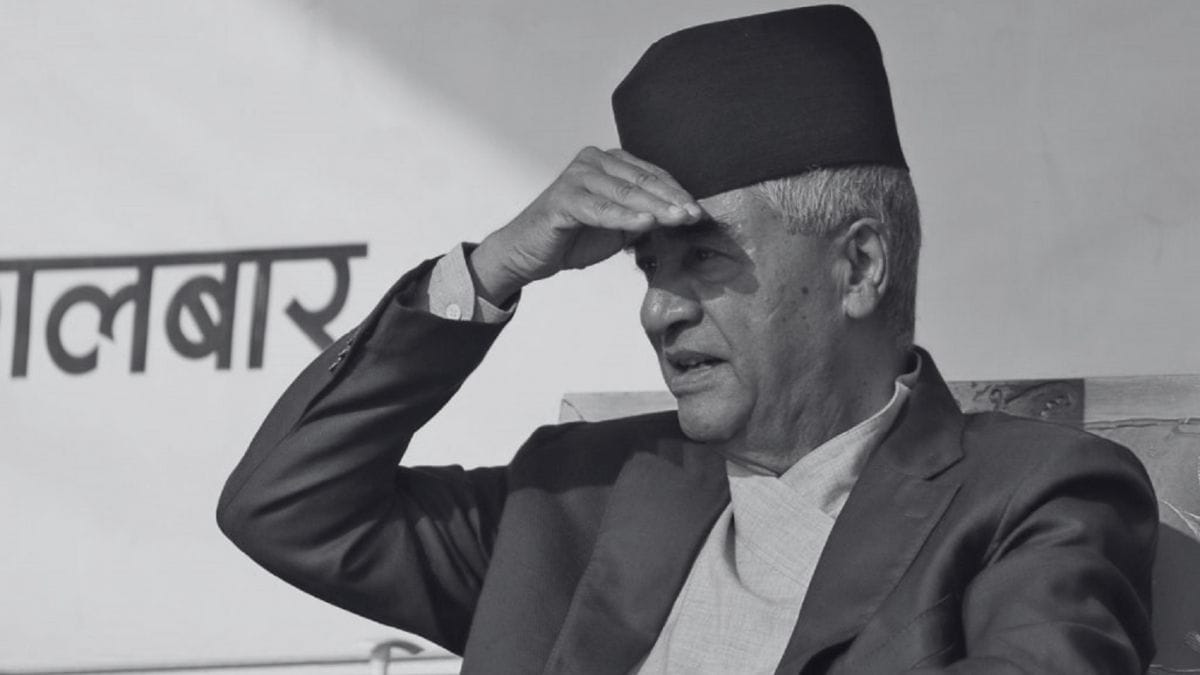
SHER BAHADUR DEUBA, five-time prime minister and maestro of smoke-filled rooms, seems to believe history moves in circles. At 79, he has outlasted kings, Maoist insurgents and even his own political shelf life. This week in Kathmandu the circle seems to have snapped. The Nepali Congress, once the country’s democratic spine, is now a house at war with itself. One half clings to twentieth-century patronage networks. The other fights for the party’s survival in the twenty-first.
The spark came last September. Gen Z protests, provoked by a bungled social-media ban but fed by chronic economic despair, turned violent, leading to 19 deaths on its first day. The next day protesters looted and torched government buildings and private residences of politicians, making their fury visible. Mr Deuba’s own house went up in smoke. In other words, it is foolish to assume that the public fears the old guard. They are finished. For a generation trapped in unemployment and a state that feels like a private club for the elderly, the Grand Old Party today looks like a museum.
Yet Mr Deuba refuses to step aside. His survival depends on the central working committee, packed with loyalists. But the party statute gives the general convention higher authority. In a move of defiance, Gagan Thapa and Bishwa Prakash Sharma, general secretaries, summoned a special general convention at Bhrikuti Mandap. Over 60% of delegates turned up. They did not come for a reunion: they came to fire the management.
Mr Thapa, 49, articulate and policy-driven, was elected president. In a country with a median age of 24, his rise promises changes. He has proposed fixed term limits—one for the party presidency, two for the premiership—directly challenging the “Nepo-State” that September’s protesters despised.
The stakes are national. Elections loom on March 5th. Meanwhile the political ground has shifted. Rabi Lamichhane’s Rastriya Swatantra Party and Harka Sampang’s Shram Sanskriti Party have seized attention with digital campaigns and street-level action. They make the Nepali Congress look antique. If the party enters the polls under Deuba urban voters are already gone.
The Deuba faction has responded with “retrospective theatre”, trying to expel Thapa and Sharma for “indiscipline”. But one cannot easily discipline a leader affirmed by the party’s supreme body. The dispute now lands on the Election Commission, which must decide who owns the party and its iconic tree. To side with the committee over the convention would invert logic: the servant would be stronger than the master.
The Nepali Congress, founded in 1950 by revolutionaries who toppled an autocracy, has led every major democratic shift in modern Nepal. Institutions that forget their origins rarely survive their own success. History is littered with “Grand Old Parties” that died because they mistook seniority for legitimacy. India’s Congress is a warning of what happens when a movement stagnates under elite control.
For Mr Thapa, the challenge is practical: he must prove that a “New Dawn” is more than a change of face, that the party can manage federalism, fix schools and create jobs that do not require a flight to the Gulf. Courts and commissions may shape his path, but the delegates at Bhrikuti Mandap have already chosen: risk over comfort and change over nostalgia. Sher Bahadur Deuba’s chapter must end, and a new one must begin. ■