
IMAGE VIA NEPAL NEWS
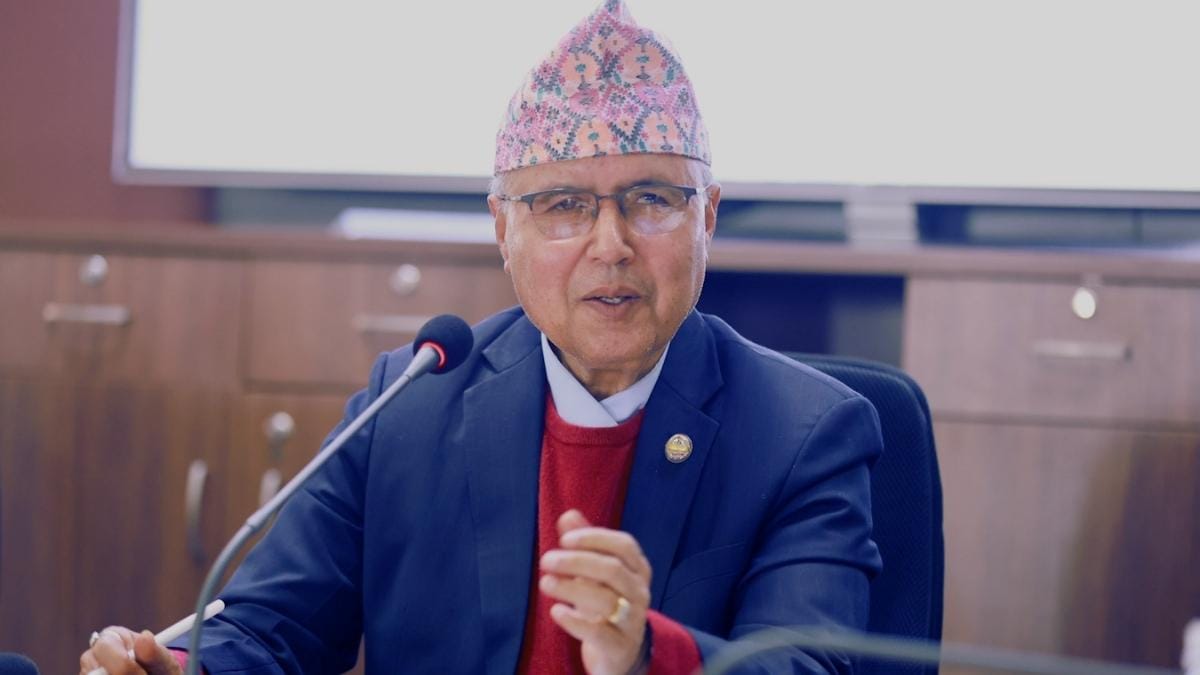
WHEN RAMESHWOR Khanal became Nepal’s finance minister last September, he did something unusual for a Nepali politician: he declined a personal secretariat. The symbolic gesture of giving up the staff, cars and patronage perks that usually come with high office signalled his intent.
Here was a technocrat with a mandate to clean house after Gen-Z protesters torched parliament, the prime minister’s residence and several ministries, killing 76 people. Mr Khanal, a former finance secretary who had spent six months chairing a reform commission, promised to scrap “politically-influenced, unprepared and fragmented projects” choking the budget. He would cut Rs100bn ($740m) in wasteful spending. He would restore integrity to fiscal management.
Five months on, Nepal’s capital expenditure execution stands at 12.12%. That figure—the proportion of allocated development budget actually spent by mid-January—is the lowest in years. Mr Khanal has maintained macroeconomic stability. Foreign exchange reserves have reached a record. Inflation is below the target. The rupee is stable. Yet the core problem that has hobbled Nepali governance for decades persists: the state cannot build. Roads remain unpaved, hydropower dams sit half-finished and irrigation systems exist only on paper. Meanwhile remittances from Nepalis working abroad, many of them young people fleeing a stagnant economy, account for a quarter of GDP.
The obstacle is structural, and Mr Khanal knows it intimately. When his taskforce examined the fiscal 2025-26 budget in September, they discovered that 1,300 projects in the Rs 1.96trn plan had never been registered in the national project bank. These “ghost projects” lacked feasibility studies, cost-benefit analysis or implementation plans. They existed to channel money to political constituencies, rather than to build infrastructure. Mr Khanal froze them. This week he revised the entire budget downward by 14%, cutting the capital allocation by 40%—from Rs408bn to Rs243bn. The move was an admission of fiscal reality: better to plan for what can actually be built than maintain the fiction of ambitious targets.
Even this smaller target will probably prove out of reach. The September protests destroyed more than 300 local government offices. Files were burned, computers smashed and procurement records lost. Many offices now operate from tents. Land acquisition for major projects, already glacial before the unrest, has stalled almost completely. Contractors owed money by a cash-strapped government have stopped showing up to sites. The Public Procurement Monitoring Office has issued ultimatums, but the “commission-seeking culture” Mr Khanal once criticised as an analyst endures. Provincial governments, starved of federal grants by his fiscal discipline, have spent just 14.16% of their budgets at mid-year.
The more fundamental barrier is political. Mr Khanal leads an interim administration with a six-month mandate ending on March 5th, when Nepal holds fresh elections. He cannot pass legislation through parliament. His reforms rely on cabinet decisions and executive orders, easily reversed by the next government. The major parties, the CPN-UML and the Nepali Congress, are already positioning for that return. K.P. Sharma Oli, whose government fell after the Gen-Z uprising, has called the protests a “planned conspiracy” and “attack on democracy”. These parties built power on the patronage networks that ghost projects sustain. Mr Khanal’s budget cuts threaten their core interests.
The Gen-Z representatives who signed a ten-point reform agreement with the government in December secured commitments on corruption investigations, term limits for party leaders as well as digital rights. But that agreement binds future administrations only if those administrations choose to honour it. As Ncell, the telecom company whose building was torched in September, put it: “What matters is what happens next.” Business confidence depends on political stability. Investment decisions are frozen pending the election outcome.
Mr Khanal’s commission recommended converting state-owned enterprises into public companies, liquidating loss-making factories, scrapping 14 outdated laws and building a project bank to filter unfeasible schemes. These ideas are sensible. Some have begun implementation: Nepal Telecom is preparing to sell 30% of its shares. But the window for technocratic intervention is closing. The very parties whose governance failures triggered the September uprising are preparing to reclaim power. They will inherit Mr Khanal’s stabilised macro indicators. They will also inherit his realistic budget projections, which they can inflate once he departs.
Nepal’s recessionary paradox—high liquidity, low investment; full reserves, stagnant growth—will outlast this brief technocratic experiment. Banks hold hundreds of billions of rupees in excess liquidity that nobody wants to borrow. The economy needs the demand shock that rapid infrastructure spending could provide. But that requires a state capable of executing its own plans. Mr Khanal has shown it is possible to diagnose the disease. Curing it depends on political will that survives the return of the patronage system. Nepal’s Gen-Z protesters toppled one government. The structure that produced it stands intact. ■





