IMAGE: GETTY IMAGES
WHAT USE IS growth that does not create jobs? For three decades India has expanded at a clip that would be the envy of any stalled Western economy. Yet its labour markets tell a different story. Last December, thousands of young people gathered on an abandoned wartime airstrip in Odisha to sit an exam. They were competing for the lowest ranks of the local police and forest departments.
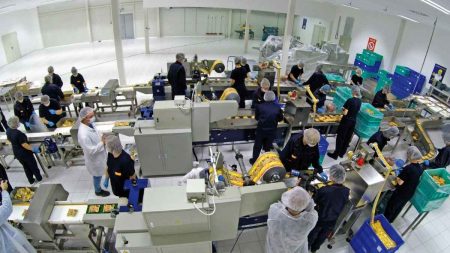
That growth—averaging 6-7% since the liberalisation of 1991—has done many things. It has reduced extreme poverty from above 50% in the 1980s to under 20% today. It has produced globally competitive IT and pharmaceutical giants. It has built a digital public infrastructure that is the envy of the world. What it has not done is generate enough secure, productive work. Some 46% of workers remain in agriculture, a share more typical of a poor country. Manufacturing never became the labour-absorber it was in East Asia. Around 90% of workers are in the informal economy without contracts or social security. Fewer than one in four women are in the workforce at all.
The result is a peculiar economy. India’s per-person income is less than a quarter of Brazil’s and a sixth of Turkey’s. Yet the country is home to 205 billionaires, one of the highest concentrations on the planet. Wealth pools at the top; mass incomes stagnate. The mechanism that normally connects growth to widespread prosperity—the creation of good jobs—has jammed.
Like Nepal, India skipped the classic development script. The successful East Asian economies moved workers from farms to factories, then to services. India jumped straight to high-end services, which employ the educated few, while leaving the many in low-productivity agriculture or precarious urban work.
Economists call this “premature servicification”. Agricultural productivity remains weak. Land reforms, the kind imposed by non-democratic governments in post-war Japan, South Korea and China, never happened. India’s democracy, born in 1950 at a very low level of income, created electoral pressures that made such painful restructuring politically impossible. Landed elites, farmers’ lobbies, caste groups: all had to be appeased. The state feeds many constituencies but transforms few lives.
The Indian state is itself a paradox. It is overbearing, dominating swathes of the economy, doling out subsidies and protecting inefficient public enterprises. Yet it is also thin. Government employment accounts for just 2.2% of the working-age population, one of the lowest shares anywhere. Local governments, where public services are actually delivered, employ less than 12% of that total. Citizens depend on the state for handouts and jobs, but receive from it poor schools, weak clinics and broken infrastructure. More than 60% of formal employment is in the public sector. For lower-skilled workers, government wages can be double those in private firms.
That raises the reservation wage—the minimum people will accept—and discourages the sort of labour-intensive manufacturing India needs. It also creates the exam obsession: a channelling of human capital into test-prep rather than entrepreneurship.
Democracy has been a double-edged sword. It held a fractious nation together after independence. It empowered lower castes and marginalised groups. But it also encouraged a transactional politics in which voters seek access to state benefits rather than demanding better public goods. Reforms that might boost long-run productivity—ending subsidies, liberalising labour laws, closing loss-making factories—are endlessly deferred. The result is growth without transformation.
There are exceptions. Kerala, Tamil Nadu and Himachal Pradesh show what democracy can deliver when institutions are participatory and local government strong. Kerala, after decades of land reform and investment in health and education, declared the eradication of extreme poverty in 2025. Tamil Nadu combined social justice movements with a robust manufacturing base. These are the proof that India’s model can work.
But the national trend is towards greater centralisation and a retreat from redistribution. In December the government repealed the National Rural Employment Guarantee Act, a scheme that had provided a safety-net for millions of rural households. The signal is that the state is shifting priorities. Whether it can now build the human capital, attract the labour-intensive investment and create the mass employment its young population needs is an open question.
India adds millions to the workforce a year. The window for manufacturing is closing, as automation spreads and global trade fragments. Its democracy, long a drag on reform, may yet prove its greatest long-term asset—if it can generate the political will to fix the economy from the bottom up. On that airstrip, the young people were not waiting for a plane. They were waiting for the country to take off. ■