IMAGE VIA FACEBOOK
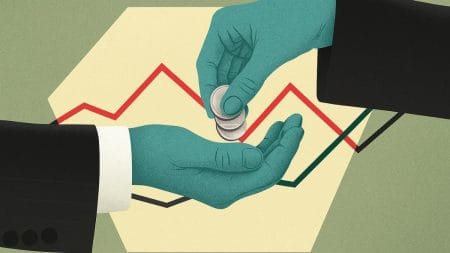
NEPAL’S NEW government has hit upon a novel way to tame fuel prices: declare a holiday. From now on schools and state offices will close on Sundays as well as Saturdays, creating a two-day weekend. The logic is seductive. Less economic activity means less driving. Less driving means less fuel burned. By some rough estimates, shutting down on Sundays could save around Rs1bn ($6.7m) a day in foregone petrol and diesel sales. For a state monopoly losing over Rs11bn every two weeks, that looks like a lifeline.
It is nothing of the sort. The holiday is a clever accounting trick rather than a serious energy policy. The fuel not sold on a Sunday will merely be burned on a Monday, or hoarded on a Friday. Petrol pumps will stock up in advance. Public transport will not vanish just because schools are closed. And the biggest risk—that Nepalis use their long weekends to drive to the hills for leisure—could easily leave consumption higher than before. A policy that depends on behavioural restraint in a country with little enforcement is a policy that will fail.
The crisis that provoked this gimmick is real enough. A conflict in the Persian Gulf has sent global oil prices soaring. Nepal, which imports every drop of its refined fuel, now pays far more than its citizens can afford. The state oil corporation loses perhaps Rs120 on every litre of diesel it sells. Petrol is priced at Rs202 a litre, but the break-even point is Rs236. The gap is unsustainable, and three price hikes in a month have already squeezed household budgets. More increases are coming, because the alternative—running out of cash to pay Indian suppliers—means queues at pumps and factories grinding to a halt.
Against this grim backdrop, prime minister Balendra Shah deserves credit for trying something. But the holiday is a distraction from the real work. Far better measures exist, none of them politically easy. An odd-even system for private vehicles would cut petrol demand without shutting down the economy. Tax reform could help, too. Nepal levies nearly Rs67 per litre of petrol and Rs49 on diesel. When global prices spike, the logical response is to trim those taxes, as India did on March 27th. The revenue loss hurts but so does inflation fuelled by dearer transport and cooking gas. Low-income households, who spend a bigger share of their income on fuel, are hit hardest.
Longer-term, the answer is electrification. Nepal’s hydropower potential is finally coming online with nearly 4,000 megawatts of installed capacity. That makes the country a net exporter of electricity in the rainy season. Yet most vehicles still run on petrol and most kitchens on imported LPG. Every electric bus, every induction stove, every EV charger in a Kathmandu parking lot is a small act of energy independence. The government should be subsidising those rather than subsidising holidays.
The Sunday policy will produce headlines and not savings. It is the kind of measure that looks assertive in a press release but melts on contact with reality. Nepali leaders need to tell their citizens an ugly truth: there is no cheap way out of a Gulf crisis. The only durable response is to reduce the country’s dependence on imported fuel. Until then a holiday is just a day off. ■