IMAGE VIA SETOPATI
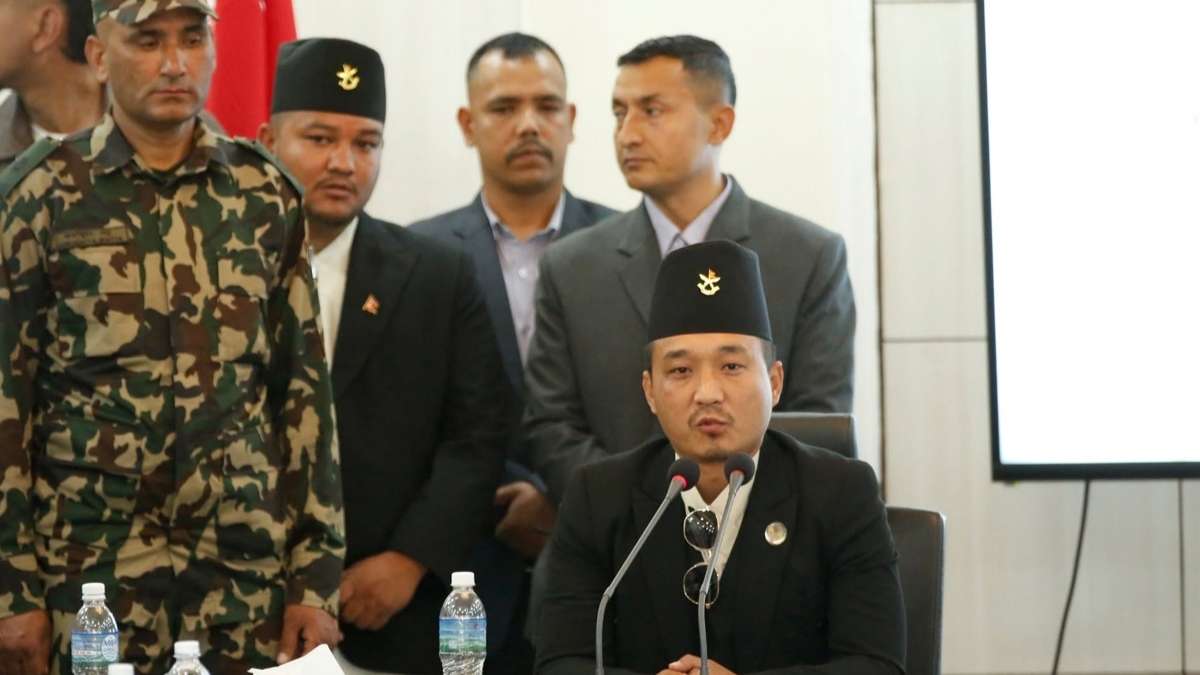
FOR A man who built his reputation on other people’s sins, Sudan Gurung has developed an unusual gift for acquiring his own. The Nepali home minister rose to fame as a Gen Z firebrand, promising to cleanse a political system so rotten that voters had stopped bothering to hold their noses. His party, the Rastriya Swatantra Party (RSP), was meant to be different: a broom to sweep away the old guard’s grubby habits. That broom now looks suspiciously like it was made of the same crooked timber.
Mr Gurung should resign: not because he has been convicted of a crime—he has not, at least not yet. But because he has deceived the public on a matter that goes to the heart of his mandate: integrity. When a politician campaigns on honesty and then fails to disclose a significant investment in a firm in which individuals currently in custody for money laundering are shareholders, he forfeits the moral authority to govern.
The facts are damning enough. Mr Gurung is a founding shareholder in Star Micro Insurance, an unlisted firm that received its licence under a regulator now accused of being a stooge for Deepak Bhatt, a businessman detained for various crimes. Mr Bhatt’s network, investigators allege, stretched across hydropower, insurance and tax policy. Other partners in the micro-insurance venture include Sulav Agrawal, vice-charman of the Shanker Group, who is also in custody. Mr Gurung did not disclose his Rs2.5 million stake in his official asset declaration. He has since clarified that the omission was a matter of classification. Earlier he defended the source of his substantial wealth, arguing that earning money before entering government—so long as it is not through corruption—is not a wrongdoing.
That is too clever by half. The problem is not that Mr Gurung once ran a business. It is that he ran one alongside people now accused of using the state as a cash machine. And that he hid it. As home minister, he oversees the very police and investigators who are probing his former associates. Even if he never lifts a phone to interfere, the appearance of a conflict is corrosive.
The RSP has a weapon for such moments: a “right to recall” clause in its own statute. The party used it recently to sack a labour minister who regularised his wife’s sinecure. To hesitate now would be to announce that the party’s principles are elastic. The RSP’s leaders say they will wait for the government’s investigation. That is cowardice faking as prudence. Investigations take months. Politics moves in days. If the party cannot judge its own home minister on the facts already public, it has no business judging anyone.
This affair carries a larger lesson for the wave of anti-establishment movements sweeping South Asia. Purity is a poor platform for governance, because no one is entirely clean. But consistency is not too much to ask. Voters who backed Mr Gurung’s promise of a new politics did not expect a saint. They did expect a minister who would not have to explain, weeks into the job, why he had been in business with men the police had just arrested.
Mr Gurung could try to ride out the storm. He has a parliamentary seat, a party that owes him loyalty and a prime minister who needs allies. But every day he clings to his portfolio, he reminds Nepalis that their new politics looks a lot like the old one. That is a tragedy for a country that had begun to hope for something better. And it is a verdict on a man who promised to drain a swamp, only to be caught paddling in one. ■