IMAGE: PRIME MINISTER’S OFFICE
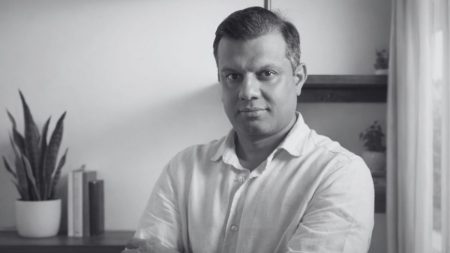
WHEN BALENDRA Shah’s party swept Nepal’s general election in March, the result looked like the final triumph of the country’s Gen‑Z uprising. The old men who had taken turns running Nepal into the ground since the 1990s seemed finished. Shah, the first Madhesi to hold the post and the youngest prime minister in the republic’s history, was hailed as a democratic disruptor. That was two months ago. Today he governs like a man who has already given up on governing.
Shah has not addressed the House of Representatives since taking office. He walked out of his own government’s policy speech while the president was still reading it, retreating to his office 50 metres away and slipping off without a farewell. His government postponed parliament’s first session so it could ram through eight ordinances, the most brazen of which would give the prime minister a veto over appointments to the constitutional council. He holds no press conferences. When opposition lawmakers demand he appear in the chamber to defend his programme, he sends his finance minister instead. One parliamentary leader stormed out, vowing never to return until the prime minister did. The bench where Shah should sit remains empty.
This is less a style of governance than a flight from it. Shah’s defenders argue that he despises the drama of parliamentary politics; that his anti‑establishment base wants a leader who bulldozes through the old rituals.
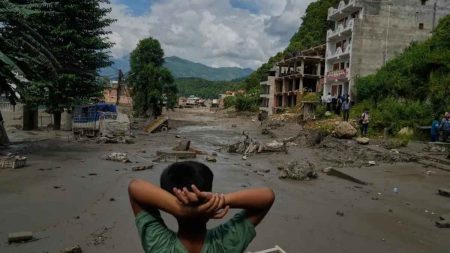
But a democratic prime minister does not get to choose when parliament matters. He must go there precisely when it is awkward. What Shah practises instead is a form of dashboard populism: rule by social media, in which institutions are treated as decorative obstacles. The bulldozer, in fairness, has been busy: over 2,000 riverside homes were flattened in the Kathmandu Valley, thousands displaced, with scant notice and less compassion. Already the Supreme Court has stayed several of his executive actions, including restrictions on trade unions and student groups. A pattern is coming into shape. The disruptor is beginning to look an awful lot like the strongmen he promised to replace.
The real engine of his downfall, however, sits inside his own party. The Rastriya Swatantra Party’s electoral machine was built on a fragile seven‑point compact between two men with outsize egos: Shah as prime minister and Rabi Lamichhane as party president. Lamichhane controls the party apparatus; Shah holds the executive. It is a dual‑power structure that asks, as one Nepali columnist put it, how two swords fit into one sheath. The early signs are that they do not. Shah overrode Lamichhane’s objections to install a home minister who then resigned within weeks over a money‑laundering scandal. A labour minister was sacked for putting his wife on a public board. Both fiascos bruised the prime minister personally and signalled to the party’s rank and file that his judgment is suspect.
Lamichhane, meanwhile, is a weakened but still lethal force. He faces multiple court cases, including one related to cooperative‑fund embezzlement, and remains tainted by his escape from prison during the 2025 protests. A new parliamentary rule that shields MPs from suspension unless they are in judicial custody for serious offences was widely read as a bespoke life‑raft for the party boss. If Lamichhane’s legal troubles worsen—or if party cadres tire of defending a damaged leader—the internal calculus will shift violently. The same super‑majority that made Shah unassailable can, with a few dozen defections, make him disposable. The backbenches are packed with novice MPs whose loyalty is to survival, not to a prime minister who treats parliament with contempt.
Nepal has chewed up more than three dozen governments since 1990. The country knows what an authoritarian drift looks like. Shah’s predecessor, K.P. Sharma Oli, rode a similar parliamentary landslide into office and then spent years acting like an elected monarch, dissolving the house twice and ruling by fiat. Shah appears to be speeding through the same playbook at double time. The youth who filled the streets in 2025 to hound Oli from power are now watching their champion govern in ways that recall the very man they chased out. Buyer’s remorse is settling in fast.
What undoes Shah will be the contradiction at his core. He came to power promising to smash the old order. Yet his vision extends no further than the next demolition, the next ordinance that dares the judges to stop him. There is no programme for economic revival. No strategy for governing a fragile federal state. And certainly no plan for the thousands of young Nepalis who leave for the Gulf each year. Silence, which once looked like focus, now breeds only the suspicion that there is nothing behind it.
The seven‑point pact between Shah and Lamichhane will snap. When it does, Lamichhane will likely conclude that the party’s future requires sacrificing the prime minister to save itself. A parliamentary revolt or a palace coup by senior RSP figures would need only a modest spark. The same anti‑establishment wave that carried Shah to Singha Durbar can just as easily spit him out. The millennial prime minister who refused to enter parliament may soon find he is no longer invited. ■